
Travel guides and resources
Malaysia: Langkawi
Langkawi — The Place to Chill Out
Langkawi is one of those places where you arrive, look around and think, “Oh right… this is why people go on holiday.” Nothing here is in a hurry. Not the sea. Not the sky. Not the people and definitely not the monkeys, (They’re far too busy plotting snack‑related crimes.) It’s the kind of island that makes you loosen your shoulders without realising. You stop checking the time. You stop checking your emails. You stop checking… well, everything.
Things to see and do

Beaches You Could Live On
Beaches You Could Live On
Langkawi does beaches really well and has beaches for every mood, choose the vibe you want:
- Pantai Cenang: Busy, fun, food everywhere, great for people-watching.
- Pantai Tengah: Same area but calmer; fewer kids throwing sand at each other.
- Tanjung Rhu: Peaceful, empty-feeling, ridiculously photogenic, probably because it is deliberately out of the way.
- Datai Bay: Private, quiet, and absurdly beautiful (but sneaky – only accessible via resorts/restaurants).
It’s basically a beach buffet.
Waterfalls: Beautiful, But Your Legs May Complain (and justification for ice-cream afterwards.)
Langkawi’s waterfalls don’t just look like something out of a travel advert — they are the travel advert. Towering green cliffs, jungle hum, water tumbling dramatically like it’s auditioning for a shampoo commercial. But getting to them? That’s the part nobody warns you about (until now!).
You start out optimistic. “A quick walk,” you say. “A gentle stroll,” you tell yourself.
Then the steps appear. Then more steps.
Then steps that feel specifically designed to humble you.
You will arrive at the waterfall sweaty, dishevelled, and emotionally altered. And then — the moment you slide into that cold, mountain-fresh pool — you are reborn. Glorious. Smug. Ready to tell strangers, “Oh yeah, the hike wasn’t that bad.”
Pro tip: If you slip on the rocks (and you will), just pretend it was a deliberate, graceful descent into the water. Style it out. Everyone else is too busy clinging to mossy stones to judge you.
Where to Go
Telaga Tujuh (Seven Wells Waterfall)
Difficulty: Moderately Hard
This one is the island’s show‑off, powerful cascades, jungle drama, natural rock slides, infinity‑style pools, the works. But the climb? Oh, the climb!
This is the celebrity waterfall, dramatic, loud and unapologetically gorgeous. It has two parts:
- Lower Falls, easy access, photogenic, and family-friendly
- Upper Pools (“Seven Wells”), the part that will make your quads question your decisions.
Hundreds of steep steps that feel specifically engineered to challenge your commitment to holiday happiness. You’ll sweat. You’ll pant. You’ll strongly consider turning around. Then you’ll reach the top and suddenly become that annoyingly smug person who says, “It wasn’t that bad actually.”
Why it’s worth it:
Natural pools you can actually swim in, incredible views, and the joy of earning your dip through mild suffering.
Temurun Waterfall
Difficulty: Easy–Moderate
Temurun is the gentle option. A tall, elegant waterfall with a chilled, rainforest‑cathedral vibe. The path is short, shaded, and manageable for most people, including those who enjoy nature but not “climbing until your soul detaches” levels of nature.
Why it’s worth it:
Less hiking, more relaxing; fantastic for photos and cooling off without committing to vertical cardio.
How to Get There from Pantai Cenang
Thankfully, Langkawi is small, so you won’t need a multi‑day expedition.
From Pantai Cenang to Telaga Tujuh (Seven Wells)
- By Grab / Taxi: ~20–25 minutes. Easy, painless, cheapest stress‑free option.
- By Rental Car / Scooter: Follow road signs toward Oriental Village / SkyCab.
The waterfall entrance is about 2 minutes further up the road — look for the parking area and inevitable cluster of stalls selling coconuts and questionable hats. - Parking: Small fee (a few ringgit), occasionally a friendly man waving you toward his “official” spot.
From Pantai Cenang → Temurun Waterfall
- By Grab / Taxi: ~30–35 minutes to the northern end of the island.
- By Scooter / Car: Follow signs toward Datai Bay, continue past the posh resorts, and the waterfall signage will appear on your left like a divine invitation.
Prices
The good news: Langkawi’s waterfalls are basically free.
- Entry: RM0
- Parking: Usually RM2–RM5 depending on the location and entrepreneurial spirit of the person collecting money
- Extras:
- Drink stalls: RM2–RM5
- Coconut water: RM5–RM8
- The emotional cost of climbing 600 steps: incalculable
What to Bring (If You Want to Survive Gracefully)
- Water (your calves will beg you for it)
- Trainers or sandals with grip — the rocks are deceptively slippery
- A towel
- Bug spray — the jungle locals love tourists
- Your best “I totally meant to slip like that” expression
Final Verdict
Langkawi’s waterfalls are one of those rare travel moments where beauty, chaos, sweat, and serenity collide.
Go for the adventure, stay for the cold pools, and leave with photos that make everyone at home wonder if you joined a wellness retreat.
The Langkawi Sky Bridge — Where Your Legs Stop, But the Island Begins
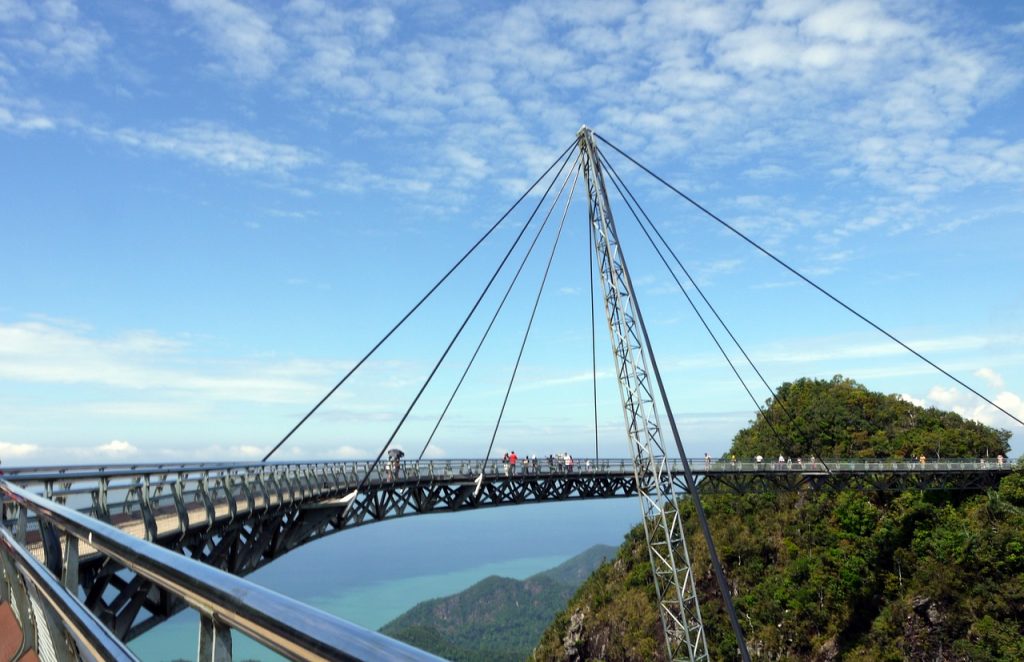
The Langkawi Sky Bridge is one of those places that doesn’t just give you a view — it rearranges your definition of one.
You don’t simply “arrive” at it. You get delivered there, courtesy of a cable car that cheerfully drags you up a mountain in a tiny glass pod, as if gravity is merely a polite suggestion. Halfway up, the rainforest falls away behind you, the sea appears in pieces through the mist, and there’s a small moment where you realise you’re breathing heavily even though you’re… sitting down.
Then the Sky Bridge appears — this gleaming, curved thread hanging between peaks like somebody took a sketch from a sci‑fi film and said, “Yes. Build it. Immediately”.
Walking the Bridge
Stepping onto the bridge feels like crossing the threshold into someone else’s dream.
The structure is impossibly elegant, a smooth swoop of steel and sky that doesn’t bother pretending it belongs to the mountain beneath it. It floats. It stretches. It dares you to walk its length while pretending you’re totally fine and absolutely not rethinking your stance on heights.
Every step is a shift in perspective:
- One direction gives you endless green hills rolling away like a rumpled blanket.
- The other reveals the sea — sparkling, smug, and scatter‑filled with islands that look dropped into place by a bored god with excellent aesthetics.
- Look down (if you dare) and it’s nothing but treetops far, far below, swaying calmly while your heartbeat does the opposite.
You can guarantee there will be one person confidently strolling ahead, pretending this is all very normal. There’s always another frozen halfway across, negotiating with their ancestors, and there’s always someone filming a slow‑mo walk that will later be posted somewhere even though their face, in reality, was 80% panic.
You will probably be all three of these people at some point.
Why It’s Worth It
Because there are views that impress you… and then there are views that quiet the entire inside of your head.
The Sky Bridge gives you that rare moment where you’re completely still, not because you chose to be, but because the world around you refuses to let you rush it. The mountains hum, the breeze threads through the cables, and the ocean holds a mirror up to the sky. You feel very small, but in the nicest possible way.
It’s the kind of beauty that doesn’t ask for attention — it demands awe and gets it.
What You Take Away
Not bravery. Not adrenaline.
What you leave with is a memory that sits somewhere between “I can’t believe I did that” and “I can’t believe places like this exist.”
It’s one of Langkawi’s great tricks: giving you something unforgettable without ever raising its voice.
Langkawi SkyCab (The bit before the bridge where you briefly try and remember some school physics).
What the SkyCab Actually Is
Langkawi’s SkyCab is the cable car that drags you — willingly or otherwise — up the side of Gunung Mat Cincang. It’s famous for two things:
- being very high,
- pretending it’s no big deal.
It’s the island’s version of an escalator to the heavens: smooth, scenic, and slightly nerve‑prickling if you’re the kind of person who grips the handrail on airport travelators. Just think of Fuente De in the Picos De Europa.
The Ride Up (aka: The Suspended Reality Check)
- It starts gently, like an elevator.
- Then it tilts just a bit more than your comfort level requested.
- Then you realise you are hanging above rainforest that looks several centuries old and very, very far below.
But here’s the thing: it’s stunning. Properly, stupidly stunning.
The gondola glides past cliffs, waterfalls, and rolling layers of green that look like someone turned the saturation up too high. Every few seconds the view changes — sea one moment, mountain folds the next — and you’ll instinctively reach for your camera even though the cabin window will insist on reflecting your face back at you like a smug ghost, oh and that is assuming you have got your eyes open.
Atmosphere Inside the Gondola
It’s always the same collection of characters, the one:
- narrating facts no one asked for.
- gripping the seat so hard their ancestors feel it.
- blocking the view by filming a vertical video you know will be unwatchable.
- pretending to be unbothered while calculating the tensile strength of steel cables.
Why You Need It
Because without the SkyCab, the Sky Bridge remains a rumour, or something you saw on YouTube.
This ride is the whole point: it’s the slow, dramatic ascent into whatever heroic storyline you’ve given yourself for the day. It builds suspense, sets the scene, and deposits you at the peak feeling like you’ve just unlocked a new level in a video game.
How Long It Takes
Roughly 15 minutes — or an eternity, depending on your relationship with heights. There’s a mid‑station where you can hop out, pretend you’re doing it for the view, and not because your heart needs a moment.
What You Should Bring
- Something to clean the glass (greasy fingerprints are the true enemy of photography).
- A bottle of water for when your heartbeat realises you’re dangling and you need to take your emergency meds.
- A sense of humour about how small you suddenly feel.
- A camera that can cope with motion and mild panic.
The Best Part
The moment the gondola rounds a cliff edge and suddenly the whole island appears beneath you — beaches, jungle, little toy‑town villages, and the endless sea — all looking far too perfect to be real.
It’s the exact point where the SkyCab stops being transport and becomes an experience.
Final Verdict
If the Sky Bridge is the punchline, the SkyCab is the setup — slow, scenic, dramatic, and slightly terrifying in a way you’ll pretend you enjoyed from the start. A total must‑do.
Sky Bridge Ticket Prices
Standalone Sky Bridge Ticket
- Adults: RM6
- Children (3–12): RM4
Sky Bridge + Cable Car (SkyCab) Combo
Prices vary depending on the package but typically:
- RM40–50 (about £9.00) for a return cable car ride + Sky Bridge access
Note: Prices can be slightly different depending on where you purchase them. (online vs. ticket counter).
Opening Hours
The Langkawi Sky Bridge is generally open:
- Daily, 9:30 AM – 6:00 PM
Important Notes
- Weather‑dependent: The bridge may temporarily close in heavy rain or thunderstorms for safety.
- Seasonal tweaks: Peak seasons (and Ramadan for the cable car) sometimes bring slight hour adjustments.
Snorkelling: Like Swimming Inside a Screensaver (I have a feeling I might have used that line somewhere else already)
(Effort level: low. Awe level: rude.)
Snorkelling around Langkawi is the closest you’ll get to starring in your own underwater nature documentary without having to learn how to scuba dive. You float, you peer down, and suddenly colour, everywhere. Fish in enough colours for a paint colour chart and coral that looks like someone spilled a box of neon craft supplies across the sea floor.
Most people head to Pulau Payar Marine Park, which is famously clear, calm, and teeming with marine life. It’s about 45 minutes offshore by boat, long enough to feel like an adventure, not long enough to wonder about your life insurance.
Difficulty: Easy
Floaty, gentle, occasionally interrupted by fish who get a little too curious.
How to Get There from Pantai Cenang
- Join a tour: Boats pick up from Pantai Cenang or Teluk Baru Jetty.
- Travel time: 45–60 minutes.
- Good to know: Payar is the only place with consistently good snorkelling near Langkawi.
Prices
- RM 120–200 for a group trip (gear included)
- RM 300–500 for private snorkelling
- Marine park fee: usually RM 30–40
Bring
- T-shirt, (the fish don’t care how you look, but the sun does)
- Dry bag for your phone (remember they have an affinity for the sea)
- Underwater camera if you want evidence you saw a fish that looked like something you ate fried with ginger and lemongrass
Difficulty
- Boat: Effort? None.
- Kayak: Gentle arm wiggling.
- Jet ski: Fun chaos, but there goes the peace and quiet.
How to Get There from Pantai Cenang
Most mangrove tours start at Kilim Geoforest Park in the north-east of Langkawi.
- Taxi/Grab: 35–40 minutes
- Scooter/Car: Easy drive, scenic, occasional monkey road‑tax collectors
Mangroves: Calm, Cool, and Judged by Monkeys
(Nature served in slow motion.)
Mangrove tours are the opposite of the SkyBridge and Seven Wells. No sweating (through exertion). No steps. No emotional negotiations with your calf muscles. Just smooth water, limestone cliffs rising like ancient teeth, cheeky monkeys plotting theft, and eagles circling overhead like they own the place.
You can experience the mangroves by boat, kayak, or, if you enjoy drama, jet ski. Kayaking is the sleeper hit: peaceful, close to nature, and gentle enough that you can pretend you’re sporty without breaking too much of a sweat.
Prices
- Boat tours: RM 60–120 per person
- Kayak tours: RM 90–150
- Jet ski mangrove routes: RM 400–600 (chaos isn’t cheap)
Bring
- Bug spray (the mosquitoes are passionate)
- Water
- A sense of humour — the monkeys will stare at you like you owe them money
Sunset Cruises
(Also known as: “the sky performs for you”.)
A sunset cruise in Langkawi is the kind of experience that tricks you into believing you’re living in a movie montage. The sea goes glassy, the sky decides to try on every colour it owns, and the boat glides in that slow, dramatic way usually reserved for perfume adverts.
Some cruises include dinner, some include free-flow drinks, and some include the unexpectedly chaotic “saltwater jacuzzi” (a net dragged behind the boat where you bob around like a confused manatee). All are delightful.
Difficulty: Effortless luxury
Your only job is to sit there and sigh meaningfully at the horizon.
How to Get There from Pantai Cenang
Most cruises depart from:
- Awana Porto Malai Marina (10 minutes from Cenang)
- Telaga Harbour (30 minutes)
Transfers are often included for sunset sail packages.
Prices
- Standard sunset cruise: RM 200–250
- With dinner & drinks: RM 250–350
- Private yacht (if you’re feeling unhinged): RM 1,000+
Bring
- Light jacket (windy at sea)
- Camera, sunsets here are outrageous
- Swimsuit if you want to be net‑dragged behind the boat (strangely fun)
Wildlife Park & Bird Paradise: The “Everybody Gets a Feathered Friend” Experience
(Where parrots are the true stars.)
Visiting the Langkawi Wildlife Park & Bird Paradise is like stepping into a cheerful, mildly chaotic Disney film where every character is either brightly coloured, slightly noisy, or plotting to land on your shoulder without warning. This is not a passive experience — the animals here have opinions, and they are not afraid to share them. It’s covered, air‑flowy, and blissfully shaded, making it one of the few Langkawi activities where you won’t melt into the pavement. You wander through charming walk‑through aviaries, free‑flying birds swooping about like they own the place (because they do), and enclosures where you can feed everything from deer to raccoons to a dangerously persuasive ostrich.
Difficulty: Effortless, but emotionally surprising (unless of course you are Ornithophobic then the level of difficulty might just be a little higher)
No climbing, no sweating, no battling gravity. You may, however, have to deal with a parrot that decides you’re its soulmate, and no teaching it to swear.
Why It’s Worth It
- Up-close animal encounters — birds, mammals, reptiles, and occasionally a peacock that looks like it charges appearance fees.
- Feeding sessions — adorable chaos in its purest form.
- Kid-friendly but equally enjoyable for adults who secretly love animals more than people.
- Great for rainy days, sunburned days, or “I refuse to climb anything today” days.
How to Get There from Pantai Cenang
- Taxi / Grab: 20-25 minutes (the easiest option).
- Scooter / Car: Straightforward drive toward Kuah Town; the park is clearly signposted.
- Parking: Usually free and close to the entrance, a rarity in life and travel.
Prices
(They fluctuate slightly depending on season, but typical ranges are:)
- Adults: RM 45–60
- Children: RM 30–40
- Animal food packs: RM 6–10 depending on how many creatures you want to bribe
Private feeding sessions or photo experiences may cost a little extra, but they’re usually worth it if you want a parrot‑on‑the‑shoulder photo that screams “Disney side character.”
What to Bring
- Hand sanitiser (your hands will smell like a farm at some point)
- A camera, birds here love posing
- Closed-toe shoes if you don’t want a curious duck nibbling your toes
- Confidence (the parrots can smell fear)
Vibe Check
This is the gentlest adventure in Langkawi. No sweat, no heights, no existential dread, just feathered divas, furry charmers, and a surprisingly soothing wander through greenery while animals make unfiltered eye contact with you.
Final Verdict
Perfect for families, couples, or solo travellers who want a bit of wholesome joy between adrenaline activities. It’s fun, easy, colourful, and full of personalities — and that’s just the flamingos.
Best Times to Visit the Wildlife Park
(Because even the animals prefer good lighting.)
The beauty of Langkawi Wildlife Park & Bird Paradise is that it’s mostly covered, which means it’s one of the few attractions on the island that doesn’t completely unravel when the sky decides to do dramatic tropical downpours.
Still, some times are better than others if you want peak comfort, maximum animal sass, and minimal crowds.
Best Season to Go
November to April, The Sweet Spot
This is Langkawi’s dry season, which means less rain, more sunshine, your hair doesn’t immediately lose structural integrity, you’re not dodging puddles with a parrot on your shoulder. The weather is stable, warm, and ideal for both the indoor and outdoor bits of the park.
If you can, aim for early dry season (Nov–Dec) the holiday rush hasn’t fully descended yet, so you get more birds and fewer humans.
Best Time of Day
Go in the Morning (8:30 AM – 11 AM)
- Cooler, calmer, and less crowded
- Animals are more active
- You won’t get stuck behind a family taking 47 photos of the same flamingo
- You can enjoy feedings without the mid-day humidity slowly turning you into soup
Bonus: You beat the peak hours. The park opens at 8:30 am and stays open until 6 pm (ticket counter closes at 5 pm).
When to Avoid
Peak public holidays & festival weeks
Malaysia loves a holiday, and the crowds show up accordingly. Expect, busloads of excited children, long feeding queues and birds giving you a look that says “not this again”
If you want a calmer visit, avoid major holidays and school breaks.
Mid‑day Heat (12 pm – 3 pm)
While the park is partially covered, Langkawi humidity is an equal-opportunity oppressor. Mid-day turns you into the kind of sweaty the animals politely pretend not to notice.
Rainy Season? Still Fine.
If it rains (May-October), the Wildlife Park is actually one of the best places to be. It’s designed as an indoor tropical rainforest experience. In other words, rain outside equals no problem inside. Still, the dry season offers the most comfortable overall experience.
Night Markets: Chaos, Food, Happiness (Where your dinner plans unravel beautifully).
Langkawi’s night markets aren’t just markets, they’re events. Loud, warm, busy, fragrant, slightly chaotic, and absolutely glorious. Each evening the location changes, like a roving carnival of grilled things, fried things, sweet things, and “what is that but yes I’ll have two.”
You’ll find stalls selling everything: satay, fresh juices, crispy chicken, noodles, deep-fried snacks of mysterious origin, and that one uncle selling sunglasses for RM10 while offering you unsolicited life advice.
This is the kind of place where you wander in thinking “I’ll just grab something small,” and wander out holding six items and a bag of juice.
Difficulty: Crowd navigation + food choice panic
You need, decent weaving skills, and acceptance that you will get sauce on your shirt
Why It’s Worth It
- Cheap, delicious street food
- Actual insight into local food culture
- The best way to meet people (both locals and sweaty tourists)
- You can turn RM20 into a full meal plus dessert
How to Get There From Pantai Cenang
The market location changes nightly, but good news:
- Most are within 5-20 minutes of Cenang
- Taxi/Grab: Easiest option
- Scooter: Even easier, plus highly convenient for snack‑hoarding
- Follow the crowd, smells, or neon lights – all will lead you to the right place
General Opening Hours
- Starts: 5:00–6:00 PM (most fully open by 6:30 PM)
- Ends: 9:00–10:00 PM
Prices
- Satay sticks: RM 1–2 each
- Noodles/rice dishes: RM 5–8
- Fresh juices: RM 3–6
- Snacks & sweets: RM 2–5
- Regret for not buying more: free
Bring
- Cash, most stalls don’t take cards
- Wet wipes (chili sauce happens)
- Appetite
- Curiosity, half the fun is pointing at something and hoping for the best
Vibe Check
Energetic, colourful, slightly chaotic, incredibly tasty. A must-do no matter how many days you’re in Langkawi.
Langkawi Night Market Schedule (By Day + Location)
Monday – Ulu Melaka Night Market (near Makam Mahsuri)
Traditional Malay snacks, grilled seafood, handicrafts
- About 15 minutes from Pantai Cenang
Tuesday — Kedawang Night Market (near Pantai Cenang)
- Close to Cenang, great for cheap eats, fresh fruit, fried chicken
- About 10 minutes from Pantai Cenang
Wednesday — Kuah Town Night Market (near Kuah Jetty & shopping district)
- One of the biggest; tons of food, clothes, souvenirs
- 25 minutes from Pantai Cenang
Thursday — Bohor Temoyong Night Market (near Pantai Cenang)
- Very local vibe, lots of kuih (Malay desserts), satay, snacks
- 10 minutes from Pantai Cenang
Friday — Ayer Hangat Night Market (near Ayer Hangat Hot Springs / Tanjung Rhu area)
- Great seafood, grilled meats, quieter atmosphere
- Around 20 minutes from Kuah, longer from Cenang
Saturday — Kuah Town Night Market (Again!)
- Same location as Wednesday
- Weekend crowds, but huge variety
Sunday — Padang Matsirat Night Market (near the airport)
- Very popular; great grilled squid, murtabak (stuffed pancake or pan-fried bread), sugarcane juice
- 10 minutes from the airport
Why Langkawi Hits Different
Langkawi doesn’t try to impress you. It doesn’t need to.
It’s just easy. Warm. Funny. Relaxing. It’s got beaches, waterfalls, food, monkeys with attitude, and that kind of holiday energy where you suddenly forget what day it is, and don’t care.
It’s the kind of place you leave, then instantly start trying to figure out how soon you can get back.