

Travel guides and resources
Malaysia: Heritage and food trail
A Taste of Time: Ipoh, George Town and Malacca
Ipoh — Quiet Streets, Old Souls, and the Warm Glow of a City in No Hurry
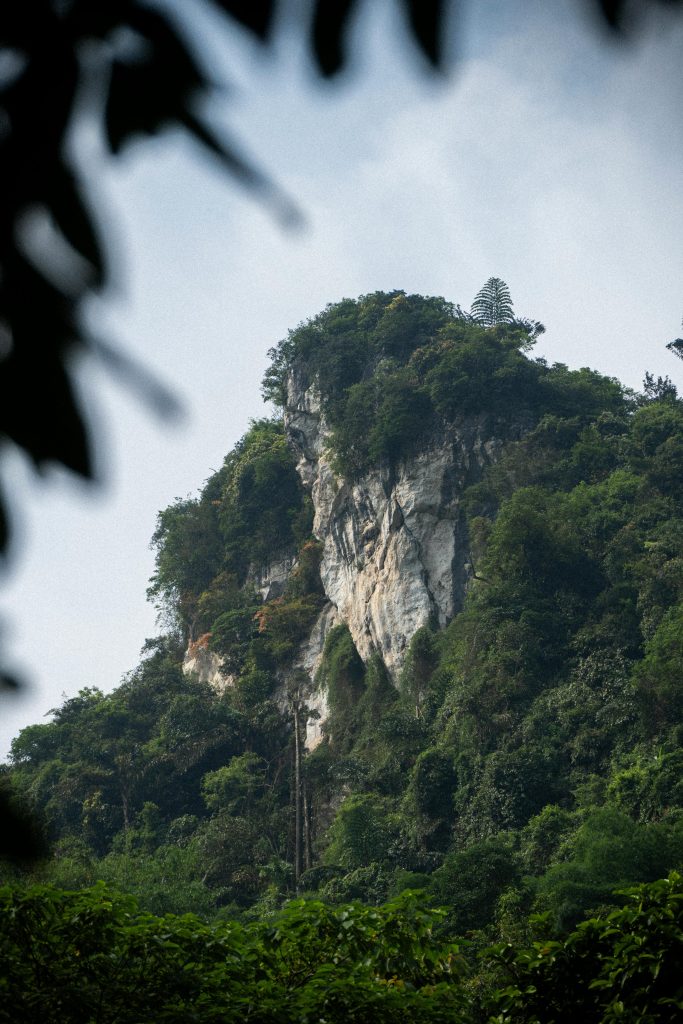
Ipoh has a way of easing up to you rather than presenting itself all at once. It starts with the limestone cliffs—those towering grey‑green sentinels that ring the edges of the city like ancient guardians. Then come the shophouses, fading at the edges in the most photogenic way, their pastel paints sun‑bleached but still quietly proud.
There’s no rush here. Even the moments seem to move at half‑speed, as if the city is whispering, Come on, slow down a bit. Stay awhile.
A City Worn Soft by Time
Old Town is the heart of Ipoh, but not the beating kind, the kind that hums. Walk down the streets early in the morning and you’ll hear doors sliding open, chairs scraping across tile floors, and the low rhythmic clatter of a kopi maker warming up for the day.
The heritage shophouses stand shoulder to shoulder, each one full of tiny stories: a tailor who seems to have been stitching since the 1960s, a bakery whose window fans never stop spinning, and murals that spill across the walls like memories someone decided to paint before they faded.
In Ipoh, “old” isn’t a selling point. It’s simply what things are, and that’s where the charm lives.
Breakfast as a Love Language
You don’t eat breakfast in Ipoh, you join breakfast.
Whether it’s kaya toast so crisp it fractures at first bite, soft‑boiled eggs you stir with pepper until they become sunshine in a bowl, or that signature Ipoh white coffee, nutty, smooth, and almost too comforting, breakfast is ritual here.
A quiet celebration repeated daily.
It’s the kind of meal where strangers at the next table nod hello, the ceiling fans spin lazily overhead, and for a moment the rest of the world feels very far away.

A Deeper Look Into Ipoh’s Past — Tin, Migration, and the Making of a Quiet Giant
Long before Ipoh became the mellow, mural‑spotted city visitors know today, it was a frontier town shaped almost entirely by the earth beneath it. The story really begins in the late 1800s, when the Kinta Valley, lush, river‑laced, and flanked by limestone mountains, was discovered to hold some of the richest tin deposits in the world. What followed was a transformation nothing short of astonishing.
The Tin Boom That Built a City
As news of the valley’s mineral wealth spread, prospectors poured in from across Malaya, China, and beyond. Chinese miners, particularly the Cantonese and Hakka, played an enormous role in developing the industry, working the rivers and hills with skill and tenacity.
Tin didn’t just shape the economy, it reshaped the entire landscape of Ipoh:
- Small settlements swelled into bustling towns, filled with shopkeepers, traders, and families seeking new fortunes.
- The British arrived, keen to regulate and profit from the industry. Under colonial administration, infrastructure blossomed.
- Rail lines were laid, linking Ipoh to Penang and Kuala Lumpur, turning it into a crucial hub in British Malaya.
- Wealth flowed in quickly enough that Ipoh earned the nickname:
“The City of Millionaires.”
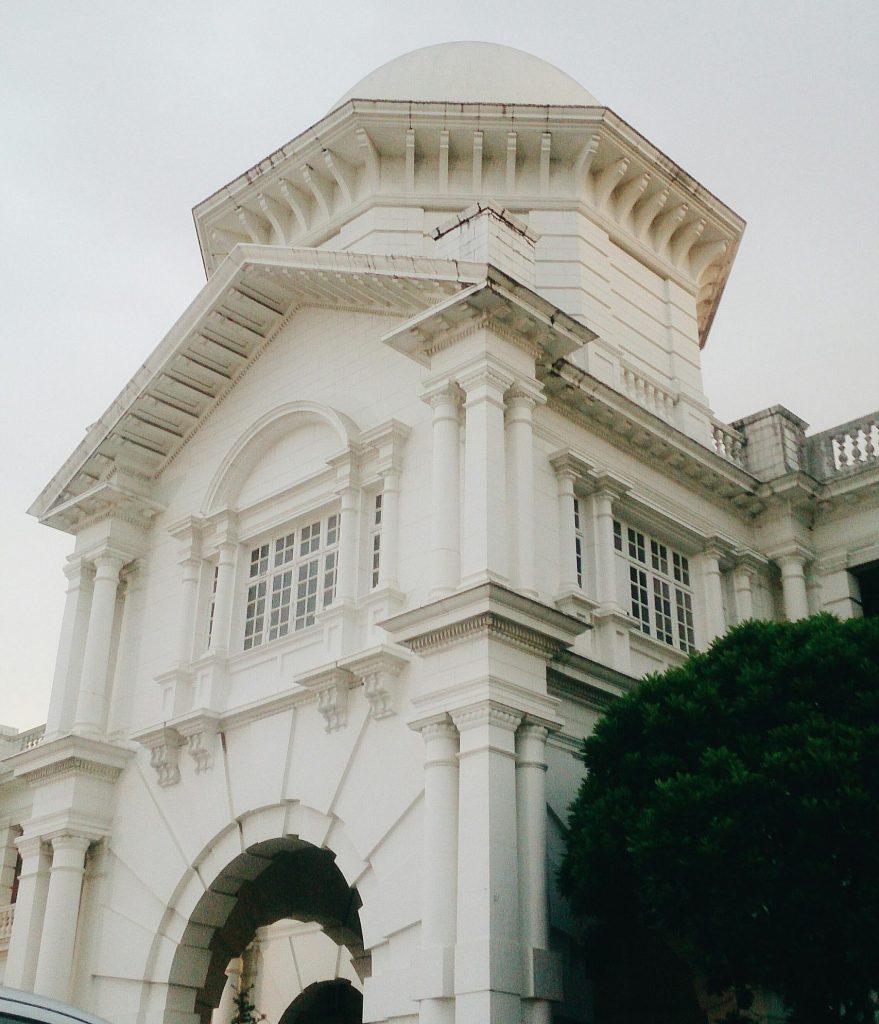
Grand banks and stately administrative buildings rose, many of which still stand today in Old Town like elegant, slightly weathered reminders of the boom years.
Migration, Culture, and a City Taking Shape
Ipoh’s population in the early 20th century was a vibrant tapestry:
- Chinese clans forming tight‑knit community networks
- Indian labourers contributing to public works and plantations
- Malay families settling around the riverbanks and agricultural edges
- British civil servants creating enclaves of Empire with clubs, schools, and bungalows.
This mix didn’t just keep the tin industry running, it created the foundations of modern Ipoh: its food culture, its languages, its architecture, and the easygoing, community‑centred rhythm the city still carries today.
Decline, Reinvention, and the Gift of Stillness
By the 1980s, global tin prices collapsed, mines closed, wealth faded and many feared Ipoh would wither. However, something gentler happened instead.
With industrial pressure gone, the city eased into a quieter phase, one that would later become its greatest asset. Without aggressive modern redevelopment, Ipoh’s older neighbourhoods, colonial buildings, and pre‑war shophouses remained intact. What was once a mark of decline gradually became a kind of accidental preservation, allowing Ipoh to re‑emerge in the 2000s as a heritage‑rich, food‑forward, quietly soulful city.
It is this layered history, booming growth, multicultural foundations, economic pause, and gentle rediscovery that gives Ipoh its depth. You can feel it when you walk its streets: a city shaped by ambition, softened by time, and now carried forward by the pride of people who have always called it home.
Limestone, Temples and the Thin Line Between Nature and Faith
Wander a little further out and Ipoh suddenly turns grand. The limestone hills rise sharply, their surfaces streaked by rain and time, and at their feet sit temples built into caves, places where incense curls upward into the cool, dim air.
Sam Poh Tong, Perak Tong, Kek Lok Tong: each one feels like stepping into a hidden world. The echoes are softer, the air is colder and the space feels as if it has been waiting for centuries for someone to wander in and look around.
A City That Lets You Drift
Ipoh doesn’t set out to entertain. It allows you to slow, to wander markets where greetings drift as easily as steam from coffee cups, and along riverfront paths where time stretches into conversation. Elsewhere, these are the moments cities hide between destinations. In Ipoh, they are the destination, unremarkable at first, and quietly unforgettable once you notice they’re happening.
When the Sun Drops Behind the Hills
Late afternoon is Ipoh at its best. The sun dips behind the karst cliffs, painting the whole city gold. The shadows lengthen. The heat loosens its grip. And everything begins to glow. It is possible to follow the light to a colonial-era bar for a cold drink, or maybe to a hawker stall where steam rises in fragrant plumes and finish the day with a bowl of tau fu fah (a traditional soft tofu dessert).
Why Ipoh Stays with You
Ipoh is easy to underestimate. It doesn’t parade its attractions. It doesn’t demand your wonder. Instead, it offers something rarer, a place where everyday life feels deeply, quietly beautiful. It’s a city made not of highlights, but of moments, and if you let it, Ipoh will gently remind you that sometimes the most memorable places aren’t the ones that dazzle, but the ones that feel like home the moment you arrive.
Ten things to see before leaving Ipoh
Concubine Lane — A Walk Through Ipoh’s Past, Wrapped in Colour and Charm
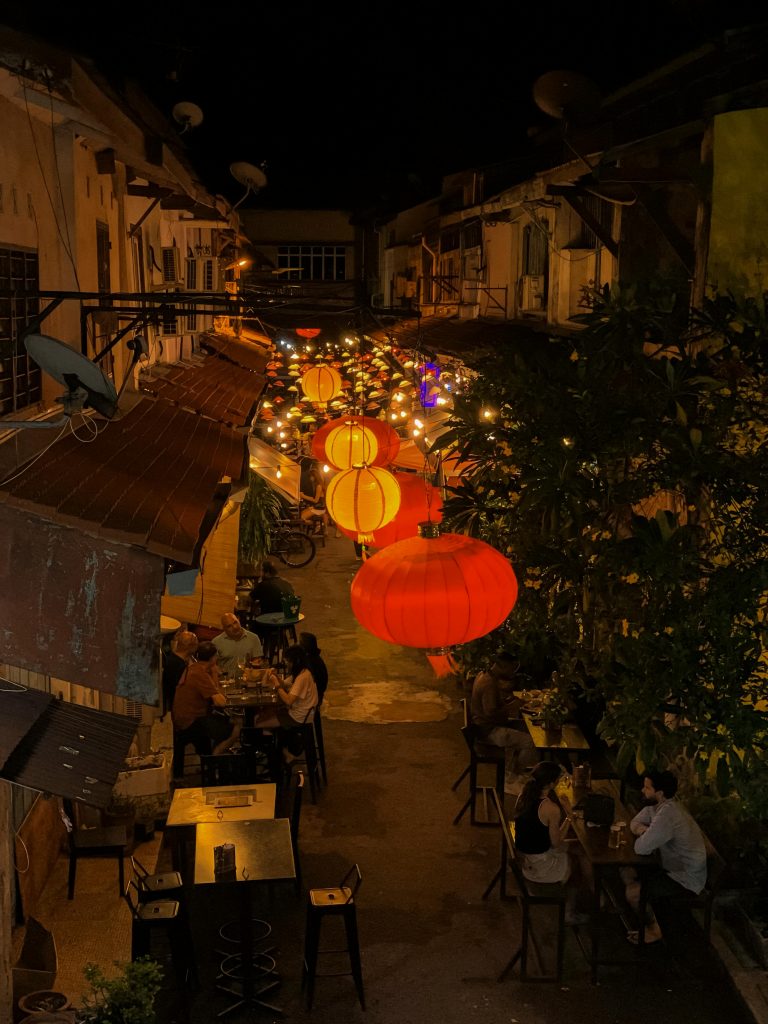
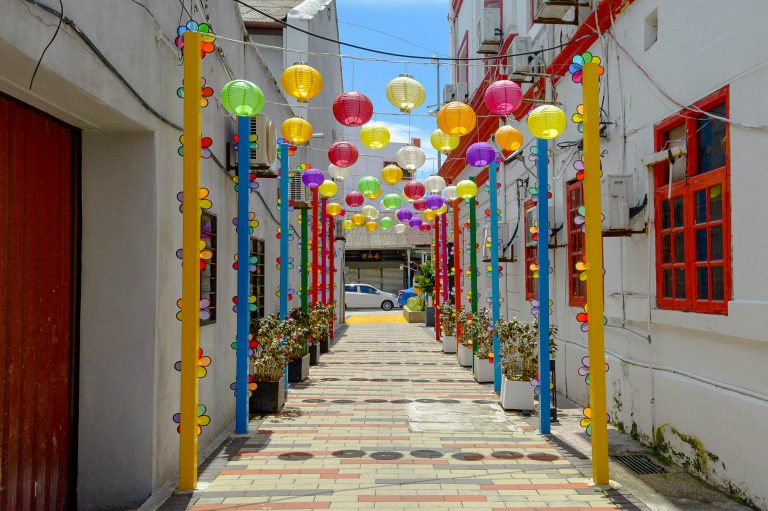
If Ipoh had a heartbeat, it would pulse through Concubine Lane. Narrow and lively, this heritage alley feels like a time capsule cracked open—Chinese lanterns overhead, wooden shutters faded just enough to be beautiful, and the gentle hum of shopkeepers setting out handmade trinkets.
Wander slowly. Buy something small. Snack on something sweet. This is the kind of place where you don’t look for meaning—you simply let it happen around you.
Perak Tong — A Cave Temple Where Silence Speaks
At first glance, Perak Tong looks like another limestone hill rising from the valley floor. But step inside, and the world changes. A vast golden Buddha sits serenely in the cavern’s cool, echoing hush, while painted murals curl across the rock walls like ancient whispers.
If you’re up for a climb, the staircase behind the altar leads to airy viewpoints where Ipoh sprawls out beneath you, framed in rugged stone and wild green.
Kek Lok Tong — Gardens Hidden Beneath the Mountains
Kek Lok Tong feels like a secret kept by the limestone cliffs themselves. The cave opens into a cathedral‑sized chamber—cool, reverberant, and strangely peaceful—before spilling into sculpted gardens tucked behind the hill.
Here, koi glide in quiet ponds and sunlight filters softly through gaps in the rock. It’s part temple, part sanctuary, all serenity.
Tasik Cermin (Mirror Lake) — Ipoh’s Most Surreal Surprise
Imagine a lake so still it looks like polished glass, ringed by cliffs that rise dramatically toward the sky. That’s Tasik Cermin—a place that feels almost enchanted. Reached by tunnels carved through solid stone, it rewards the curious with a scene that seems more like a painting than reality.
Come early if you can. Morning light makes the water glow like molten silver.
Kong Heng Square — Heritage, Reimagined with Style
Kong Heng Square is Ipoh’s creative heart, a thoughtfully restored cluster of old buildings now home to independent cafés, artisanal shops, and unexpected treasures (like a bookshop tucked into an old cinema vault).
It’s the kind of place where you stop for coffee, stay longer than intended, and leave with something you didn’t know you needed.
Street Art of Ipoh — Stories Painted on Old Walls
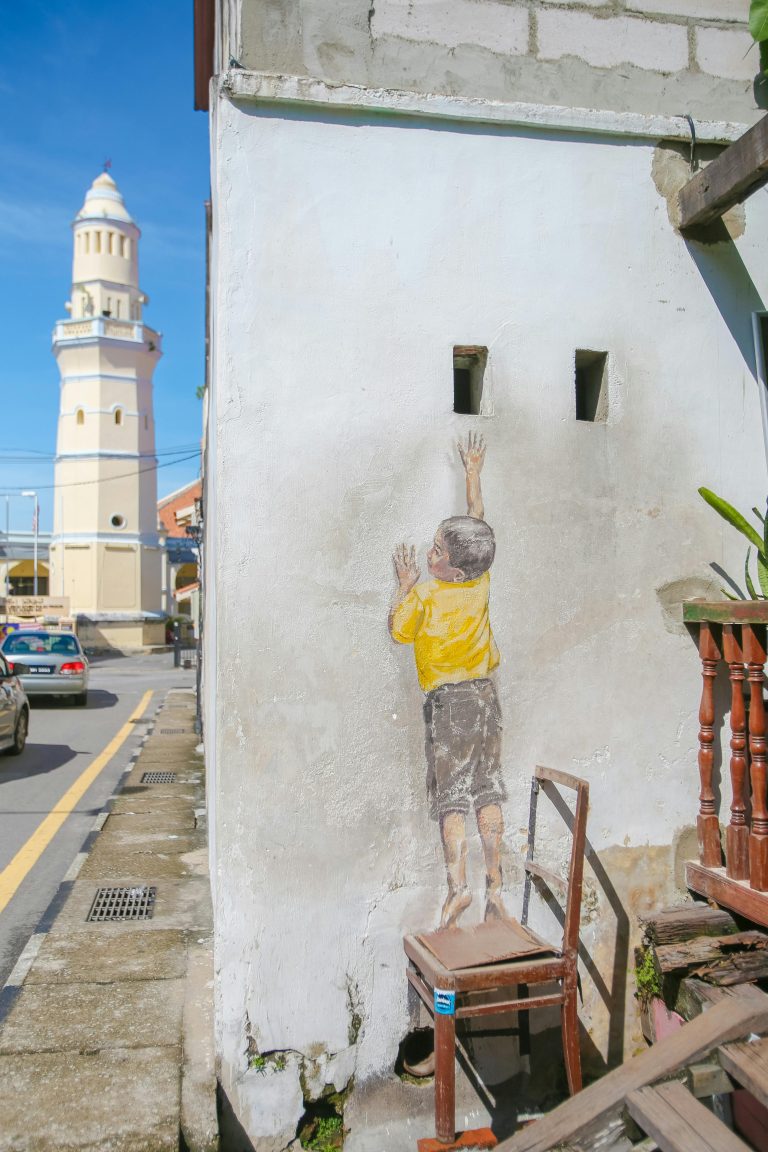
Ipoh’s murals aren’t flashy—they’re thoughtful, often playful, and always grounded in everyday Malaysian life. Kids riding paper planes, uncles at coffee shops, tiny scenes tucked into alleys you might otherwise miss.
It’s worth wandering with no plan. The art reveals itself that way, slowly and delightfully.
Han Chin Pet Soo Museum — The Soul of Ipoh’s Tin Mining Story
Step through these doors and you’re stepping back into the world of early Hakka miners, secretive societies, and the everyday life of a community built around tin.
The museum is intimate—less exhibit, more memory. It fills the gaps between what history books tell you and what life genuinely felt like.
Lost World of Tambun — Nature, Play, and Hot Springs
Surrounded by limestone cliffs, this theme park and hot‑spring resort offers a playful contrast to Ipoh’s heritage side. It’s part adventure, part relaxation: water slides, steaming pools, evening light shows, and jungle‑lush surroundings.
Go at dusk. The cliffs glow under the setting sun, and the hot springs feel even more magical.
The Ipoh Heritage Trail — A Slow Walk Through Time
Old banks, fading colonial architecture, clock towers, and shophouse corridors lined with mosaic tiles—this self‑guided trail collects the best of Ipoh’s historical core.
Do it in the morning, when the sun is soft and the city is just waking up. You’ll feel the past more clearly that way.
Kinta Riverfront Walk — Soft Light and Easy Evenings
When day gives way to night, head to the river. Lights twinkle across pedestrian bridges, trees sway in the breeze, and the whole scene feels unexpectedly romantic.
It’s a perfect place to end a long day in Ipoh—slowly, gently, just as the city likes to be experienced.
George Town, Penang — A City That Paints Its Stories on the Walls
There’s a moment on the way into George Town when Penang reveals itself, not with a single sweeping view, but in fragments. A shutter half-open on a weathered shophouse. A flash of temple red through a tangle of telephone wires. Someone frying char kway teow in a wok the size of a small planet, the scent drifting across a street just waking up.
Nothing announces itself loudly here, the magic gathers in small, deliberate pieces.
History of Penang
Penang’s story is one of crossroads, a place where people, ideas, and ambitions met long before its name appeared on European maps. Its history spans millennia: from prehistoric settlers to bustling pre‑colonial trade routes, from British expansionism to Japanese occupation, and from independence to its modern status as a cultural and technological powerhouse.
Pre‑Colonial Penang — Before Empire (Prehistory–1700s)
Long before Penang became a British outpost, it was already inhabited by early coastal peoples. Archaeological discoveries at Guar Kepah in Seberang Perai reveal human presence dating back 3,000–4,000 years, with shell mounds, stone tools, and Neolithic remains showing that fishing and foraging communities lived along the northern Malaysian coastline. By the late first millennium CE, Penang sat on the periphery of a vibrant regional trading system connected to Kedah, the Malay Peninsula, India, and China. Portuguese and early British navigators noted the island during their expeditions; Captain James Lancaster recorded a stopover near Pulau Rimau in 1593, describing Penang as “desolate” yet strategically located.
Throughout this period, Penang belonged to the Sultanate of Kedah, serving as a lightly settled frontier territory whose value lay in its forests, fresh water, deep harbours, and position along the entrance to the Strait of Malacca.
Britain Eyes the Strait — Diplomatic Manoeuvring (1700s–1786)
By the mid‑18th century, regional geopolitics shifted dramatically. Kedah faced rising pressure from Siam and Burma, and the Sultan sought alliances to protect his realm. At the same time, the British East India Company (EIC) searched for a foothold to strengthen its role in Asian trade, especially against Dutch dominance.
Enter Francis Light, a British trader with deep local knowledge. Acting partly independently and partly for the EIC, Light recognised Penang as an ideal harbour: defensible, centrally located, and politically obtainable.
After years of informal negotiations, Light persuaded the Sultan of Kedah to grant the island to Britain in exchange for promises of military protection, promises Light made without full authority from the EIC. Regardless, on 17 July 1786, Light hoisted the British flag in Penang’s harbour and claimed it as Prince of Wales Island, naming the town George Town after King George III.
This marked the beginning of Penang’s transformation.
Free Port, Open Door — The Birth of a Cosmopolitan Entrepôt (1786–1826)
The British declared Penang a free port, eliminating import duties and attracting merchants from across Asia. Traders from China, India, Arabia, the Malay world, and Europe poured in, drawn by the island’s tax‑free status and strategic location.
George Town grew rapidly:
- Chinese migrants established clan houses and business networks.
- Indian settlers arrived as labourers, traders, administrators, and soldiers.
- Malay communities remained deeply rooted, especially in fishing and rice farming.
- Arabs, Armenians, Eurasians, and Europeans added to the island’s layered identity.
This era also saw the acquisition of mainland territory in 1800, forming Province Wellesley (now Seberang Perai), securing Penang’s food supply and strengthening its strategic depth.
A Crown Colony and a Global Port (1826–1900s)
In 1826, Penang, Malacca, and Singapore were consolidated into the Straits Settlements under British India, with George Town briefly serving as capital.
Penang’s importance was profound:
- It became a major entrepôt linking China, India, and the Indonesian archipelago.
- The island thrived on the tin trade, connecting Perak’s mines to global markets.
- Beach Street and surrounding districts emerged as regional centres for shipping, finance, and commerce. Banks such as HSBC established some of their earliest Asian branches here.
But economic growth came with social tensions. Rival Chinese secret societies occasionally clashed, most dramatically during the 1867 Penang Riots, reflecting both the island’s diversity and the challenges of rapid urbanisation.
Early 20th Century — Prosperity, Migration, and Modernisation (1900–1941)
By 1900, Penang was one of Southeast Asia’s most multicultural cities. Immigration continued, including new waves of Punjabi, Tamil, Malayalee, Gujarati, and Bengali migrants, adding to the island’s religious and cultural landscape.
George Town became known for:
- Its distinctive shophouses, blending European, Chinese, and Malay architectural elements.
- Clan houses such as Khoo Kongsi, symbolising Chinese communal organisation.
- Public institutions, churches, mosques, and Hindu temples reflecting centuries of coexistence.
The port remained a vital regional hub, connecting Penang to the British Empire and global trade networks.
World War II — Invasion, Occupation, and Liberation (1941–1945)
War arrived abruptly. In December 1941, the British evacuated Penang without defending it, a decision that left bitter memories among residents. The Japanese occupied the island for nearly four years, implementing harsh rule, including forced labour and the Sook Ching purges targeting Chinese civilians.
The occupation devastated the local economy and population, but in September 1945, Penang became the first state in British Malaya to be liberated when Allied forces returned under Operation Jurist. For more information on this visit https://penang.fandom.com/wiki/Operation_Jurist
From Empire to Independence (1946–1957)
After the war, the Straits Settlements were dissolved (1946). Penang was absorbed into the Malayan Union, later the Federation of Malaya.
Economic uncertainty and loss of free‑port privileges sparked a local secession movement, but ultimately Penang remained part of the new federation, which achieved independence on 31 August 1957. That same year, George Town earned a historic milestone, it became the first city in Malaya, officially granted city status by Queen Elizabeth II
Economic Transformation — From Trade to Technology (1960s–1990s)
The revocation of Penang’s free‑port status in the 1960s caused severe economic decline. Unemployment rose, and George Town’s role as a regional commercial hub faded.
Yet Penang adapted with remarkable resilience.
The state government shifted its strategy toward industrialisation, creating the Free Industrial Zone in Bayan Lepas. In the 1970s, multinational electronics firms, including Intel, established factories, sparking Penang’s transformation into the “Silicon Valley of the East.”
The opening of the Penang Bridge in 1985 connected the island to mainland Malaysia and accelerated urban and economic development.
Cultural Revival and UNESCO Recognition (2000s–Present)
In the 2000s, George Town underwent a cultural renaissance. Activists and heritage advocates worked to preserve historical buildings, traditions, and multicultural neighbourhoods.
Their efforts culminated in 2008, when George Town’s historic core was inscribed as a UNESCO World Heritage Site, recognised for its uniquely preserved architectural and cultural landscape.
UNESCO status revitalised tourism and urban renewal, but also brought challenges. Gentrification, rising rents, and boutique development threatened long‑standing communities and traditional trades. These tensions mirror global debates around heritage cities adapting to modern economies.
At the same time, Penang’s economy continued to thrive in technology, services, creative industries, and tourism. Yet climate change, coastal vulnerability, and social inequality are now central issues shaping the island’s future.
A Living Tapestry Still Being Woven
Penang’s history spans prehistoric settlements, global sea routes, colonial conquests, migration waves, war, independence, economic reinvention, and cultural revival.
What makes Penang remarkable is not just its past, but how that past lives on. In the architecture of George Town. In the food shaped by generations of migrants. In the languages spoken in markets. In festivals shared across cultures.
Penang is a living palimpsest, a place where new stories are always being written on the traces of old ones, and its history remains, as always, a story of crossroads, convergence, and resilience.

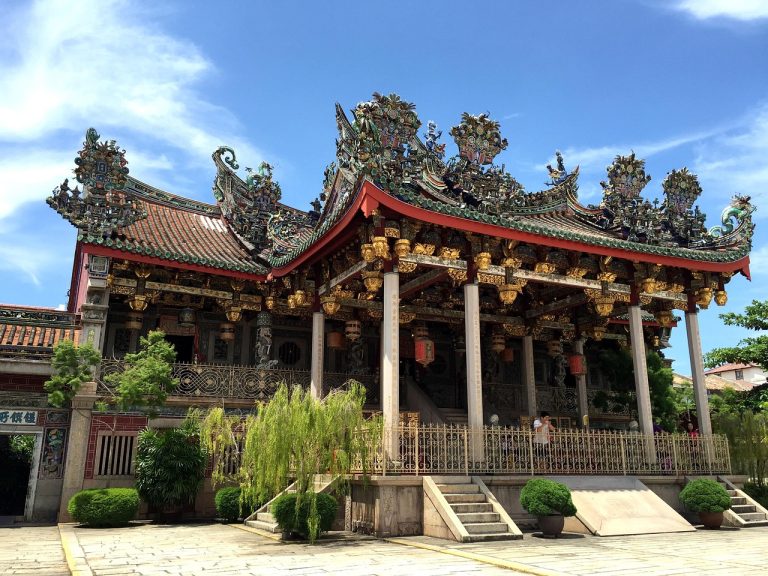
George Town:- Where the Past Lives Side by Side with the Present
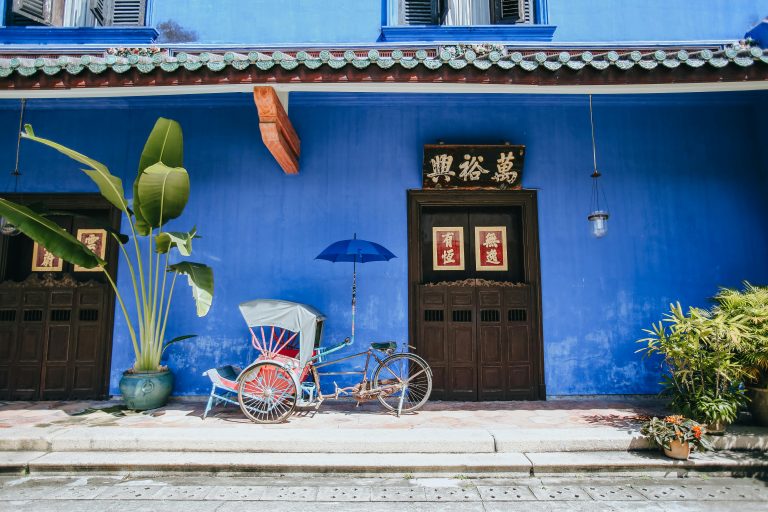
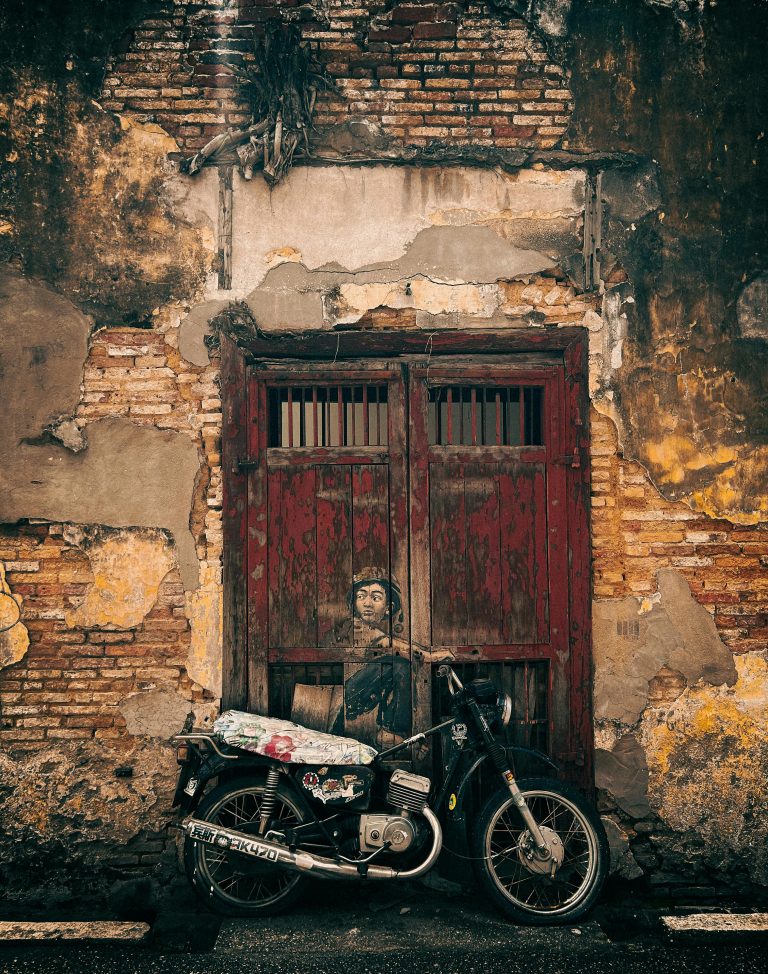
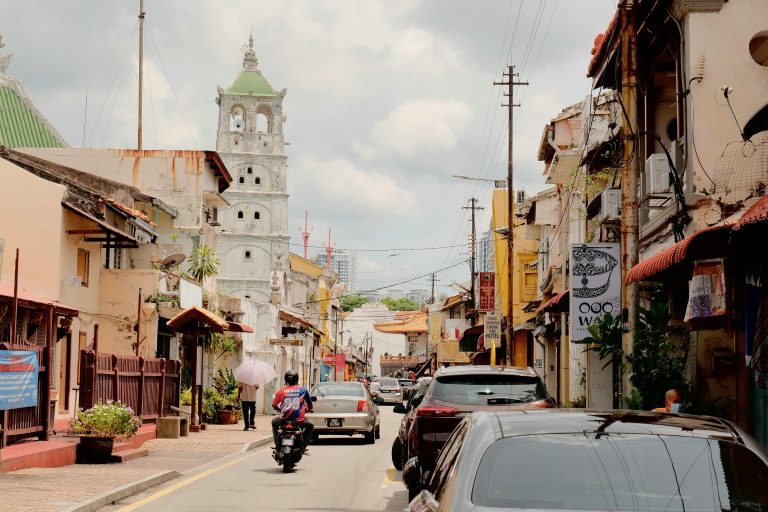
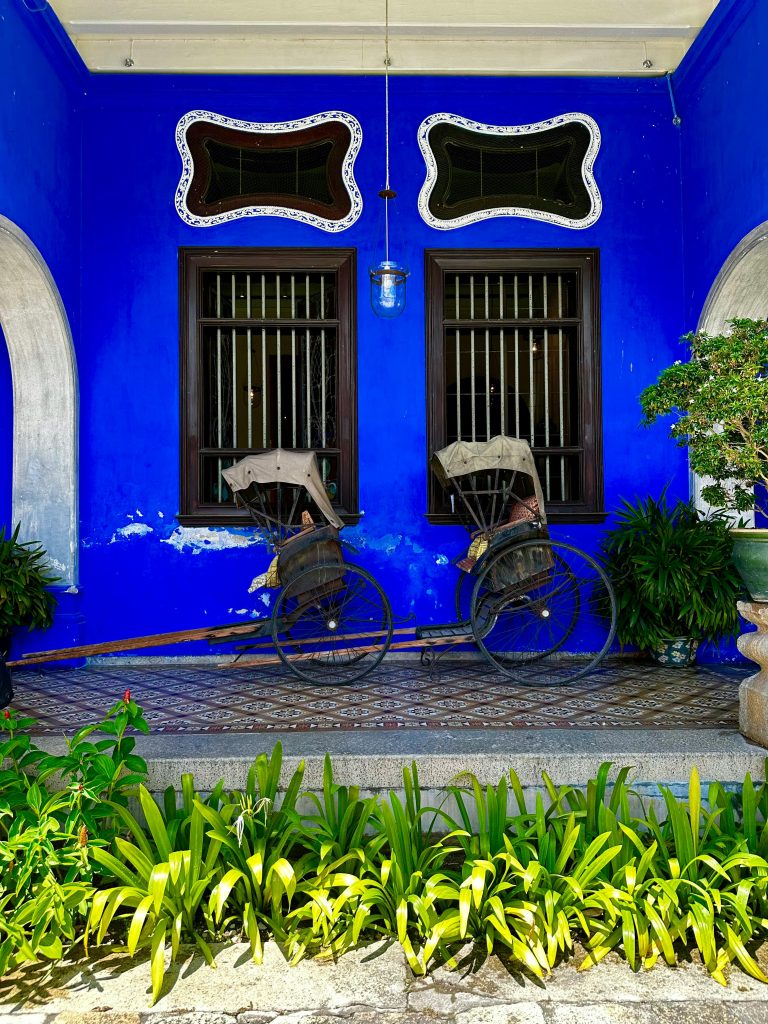
George Town is often described as a “living museum,” but museums are quiet, sterile things. George Town isn’t. Its history is loud, painted onto walls, echoed in five‑foot ways, lived in by families whose stories go back generations. Walk down Armenian Street and you’ll see what I mean. A shop selling artisanal gelato stands next to an old clan house. Lanterns hang below electrical cables. A trishaw rattles past a boutique hotel that used to be someone’s grandfather’s hardware store. Nobody here tries to smooth the edges. The beauty is in the layers, and those layers? They’re generous. They invite you in.
Mornings That Taste Like White Coffee
Morning in George Town has its own tempo. The streets feel softer, as if the city is stretching itself awake. This is the ideal time to slip into an old kopitiam where everything looks exactly as it did 60 years ago, wooden chairs that wobble, ceiling fans that seem to rotate out of sheer stubbornness, and uncles who have been reading the same newspaper for many years.
Order white coffee, thick toast with kaya. Maybe soft‑boiled eggs if you’re feeling traditional. This isn’t breakfast, it’s a ritual. A gentle initiation into Penang’s way of life.
Street Art That Makes You Stop Moving
George Town’s street art is famous, but you only truly understand it by wandering without a plan. Murals appear around corners like small surprises, children riding a real bicycle welded into the wall, a boy perched on a motorbike, cats painted the size of tigers, wire sculptures curling into local jokes only Penangites fully understand. Some pieces have faded in the sun, some have cracked, and some now feel like old friends the city refuses to repaint. That’s the charm. Nothing is polished to perfection. Everything feels lived‑in.
Temples That Glow at Twilight
If George Town’s streets tell its story, its temples give the city its soul. Kek Lok Si rises above Air Itam like a dream built in tiers, lanterns swaying gently, turtles splashing in the ponds below, the giant statue of Guan Yin watching over the island with a calm, eternal gaze.
Closer to town, smaller temples burn sandalwood and offer the kind of quiet you only find in places shaped by devotion. Their doors are always open, their welcome is unspoken but unmistakable.
The Jetties — Where Families Live on the Water
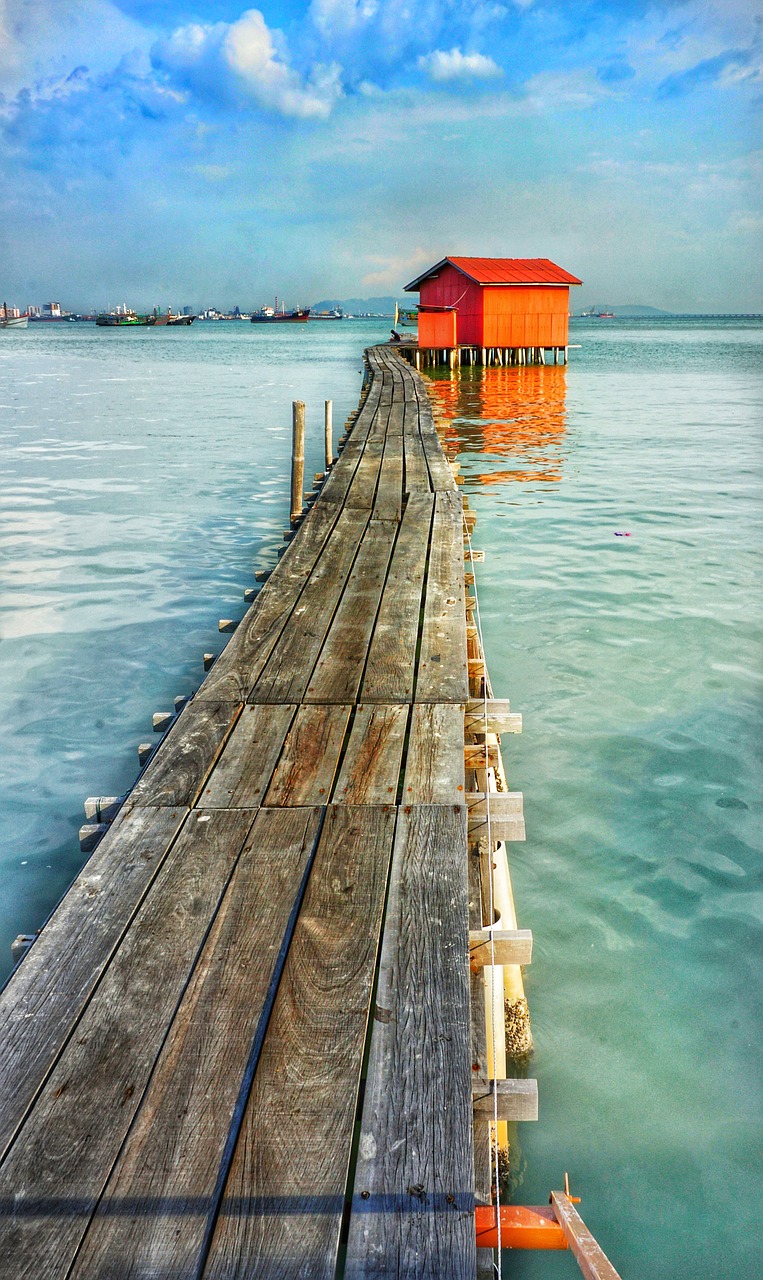
On the edge of the city, wooden walkways stretch out into the sea. Each jetty belongs to a clan: Chew, Lee, Lim, Yeoh. These settlements are not museums, not attractions, though tourists wander them daily. They are family homes, built on stilts, humming with everyday life. Children race past you on bicycles. Aunties hang laundry in the sun. The sea laps softly below.
Stand at the edge and look back at George Town: the old-world charm, the skyline rising behind it, the island breathing. This is Penang, a place caught between worlds, perfectly comfortable in all of them.
Hills Wrapped in Rainforest
Penang Hill offers a different kind of quiet. Take the funicular up and suddenly you’re in cool air, wrapped in greenery. Up here, the city feels far away. Views spill all the way to the mainland, and walking paths drift through rainforest that feels impossibly ancient for somewhere so close to modern life. It’s not an escape from George Town, more like a gentle pause.
Evenings Made of Lantern Light and Hawker Smoke
As the sun dips, George Town changes tempo again. The heat softens, the sky turns gold and the city smells like dinner. Food isn’t an afterthought here, it’s identity, pride, legacy. You’ll want to try everything, and somehow, in Penang, there’s always room for one more dish.
A City That Doesn’t Ask You to Hurry
George Town doesn’t compete for your attention. It doesn’t shout for it. Instead, it opens itself slowly, like a story told chapter by chapter. You wander, turn a corner and find something that makes you smile and somewhere along the way, without realising it, you stop being a visitor and start feeling like part of the rhythm of the place.
Why You’ll Miss It Before You Even Leave
Penang, especially George Town, isn’t unforgettable because of its attractions, though you’ll find plenty. It’s unforgettable because of how it makes you feel.
Grounded, curious, a little nostalgic for a past you didn’t live through, and a little hopeful about the present you get to witness.
The island has a way of lingering in you, of making you promise yourself, quietly “I’ll come back”.
Melaka:- Where the World Once Docked
Long before Melaka became a city of museums and monuments, it was something far more essential: a meeting point. Founded around the start of the 15th century by Parameswara, a Sumatran prince in exile, Melaka rose quickly from a quiet fishing settlement into one of the most important ports in the world, positioned perfectly along the Straits of Malacca—the narrow maritime corridor linking China, India, the Middle East, and beyond. Ships arrived not only to trade, but to wait for monsoon winds, for favourable tides, for the next leg of a much longer journey.
Under the Melaka Sultanate, the city entered its golden age. Islam took root, Malay became the lingua franca of maritime Southeast Asia, and traders from across Asia and the Arab world settled into distinct quarters. What emerged was less an empire than an ecosystem—governed by diplomacy, protected by Chinese patronage, and animated by the steady movement of goods, languages, and ideas. At its height in the 15th century, Melaka stood alongside Venice and Cairo as a node of global exchange, even if it never looked the part from the shore.
That wealth eventually drew European ambition. In 1511, the Portuguese seized Melaka by force, intent on controlling the spice trade and the strategic throat of the straits. Fortifications went up, including A Famosa, and churches rose beside mosques. Yet despite their military success, the Portuguese never fully mastered the trade networks that had made Melaka powerful; the city endured, but its momentum faltered. In 1641, the Dutch—working with regional allies—took control, reshaping the city once again. The orderly brick buildings around today’s Stadthuys date from this period, when Melaka became less a bustling port and more an administrative stronghold.
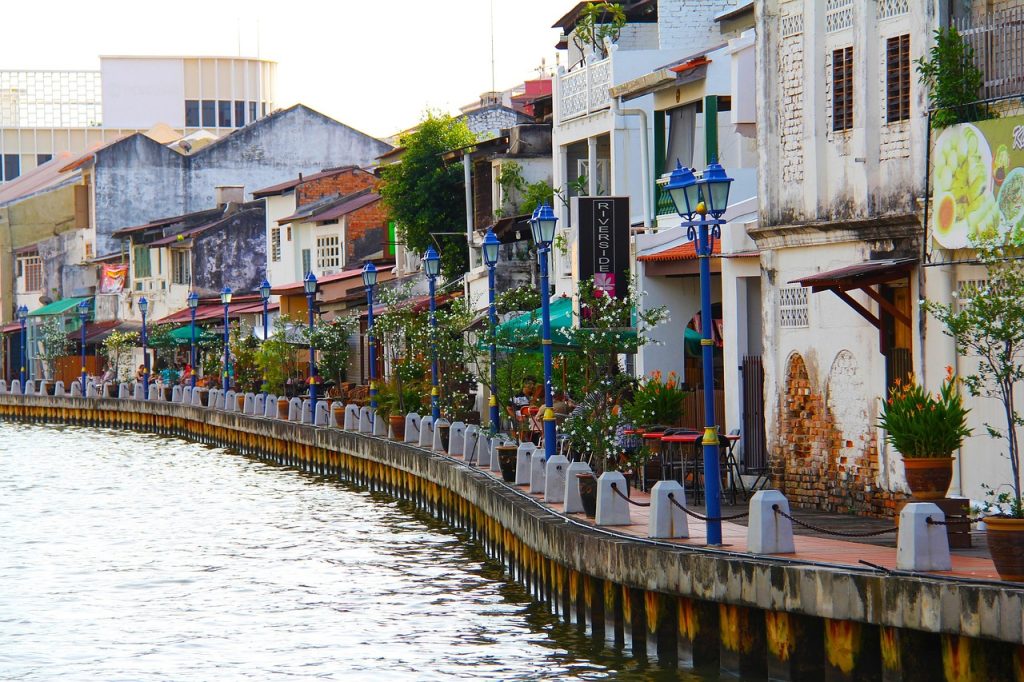
British rule followed in the 19th century, folding Melaka into the Straits Settlements alongside Penang and Singapore. As trade shifted south and Singapore rose, Melaka slipped out of the commercial foreground. What it retained instead was memory: layered, uneven, and remarkably intact. The river that once carried spice and tin now reflects shophouses and lantern light, and the streets still trace the outlines of older worlds.
Today, Melaka’s UNESCO World Heritage status recognises not a single chapter of this story, but the accumulation of it—five centuries of encounter and exchange compressed into a walkable city. Its architecture, food, language, and customs are less about preservation than continuity. Melaka does not attempt to recreate its past. It lives alongside it, quietly reminding you that history here was never something that happened once, but something that kept arriving by sea.
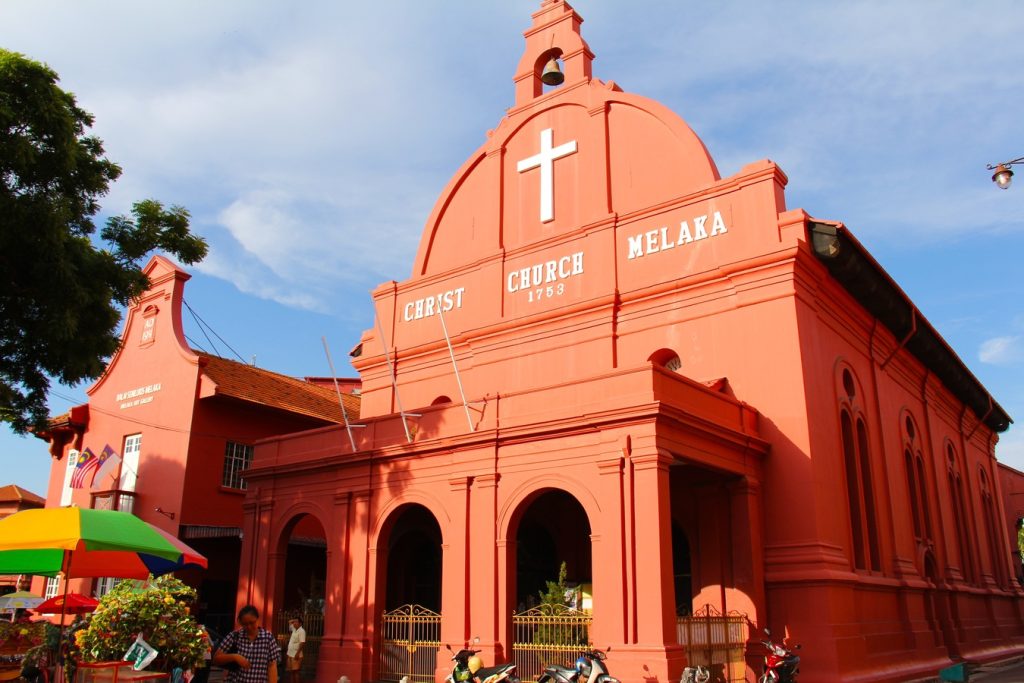
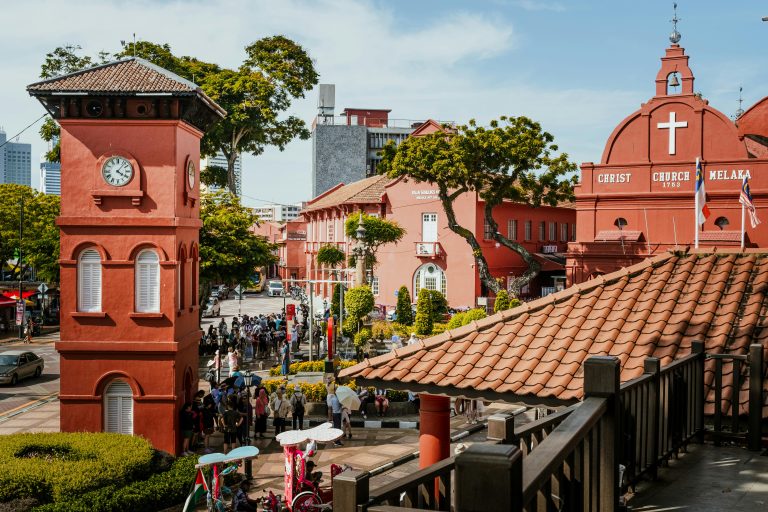
The city reveals this history quietly. It’s there in the weight of the red buildings around the Stadthuys, in the plain authority of Christ Church, and in the fragments of A Famosa that suggest more than they show. These are not monuments demanding attention so much as landmarks you circle, return to, and slowly absorb. Melaka doesn’t rush its past; it allows it to sit comfortably beside the present.
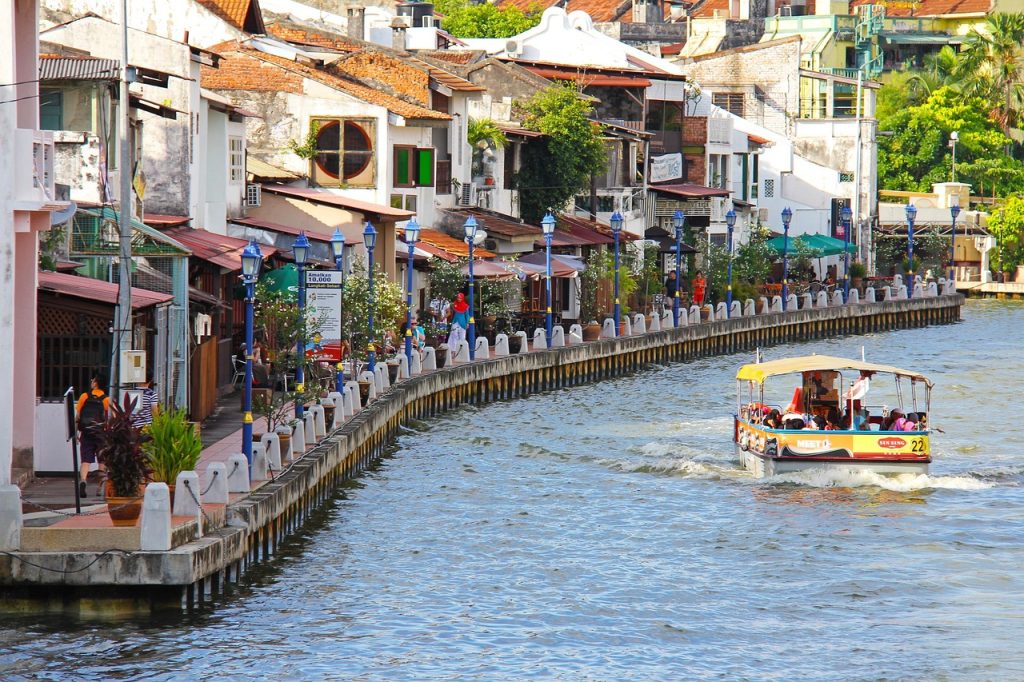
Follow the river and the mood changes again. Old warehouses now open into cafés and guesthouses, lanterns catch the light at dusk, and the water carries reflections rather than cargo. Jonker Street brings a different energy. Busier, louder, fragrant with food, where Peranakan sweets, skewers, and steaming bowls are as much part of the city’s heritage as its architecture. Even here, though, Melaka resists being overwhelming. The pace softens once you step away.
This is a city that rewards lingering. Sit a little longer by the river, wander side streets without an agenda, eat because it’s time to eat rather than because something was recommended. Melaka’s greatest appeal lies not in ticking off what it has been, but in noticing how comfortably all those histories continue to live together—unforced, imperfect, and very much alive.
Melaka: Key Moments in Time
- c.1400 – Founded by Parameswara, a Sumatran prince, Melaka begins life as a small port positioned perfectly on the Straits of Malacca.
- 15th century – The Melaka Sultanate flourishes. The city becomes a major centre of Islamic learning and one of the world’s great trading hubs, connecting China, India, Arabia, and Southeast Asia.
- 1511 – Captured by the Portuguese, marking the first European seizure of a major Southeast Asian trading city. Fortifications such as A Famosa are constructed.
- 1641 – The Dutch take control, reshaping Melaka as an administrative centre. Many of today’s red‑brick buildings date from this period.
- 1824 – Melaka passes to British control under the Anglo‑Dutch Treaty and becomes part of the Straits Settlements alongside Penang and Singapore.
- 2008 – Melaka is designated a UNESCO World Heritage Site, recognised for over 500 years of cultural and commercial exchange.
Top 10 Things to Do in Melaka
Perhaps a little optimistic to go with ten, but did see a YouTube video that gave the top 29 which irked me a little, either merge some to make 25 or split one up to make it 30!
Wander the Dutch Square: Start at the heart of the old city, where the Stadthuys, Christ Church and clock tower sit in faded red calm, quietly anchoring Melaka’s colonial past. Early morning or late afternoon is best for avoiding crowds.
Climb St. Paul’s Hill: Walk up through the ruins of St. Paul’s Church for wide views over the city and a sense of Melaka’s strategic importance laid out below you. The remains are sparse, but the setting does the talking.
See What’s Left of A Famosa: The surviving gate of the Portuguese fortress is small but significant—a reminder of Melaka’s role in the first wave of European expansion into Southeast Asia.
Lose Yourself on Jonker Street: Take it slowly during the day to appreciate the old shophouses, then return in the evening when the street turns lively with food stalls and conversation. Weekend nights are busiest.
Cruise the Melaka River: A gentle boat ride offers a different perspective on the city, passing historic buildings, bridges, and modern murals along the riverbanks—especially atmospheric after dark.
Visit the Baba & Nyonya Heritage Museum: Step inside a preserved Peranakan townhouse to understand one of Melaka’s most distinctive communities, whose culture blended Chinese and Malay traditions over centuries.
Explore Kampong Kling: Within a short walk you’ll find a mosque, a Hindu temple, and a Chinese temple standing side by side—quietly illustrating how Melaka’s communities have long coexisted.
Eat Your Way Through Nyonya Cuisine: Melaka’s food tells its history better than any plaque. Seek out classics like laksa Nyonya, ayam pongteh, and cendol rather than chasing novelty dishes.
Stroll Kampung Morten: Cross the river to this traditional Malay village, where wooden houses and family homes offer a glimpse of everyday life that has changed little despite the city around it.
Simply Walk Without a Plan: Melaka is compact and unrushed. Some of its best moments come from drifting down side streets, sitting by the river, or stopping when something catches your attention rather than your itinerary.