

Travel guides and resources
Malaysia: Borneo
Borneo: A Jungle‑Wrapped Giant With Stories to Tell
(Before we zoom in on the Malaysian side, let’s start with the island as a whole.)
Borneo is one of those places that refuses to fit neatly into a single idea. It isn’t just an island — it’s an entire world with its own weather system, moods, and rhythm. One minute you’re staring out at mountains wrapped in cloud; the next, you’re swallowed by rainforest so dense it feels like it’s been quietly plotting for a thousand years. It’s ancient, humid, alive, and faintly intimidating in the best possible way — like nature turned the volume up and forgot to turn it back down again.
A bit of background
Borneo is the third largest island on the planet, shared, somewhat awkwardly, like siblings with wildly different personalities, by Malaysia, Indonesia, and Brunei. Historically it was a crossroads of traders, seafarers, sultans, and anyone else hardy enough to navigate its coasts long before “eco‑tourism” became a marketing word. Inland, its rainforests have been home to Indigenous communities for millennia, each with languages, beliefs, and stories older than most countries.
It’s a place where headhunters once roamed (I can remember tales about this still happening in the late sixties – schoolboy memories!), orangutans still swing through the canopy like they own the place (they do), and rivers remain the original highways. Even now, Borneo feels slightly untamed — as if the jungle, not the humans, is still running the show.
Malaysia’s Borneo: Sabah & Sarawak
(The part of the island that’s wildly beautiful without having to try too hard.)
Once you drift from the island’s broad history into the Malaysian states of Sabah and Sarawak, the atmosphere changes — still jungle‑deep and adventure‑rich, but with a gentler sort of welcome.
Sabah — Mountains, Seas, and Show‑Off Scenery
Sabah is where Borneo’s drama hits its stride. Mount Kinabalu towers over everything like a granite anchor, and the coastline swings between wild beaches, dive‑sites‑of‑dreams, and islands that glow turquoise even on a cloudy day. Wildlife here is wonderfully in-your-face: orangutans, proboscis monkeys with the world’s least subtle noses, pygmy elephants that look like someone shrunk a normal elephant in the wash.
It’s the kind of place where you can climb a mountain at dawn, dive with turtles at lunch, and watch the sun set behind misty mangroves by dinner. It’s big‑nature energy, delivered casually.
Sarawak — Rivers, Rainforest, and a Sense of Old‑World Quiet
Sarawak feels different — calmer, softer edged, more “let’s sit by the river and actually breathe for a minute.” It’s a land of longhouses, river journeys, and forests so deep and green they seem to hum. Kuching, its laid‑back capital, is a cat‑themed city (literally) where life moves at an unhurried pace, and days stretch easily into evenings.
Sarawak’s magic lies in its balance: culture that’s still lived rather than performed, caves and national parks that make you feel pleasantly small, and landscapes that feel untouched in a way most places can only pretend to be.
- Sarawak
- Kuching
- Semenggoh Wildlife Centre
- Bako National Park
- Gunung Gading National Park
- Borneo Cultures Museum
- Kuching Cat Museum
- Kuching
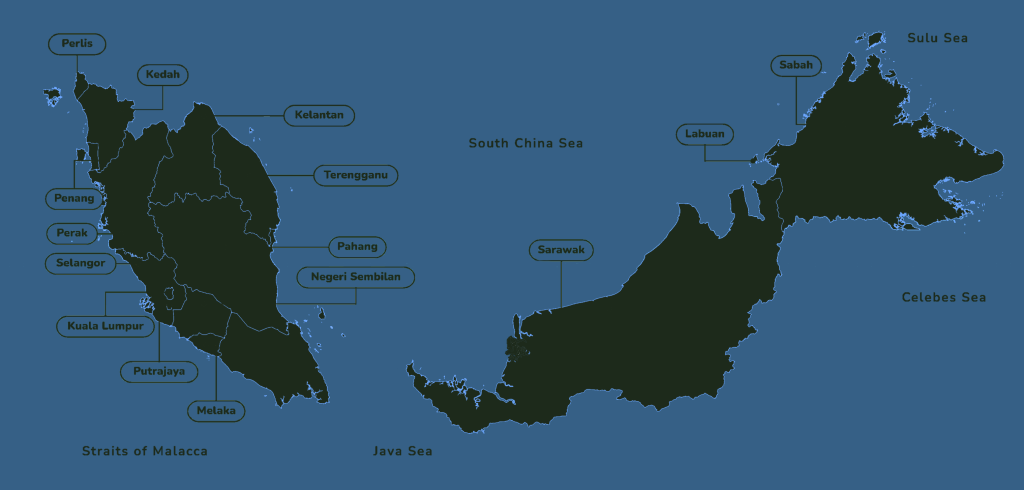
Interesting fact box and need a better map
Kuching: A City That Reveals Itself One Gentle Layer at a Time
Kuching isn’t the sort of place that leaps out shouting for your attention. It prefers subtlety. A slow wave from across the river. A story half‑told. An invitation you don’t realise you’ve accepted until you’re already there, walking along the waterfront with the feeling that you’ve slipped into the rhythm of a city that has absolutely no interest in rushing you.
It’s a place that gives you hints long before you arrive — a pretty riverfront mentioned in passing, a museum that seems more interesting than expected, a reputation for food that quietly grows in your imagination. You picture soft mornings on the water and unhurried evenings under lantern‑lit trees, and without meaning to, you start looking forward to meeting a city you somehow already like.
A Name with Nine Lives and a Thousand Stories
Even Kuching’s name feels like the beginning of a folklore tale.
Maybe it comes from kucing, Malay for “cat.” Maybe from an old Chinese term for “harbour.” Maybe from the cat’s‑eye fruit once grown along the river. No one knows, and the city doesn’t seem bothered about pinning it down. It simply adopts all the theories at once, with a playful confidence you can’t help but admire.
That same humour shows up everywhere — in the roundabout statues, in the unabashed Cat Museum, in the small feline flourishes you start spotting once you know to look. But don’t mistake the whimsy for superficiality. Behind the soft edges lies a city layered with Indigenous histories, Chinese trade, Malay heritage, and a century of rule under the White Rajahs — a blend that shaped Kuching into something distinct, eclectic, and quietly resilient.
Walk through the low-rise streets of old Chinatown and you feel it immediately: the easy blend of heritage shophouses, temples, cafés, and everyday life. Step into the Borneo Cultures Museum and Kuching opens itself further — not loudly, not theatrically, but through room after room of artistry, craft, and tradition that reminds you how deep Sarawak’s story really runs.
Where the River Sets the Pace
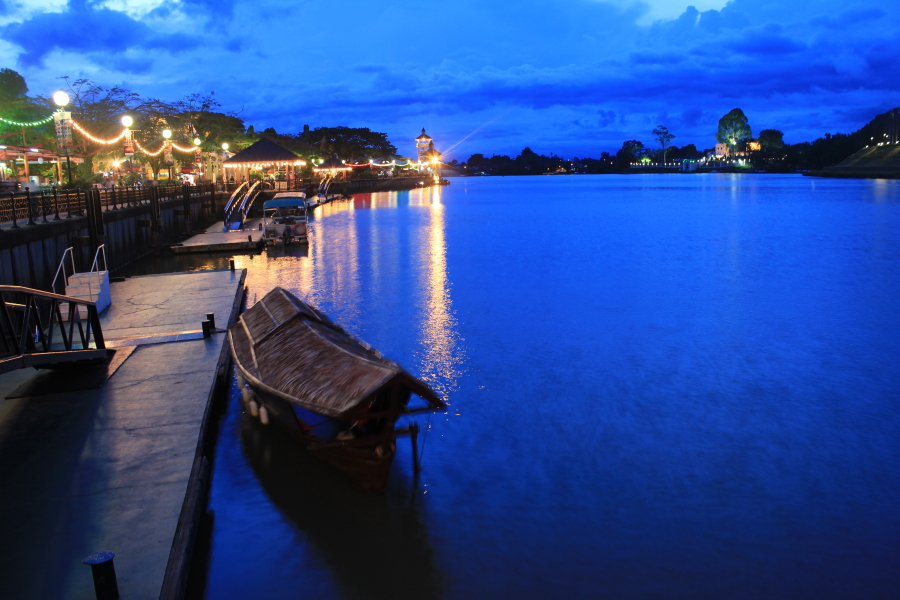
If Kuching has a heartbeat, it’s the river. The Waterfront isn’t just a promenade — it’s the living room of the city. Families drift through in the evening glow, street vendors arrange their snacks, and the little wooden tambang boats cross the water as they’ve done for generations. It’s easy to see why people speak of the place with fondness usually reserved for old friends.
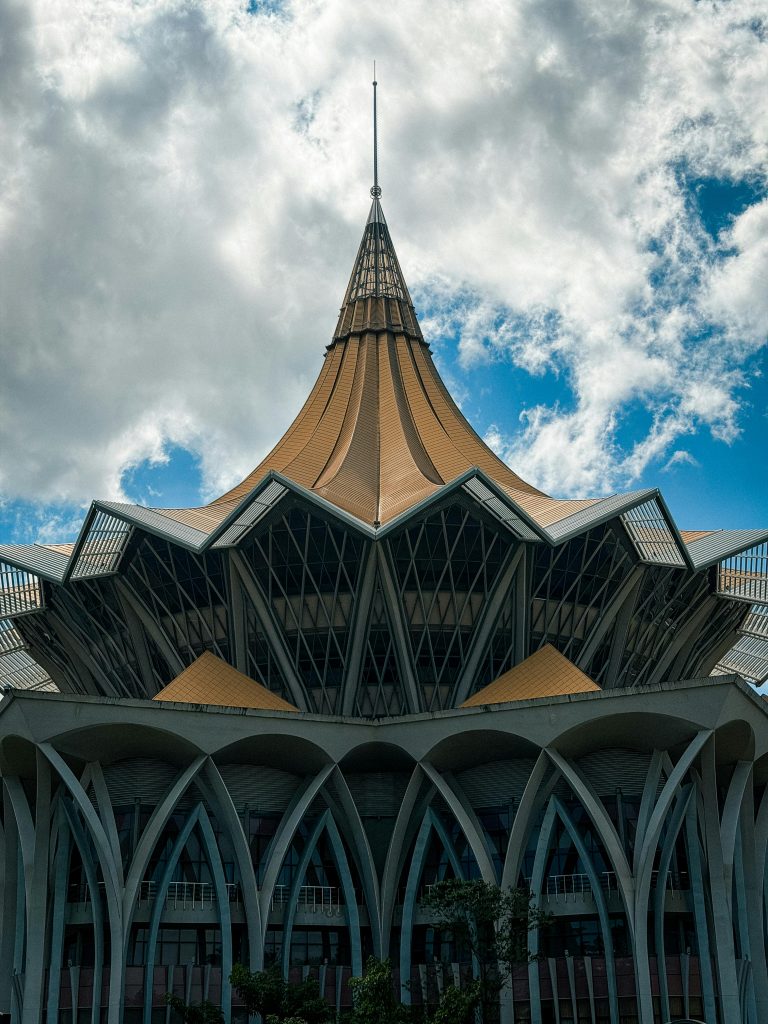
Across the water, the golden roof of the State Legislative Assembly rises like something between a crown and an architectural dare — improbable, striking, somehow perfect in the way landmarks often are when a city grows around them rather than forcing them into place.
A Capital on the Edge of the Wild
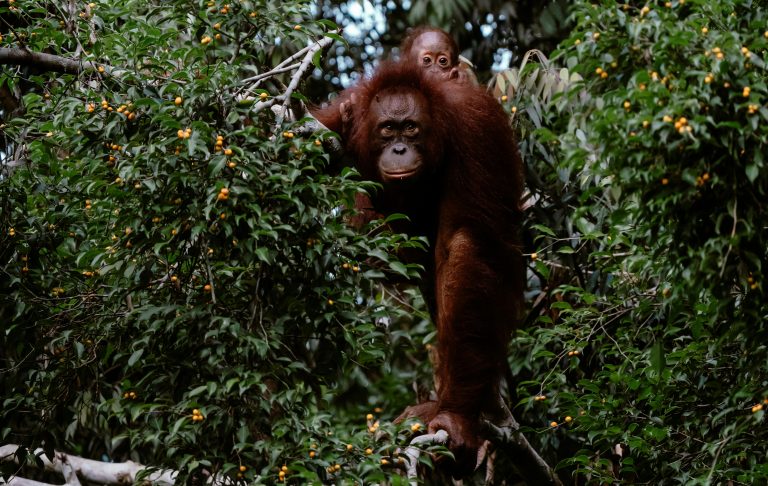
The wonderful trick Kuching plays is proximity. One moment you’re in a laid‑back city with good coffee and galleries, and twenty minutes later you’re watching an orangutan descend from the trees at Semenggoh, reminding you that Borneo’s rainforest is not an abstract concept but a living, breathing neighbour.
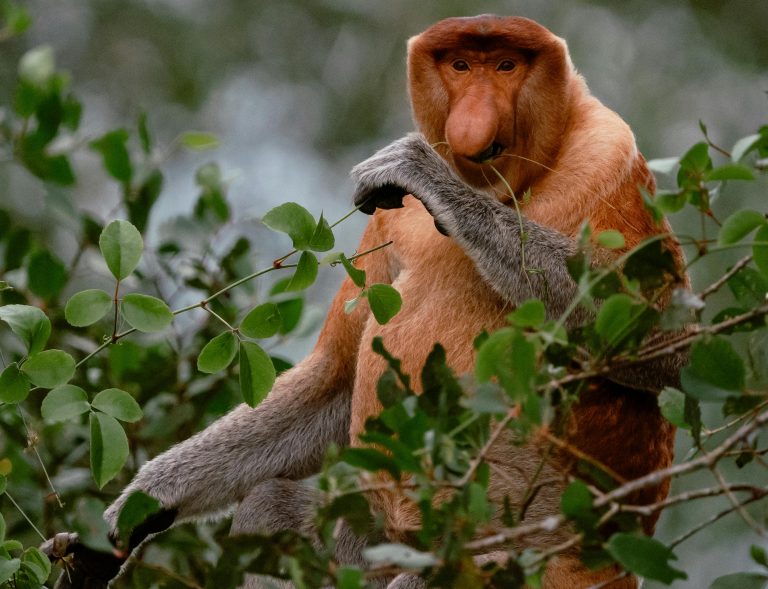
Venture a little farther and Bako National Park unfurls — cliffs, mangroves, jungle trails, strange and endearing proboscis monkeys, quiet beaches where the only sound is the tide breathing in and out.
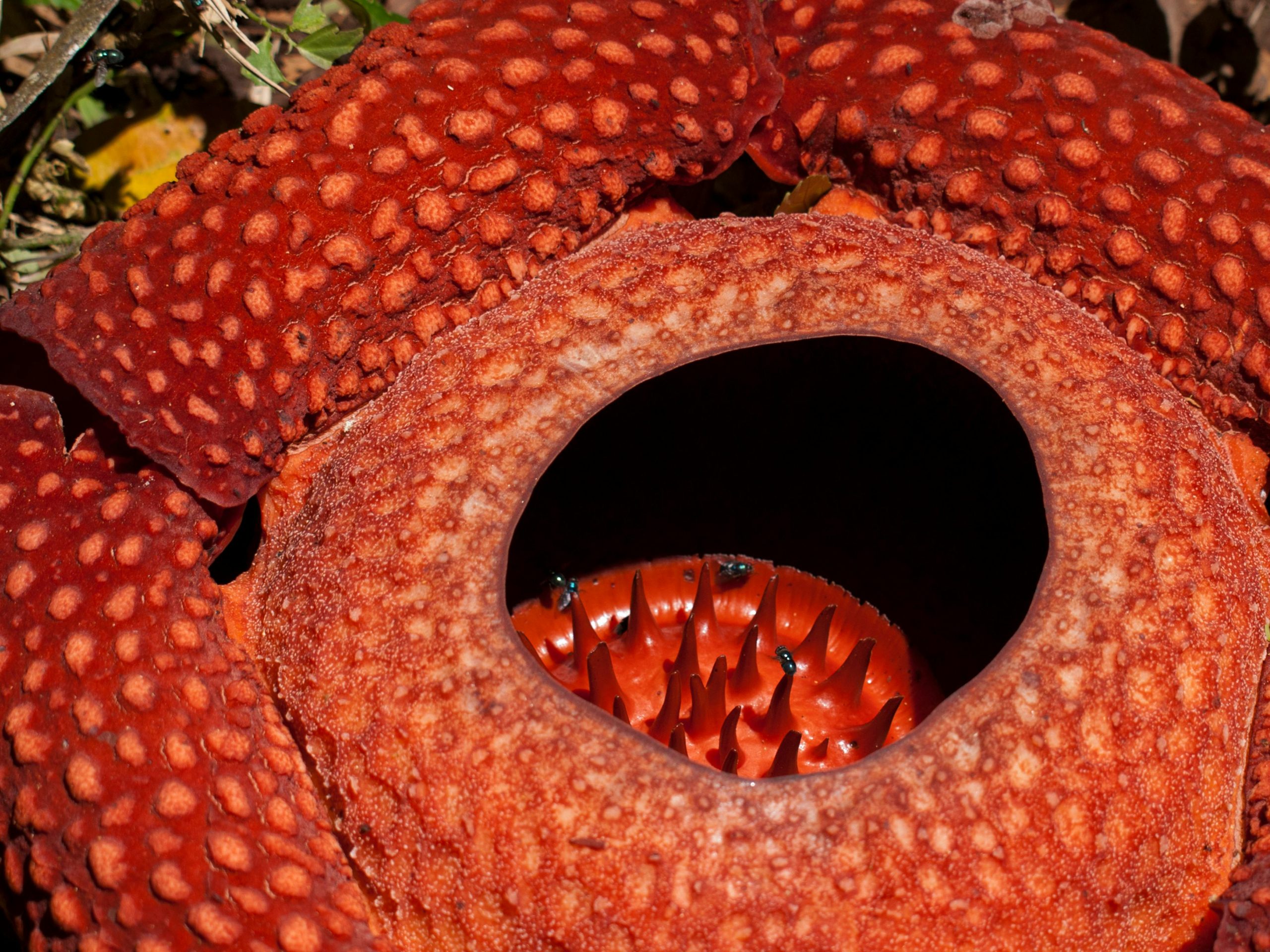
Head in another direction and Gunung Gading might reward you with the world’s largest flower, blooming whenever it pleases, entirely on its own terms.
Out toward Santubong and Damai, mountains meet the sea and the air tastes of salt and rainforest at the same time.
Kuching is a city, yes — but it’s also a gateway, a threshold, a gentle transition between the human world and something older and wilder.
A Food Culture That Welcomes You Like Family
Travellers talk about Kuching’s food with the kind of affection usually reserved for childhood memories.
Sarawak laksa, kolok mee, midin, kuih, coffee (mmm coffee), smoky stalls, communal tables — nothing pretentious, nothing complicated, just the unmistakable pleasure of eating in a place where flavours carry history, migration, and identity in every bowl.
It’s honest food, shared generously, and the sort that has a knack for turning lunch into a slow afternoon.
Why Kuching Stays With You
What makes Kuching different is how little it tries. It doesn’t posture or sell itself with slogans. It simply exists — steady, warm, culturally rich, unhurried — and trusts that you’ll recognise its charm when you feel it. And you do. Not in a single moment, but in a collection of small ones: river reflections, friendly greetings, the scent of spices drifting from a café, the sound of a boat engine across water at dusk.
It’s a city that grows on you slowly, and then all at once.
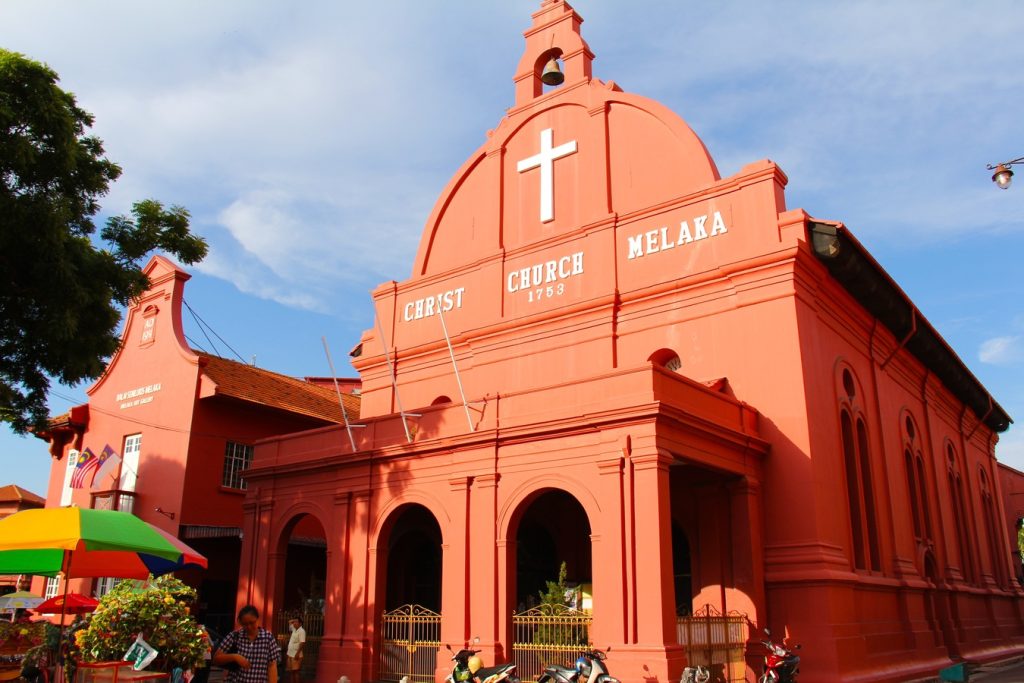
Kuching: A History Carved by Rivers, Sultans, and Adventurers
Before Kuching was a modern capital, it was a riverside settlement under the Sultanate of Brunei — a land threaded with trade, minerals, and longhouse communities deep in the interior. Antimony wealth drew attention; conflict followed. Into this stepped James Brooke, an English adventurer who sailed upriver in 1839 and, through a mix of timing, diplomacy, and opportunism, became the first White Rajah.
For a century, the Brooke dynasty ruled Sarawak as an independent kingdom: part British, part Indigenous, wholly unusual. They built forts, established trade, protected local land rights more than most colonial regimes, and left behind architecture and institutions that still shape the city’s silhouette.
After World War II, Sarawak became a British colony; in 1963, it joined Malaysia. Through every transformation, Kuching adapted — layering its riverine, multicultural past into the calm, confident city it is today.
Things to do in Sarawak
Semenggoh Wildlife Centre — Semi‑Wild Orangutans
Just outside Kuching lies one of Sarawak’s most rewarding wildlife experiences: a patch of protected rainforest where rescued and rehabilitated orangutans live semi‑wild. Semenggoh isn’t a zoo, and it isn’t a show — it’s a forest with orangutans who may or may not turn up, depending entirely on their mood and the availability of fruit. Which is all part of the charm.
Visiting Notes
Opening Hours
Semenggoh runs on a two‑session system built around feeding times — when orangutans might emerge from the trees.
Daily hours:
- Morning: 8:00 am – 10:00 am
- Afternoon: 2:00 pm – 4:00 pm
Feeding times:
- 9:00–10:00 AM
- 3:00–4:00 PM
Arriving 30 minutes early is wise — sometimes an orangutan will wander in before the official session even starts.
Bako National Park
Visiting Notes
Opening Hours
Bako National Park is open daily from 8:00 am to 5:00 pm. (Boats also generally operate within daylight hours only.)
Most people visit from Kuching as a half‑day or full‑day trip, but you can also stay overnight in park lodges for early‑morning wildlife sightings.
Best Time to Visit
Best Months:
- Dry season (roughly April to October)
Trails are more manageable, beaches accessible, and wildlife easier to spot.
Avoid / Use Caution:
- November to March (rainy season)
Some trails become muddy, certain routes may close, and sea conditions can affect boat transfers.
Best Time of Day:
- Early morning — for proboscis monkeys
- Late afternoon — for bearded pigs and coastal wildlife
- Night — if staying over, the forest becomes a glowing chorus of insects and frogs
Costs
Park Entry Fee:
- Foreign adult: RM 20 (£3.80)
- Foreign child: RM 7
(Fees vary slightly by source but are consistently in this range.)
Optional:
Guided tours vary in price but include transport, permits, and logistics.
How to Get There, the journey to Bako is part of the adventure!
Part 1 — Kuching to Bako Village Jetty
By Grab / Taxi:
~30–40 minutes from Kuching, RM 20–35 (£5.70)
By Bus:
Public bus from Kuching to Bako Village (about 45–60 minutes)
- The public bus to Bako Village, Rapid Kuching Bus No. 1, departs from the bus station behind the Open-Air Market area in central Kuching. The bus also picks up passengers at other stops along the river, including the stop next to Gloria Jean’s Coffee opposite the Riverside Majestic Hotel.
- Hourly departures from about 7:00 am to mid/late afternoon (last bus around 5–6 pm).
- Most travellers currently report the fare is RM 3.50–4 (£0.76) depending on the bus.
The return journey, the bus back leaves from the same corner/stop where you’re dropped off in Bako Village, right by the jetty/visitor centre and depart on the hour.
Part 2 — Boat to the Park
At Bako Village Jetty, purchase a boat ticket. The ferry takes 20–25 minutes and lands you directly on the beach — there is no pier, so be prepared to hop out into shallow water.
Boats do not run in bad weather.
Boat Transfer is mandatory:
All visitors must arrive via official boats from Bako Village Jetty.
Typical price range:
- RM 40–50 (£9.00) per person (return) depending on group size
- Minimum boat charges may apply
Cash is recommended.
What to Expect
Bako is essentially a natural theme park with no filters:
Wildlife
- Proboscis monkeys — the stars of the show
- Bearded pigs wandering the HQ area like they’re part of the staff
- Silvered leaf monkeys, macaques, pit vipers
- Kingfishers, hornbills, and all the rainforest extras
No feeding, no interference — animals do their thing, and you’re the guest.
Landscapes
- Mangrove forests alive with mud‑skippers and crabs
- Cream‑coloured beaches tucked between sandstone cliffs
- Inland waterfalls and jungle streams
- Alien‑looking rock formations
- Sun‑bleached sea stacks that look carved on purpose
Trails
There are 15 marked trails, ranging from 30‑minute wanders to all‑day treks.
Highlights include:
- Telok Paku — good for proboscis monkeys
- Telok Pandan Kecil — classic sea‑stack viewpoint
- Lintang Loop — diverse scenery in a single route
Atmosphere
Steamy, wild, unpredictable, and deeply compelling.
A place where the forest hums, the coastline glows, and the wildlife behaves as though humans are merely visiting characters.
What to Wear & Bring
- Trail shoes or sturdy sandals with grip
- Light, breathable clothing
- Plenty of water (very little is sold inside)
- Insect repellent
- Sunscreen
- A waterproof bag for your phone (boats land directly on the beach and phones have an affinity to water)
- Snacks — but keep them buried; macaques know a rustling wrapper when they hear one
And remember the cliche, leave nothing but footprints, take nothing but memories.
Gunung Gading National Park
Gunung Gading National Park sits quietly in southwest Sarawak, near the small town of Lundu, and has the kind of understated presence that makes you underestimate it—right until you step inside. Established in 1983 and opened to the public in 1994, the park was originally created to protect one of Borneo’s great botanical celebrities: the Rafflesia, the world’s largest flower. For years it functioned almost like a botanical vault, shielding the fragile ecosystem where these enormous, slow‑growing blossoms lurk for months and then bloom for only a few days.
But even if you arrive on a non‑Rafflesia day (which is likely—nature has her moods), you’ll quickly realise Gunung Gading is far more than a single plant. The park spreads across the slopes of Mount Gading, a 906‑metre forested massif whose flanks are laced with jungle trails, river valleys, and waterfalls so cool and clear they feel purpose‑built for weary hikers. The rainforest here is dense and humid in that classic Borneo way—ferns, palms, moss‑covered boulders and buttress‑rooted trees forming a living tapestry. It’s quieter than Bako, less theatrical, but layered with a kind of deep, breathing calm.
Gunung Gading’s remoteness gives it a different personality from Kuching’s other parks. It’s not a wildlife‑showcase like Semenggoh, and not an ecosystem sampler like Bako. Instead, it’s about atmosphere: forest light filtering through high canopy, the sound of water moving over stone, and the knowledge that somewhere in the undergrowth, one of the world’s most peculiar flowers is taking shape. Visitors tend to move slower here, not because the trails are difficult (though some can be steep), but because the whole place encourages a quieter pace.
Visiting Notes
Gunung Gading National Park is known for three things:
- The Rafflesia, blooming unpredictably yet spectacularly;
- Its waterfall system, a series of jungle cascades perfect for cooling off; and
- Its tranquil, unhurried character, making it an ideal counterbalance to Sarawak’s livelier wildlife destinations.
Opening Hours
Gunung Gading National Park is open daily, including weekends and public holidays:
8:00 am – 5:00 pm
(Last entry typically around 3:30–4:00 pm so visitors can return safely before closing.)
Rafflesia viewing trails may open or close depending on bloom status and weather.
Entrance Fees
Approximate park entrance prices are:
- Foreign adult: RM 20 (£3.80)
- Foreign child: RM 7
- Malaysian adult: RM 10
- Malaysian child: RM 5
Cash is safest — card facilities are inconsistent.
There is no extra fee to see a Rafflesia bloom, but access may be controlled if the flower is extremely close to the trail or very fragile.
How to Get There
Gunung Gading is located near Lundu, about 1 hour 45 minutes from Kuching by road.
By Bus (Cheapest)
- Take the Sarawak Transport Company (STC) bus from Kuching Sentral towards Lundu town.
- From Lundu town, take a short taxi or Grab ride (10 minutes) to the park entrance.
- Bus schedules can be irregular, so morning departures are safest.
By Grab / Taxi (Easiest)
- Direct Kuching → Gunung Gading
- Takes 1.5–2 hours depending on traffic.
- Expect RM 80–150 (upto £28.50) each way depending on time of day and availability.
Tours
Several operators run Rafflesia‑focused or waterfall trekking trips, including transport.
The Trails
Gunung Gading has several marked trails, mostly jungle‑covered, shady, and well‑maintained.
The Rafflesia Trails
Difficulty: Easy–Moderate
Short, ranger‑approved paths leading to current or recent blooms.
Can be muddy, steep in parts, and occasionally closed after rain.
The Waterfall Trail (the classic one)
Difficulty: Moderate
Time: 30 minutes–2 hours depending how far you go
Multi‑tiered waterfalls:
- Waterfall 1: closest, good for a quick dip
- Waterfall 3: further, with a deeper pool
- Waterfall 7: a long, full‑day effort for experienced hikers
The Summit Trail (Gunung Gading Peak)
Difficulty: Hard
Time: 7–8 hours return
Steep, sweaty, rewarding — not essential for most visitors.
Visit Duration
- Half‑day: Rafflesia + Waterfall 1
- Full‑day (recommended): Rafflesia + Waterfalls 1–3 + river break
- Extended adventure: Summit Trail + waterfalls (8+ hrs)
Best Time to Visit
- Dry season (April–October) is best for trekking and waterfall access.
- Rafflesia blooms any month of the year, unpredictably.
- Trails may close after heavy rain.
Rafflesia: What You Need to Know
Gunung Gading is one of the easiest places in the world to see a Rafflesia, but sightings depend entirely on nature.
Bloom Facts
- A bud takes 9–12 months to mature.
- The flower blooms for only 3–5 days.
- Day 1: Bright orange and dramatic
- Day 3+: Begins to darken and collapse
How to Know if One Is Blooming (Trust me, you will know! It’s not known as the corpse flower for nothing.)
The park rangers update a daily bloom board at the entrance.
When a flower is present, they mark the trail route and occasionally escort visitors if access is sensitive.
Photography
- Flash is discouraged. This is primarily to protect the delicate, rare plant from potential damage and to respect the environment in which it grows. While the impact of a single flash is debated, the cumulative effect of hundreds of flashes from tourists can degrade the flower.
- Keep your distance — the petals bruise easily
- The smell is… atmospheric (rotting meat), but usually mild outdoors

Wildlife
Beyond Rafflesia, you may encounter:
- Butterflies and moths
- Silvered langurs
- Monitor lizards
- Hornbills (occasionally)
- Leaf insects and stick insects
- Streams full of tiny forest fish
Gunung Gading is quieter and more subtle than Bako — wildlife appears, but only if you move slowly enough for the forest to trust you.
Facilities at the Park HQ
- Visitor registration office
- Toilets
- Basic changing areas
- Information boards
- Rafflesia bloom updates
- Sheltered rest areas
- Limited snacks at the entrance (bring your own food)
There is no café or restaurant inside the park.
What to Bring
- Proper walking shoes or sandals with grip
- Water (minimum 1–2 litres per person)
- Snacks or a packed lunch
- Reef‑safe insect repellent
- Sunscreen
- Lightweight rain jacket — it’s rainforest, after all
- Swimwear + towel for the waterfalls
- A waterproof phone pouch or dry bag
Borneo Cultures Museum
Visiting Notes
Opening Hours
Mon–Fri: 9:00 am – 4:45 pm
Sat, Sun & Public Holidays: 9:30 am – 4:30 pm
Last admission: 4:00 pm
Entrance Fees (2026)
- International visitors (18–60): RM 50 (£9.50), half price for those over 61
- International teens (13–17): RM 25
- International children (under 12): RM 20
- Discounts apply for Malaysians and Sarawakians.
- Fast visit: 1.5–2 hours
- Recommended: 2.5–4 hours
- Slow, immersive visit: 4+ hours
Location & Getting There
- Address: Jalan Tun Abang Haji Openg, Kuching
- Very central, walkable from Kuching Waterfront.
Kuching Cat Museum
This museum is quirky, hilarious, and absolutely on‑brand for Kuching.
Visiting Notes
Opening Hours
- Daily: 9:00 am – 4:30 pm
- Closed on major public holidays
Entrance Fees
- Adults (13+): RM 3 (£0.57)
- Children (3–12): RM 2
- Under 3 / Disabled visitors: Free
- Camera/smartphone fee: RM 3–5 (cash only)
Location
- DBKU Headquarters, Bukit Siol (Siol Hill)
- Address: Jalan Semariang, Petra Jaya, Kuching
Getting There
- Grab / Taxi: 10–20 minutes from Kuching Waterfront — easiest option.
- Car: Parking available at DBKU.
- Bus: Some city buses reach Petra Jaya (Metro 103), but services are infrequent; not recommended unless you enjoy guessing timetables.