

Travel guides and resources
Malaysia:
Central Highlands
Where Cool Hills Meet Ancient Rainforest
Cameron Highlands — Cool Air, Quiet Hills, and A Cup of Tea
There’s a point on the winding road up to the Cameron Highlands where the air suddenly shifts. The humidity slips away, the temperature drops, and it feels as if someone has quietly lifted you out of Malaysia and set you down somewhere softer, calmer—somewhere that invites you to breathe properly again.
The Highlands don’t announce themselves with dramatic peaks or neon‑bright attractions. They reveal themselves slowly: a curve in the road, a tea‑scented breeze, the sight of endless rolling green stitched neatly across the hills. It’s a place that feels like it’s been paused mid‑exhale.
A Landscape Sewn From Tea Leaves
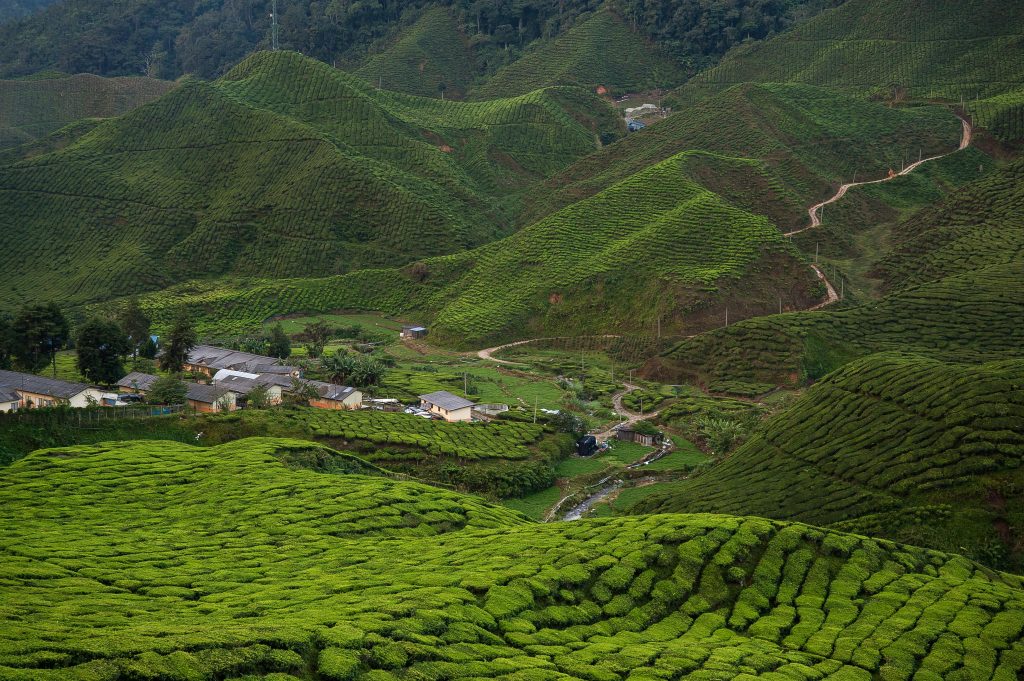
Tea plantations are the Highlands’ version of beaches—vast open spaces that catch the light differently depending on the hour and your mood. BOH and Bharat are the headliners, but the real charm is simply standing there, watching the ridges ripple across the horizon like a corduroy blanket.
It’s easy to imagine the early colonial surveyors stumbling upon this place and stopping in their tracks—not because it was grand, but because it was gentle.
Here, your day quickly adopts a new rhythm:
Walk. Sip tea. Pause. Repeat.
Trails
The Cameron Highlands are famed for their trekking routes, many of which begin behind Tanah Rata. Each path feels like a small adventure: moss crawling over roots, mist hanging just above the trees, and the occasional glimpse of sunlight through the forest canopy. Some trails end at waterfalls, others at viewpoints, and a few simply fade into the greenery. This is not a place for conquering mountains.
Why Hike in the Cameron Highlands?
- Cool climate: Perfect for long walks without tropical heat.
- Diverse terrain: Mossy forests, tea plantations, jungle ridges, waterfalls.
- Various levels of difficulty: From gentle forest strolls to challenging summit routes.
- Rich history: Trails originate from 1960s military paths, adding a sense of heritage.
Strawberries, Lavender, and Horticulture in the Highlands
The Cameron Highlands is one of Malaysia’s primary high‑altitude farming regions, and its cool climate supports crops rarely grown in the country’s lowlands. Visitors will find a concentration of strawberry farms, lavender gardens, cactus centres, and bee farms, many of which are open to the public for tours and produce tasting. These agricultural attractions have become a defining feature of the area, reflecting both the region’s suitability for temperate‑climate plants and its development as a visitor‑friendly horticultural hub.
Strawberries are among the Highlands’ most recognisable crops. They grow well here due to lower temperatures and controlled farm environments, and most farms offer fresh berries, juices, jams, and desserts. While the flavour varies by farm and growing conditions, many visitors associate the Cameron Highlands with particularly fresh, fragrant berries—often served with cream, a common offering at cafés and farm kiosks throughout the region.
Where to Stay and Stroll: Tanah Rata & Brinchang
Tanah Rata and Brinchang serve as the two main visitor centres of the Cameron Highlands. Their purpose is functional rather than architectural: both towns provide accommodation, cafés, restaurants, tour pick‑up points, and access to the region’s hiking trails and agricultural attractions. They are designed as easy bases for exploring the Highlands rather than destinations in their own right.
Afternoons often bring short periods of rain, making Tanah Rata’s compact town centre convenient for walking between cafés, bakeries, and small local shops selling regional products such as strawberry jam, honey, and knitwear. Brinchang, slightly busier, offers night markets on weekends and is closer to many farms and gardens.
Evenings across both towns are typically quiet, with cooler temperatures due to the elevation. Mornings tend to be calm, providing good conditions for walking, sightseeing, or joining guided tours before the mid‑day crowds arrive.
The Cameron Highlands’ Montane Cloud Forest
Located near the summit of Gunung Brinchang, the Mossy Forest is one of the Cameron Highlands’ most distinctive natural environments. Its high elevation creates consistently cool, humid conditions that support dense moss growth on trees, roots, and forest floor. This ecosystem is classified as a montane cloud forest, where mist and fog are common throughout the day.
Visitors typically access the area via the boardwalk section managed for conservation and safety. The route provides information on local flora, including orchids, pitcher plants, ferns, and medicinal species native to high-altitude forests. Because the terrain off the designated path can be steep and slippery, guided tours are recommended for those wishing to explore beyond the boardwalk.
Walking through the Mossy Forest is generally slow-paced due to uneven ground and the fragile environment, and visitors are encouraged to move carefully to minimise impact on the vegetation.
Why the Highlands Leave a Lasting Impression
The Cameron Highlands is known less for dramatic landmarks and more for the overall experience it provides. Its higher elevation offers consistently cooler temperatures than the lowlands, creating a comfortable environment for walking, sightseeing, and outdoor activities. The area’s relative quietness, combined with its mix of cultivated farmland and natural highland scenery, makes it a popular retreat for travellers seeking a slower pace.
Many accommodations and cafés take advantage of the climate by offering outdoor seating and views over nearby hills, gardens, or tea plantations. Mornings tend to be calm and clear, making them well‑suited for hikes, guided tours, or simply enjoying the surroundings before visitor activity increases later in the day. The region’s atmosphere and setting often appeal to those looking for a break from urban environments, contributing to its reputation as a restorative destination.
Trails of the Cameron Highlands
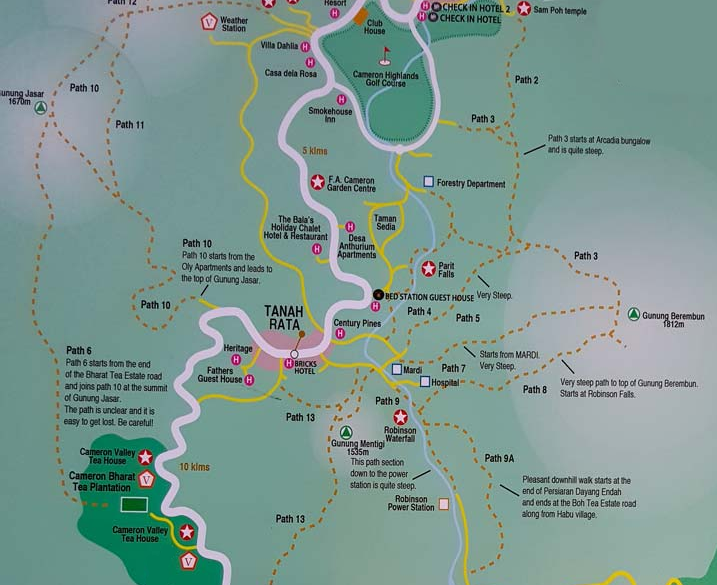
The Cameron Highlands offer 14 jungle and mountain trails, originally built for military patrols, now forming one of Malaysia’s best hiking networks. The cool climate, mossy forests and tea‑covered hills make these routes rewarding for both casual walkers and serious trekkers.
Trail 1 – Brinchang Town → Mossy Forest (New Trail 1)
- Length: ~3.5 km
- Time: 3–4 hours
- Difficulty: Difficult
- Start/End: Starts north of Brinchang Town → ends at Mossy Forest entrance
- Why do it: Steep jungle sections, ropes for ascent, and access to the atmospheric Mossy Forest. Requires a guide for forest entry.
Trail 2 – Sam Poh Buddhist Temple → Trail 3
- Length: Unmarked, ~1.5 hrs
- Difficulty: Difficult
- Start/End: Sam Poh Buddhist Temple → merges with Trail 3
- Why do it: A wilder, rougher route for hikers who enjoy unmarked terrain.
Trail 3 – Arcadia Cottage → Gunung Berembun
- Length: ~2.5 hrs one-way
- Difficulty: Moderate–Tough
- Start/End: Arcadia Cottage near the golf course → summit of Gunung Berembun (1,841m)
- Why do it: A classic half‑day trek with steep climbs and sweeping forest views. Often paired with Trails 7 or 8.
Trail 4 – Forestry Department → Parit Waterfall
- Length: 1.8 km
- Time: ~30 minutes
- Difficulty: Easy
- Start/End: Forestry Department → Parit Waterfall
- Why do it: A short, paved walk ideal for beginners; tranquil and photogenic waterfall.
Trail 5 – MARDI → Trail 3
- Length: 1.6 km
- Time: ~1 hour
- Difficulty: Easy–Moderate
- Start/End: MARDI complex → connects to Trail 3
- Why do it: Gentle forest path with orchids and pitcher plants; useful connector for longer mountain routes.
Trail 6 – Bharat Tea Plantation → Mount Jasar
- Length: 4.5 km
- Time: 1.5–2.5 hours
- Difficulty: Moderate
- Start/End: Start at Mount Jasar → descend to Bharat Tea Plantation
- Why do it: Often described as the most scenic trail — jungle, tea fields, Orang Asli villages, and panoramic highland views.
Trail 7 – MARDI → Gunung Beremban
- Length: ~2–3 hours
- Difficulty: Moderate
- Start/End: Starts at MARDI → climbs to Gunung Beremban
- Why do it: A quieter ascent alternative to Trails 3 & 8, offering a steady climb through lush jungle leading to panoramic views at the top.
Trail 8 – Robinson Waterfall → Gunung Beremban
- Length: ~2–3 hours
- Difficulty: Moderate–Difficult
- Start/End: Starts at Robinson Waterfall near Tanah Rata → Gunung Beremban summit
- Why do it: Combines waterfall scenery with steep jungle ascents; popular with more experienced hikers and typically paired with Trail 3 for a loop.
Trail 9 – Tanah Rata → Robinson Falls → Weather Station
- Length: Varies (~2 hours)
- Difficulty: Easy–Moderate
- Start/End: Begins in Tanah Rata → passes Robinson Falls → ends near the Weather Station
- Why do it: Ideal for casual hikers; offers a mix of waterfall views and gentle forest sections, great for photography and relaxed walks.
Trail 10 – Tanah Rata → Gunung Jasar
- Length: ~2–3 hours
- Difficulty: Moderate
- Start/End: Starts in Tanah Rata → ascends to Gunung Jasar
- Why do it: A favourite for sunrise or sunset hikes; rewarding summit views overlooking green valleys and tea fields. Easily combined with Trail 6.
Trail 11 – CLOSED
- Note: Officially closed and not recommended for hiking.
Trail 12 – CLOSED
- Note: Officially closed and not recommended for hiking.
Trail 13 – Cameronian Holiday Inn → Trail 14
- Length: ~1–2 hours
- Difficulty: Easy–Moderate
- Start/End: Starts at Cameronian Holiday Inn → connects directly to Trail 14
- Why do it: A smooth connector trail great for building longer routes; offers calm forest sections suitable for families or slower-paced hikers.
Trail 14 – Trail 13 → Gunung Mentigi → Tanah Rata
- Length: ~2–3 hours
- Difficulty: Moderate
- Start/End: Begins where Trail 13 ends → climbs to Gunung Mentigi → finishes in Tanah Rata
- Why do it: A scenic, varied hike combining forest canopy, ridge walking, and a satisfying descent back into town; excellent for a half‑day outing.
Here is what it looks like on Google Maps
Taman Negara — Malaysia’s Oldest Rainforest Reserve
Taman Negara is one of Malaysia’s most significant protected areas, a national park that encompasses over 4,300 square kilometres of lowland rainforest estimated to be more than 130 million years old. It spans three states—Pahang, Kelantan, and Terengganu—with the Kuala Tahan entrance in Pahang serving as the primary gateway for visitors. This is where most accommodation, park offices, guided activities, and river transport options are found.
A Landscape Shaped by Time
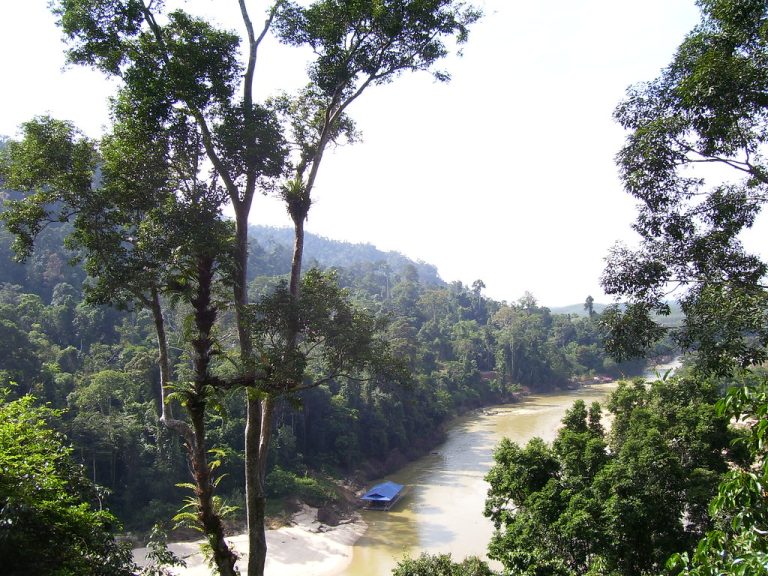
The park’s environment represents one of the world’s oldest continuously surviving rainforests. Its ecosystem includes ancient hardwood trees, dense understorey vegetation, limestone outcrops, river floodplains, and habitat for endangered species such as the Malayan tapir, Asian elephant, and Malayan tiger. Wildlife is elusive, but signs of activity—tracks, calls, nests—are common along the trails and riverbanks.
Kuala Tahan: The Visitor Base
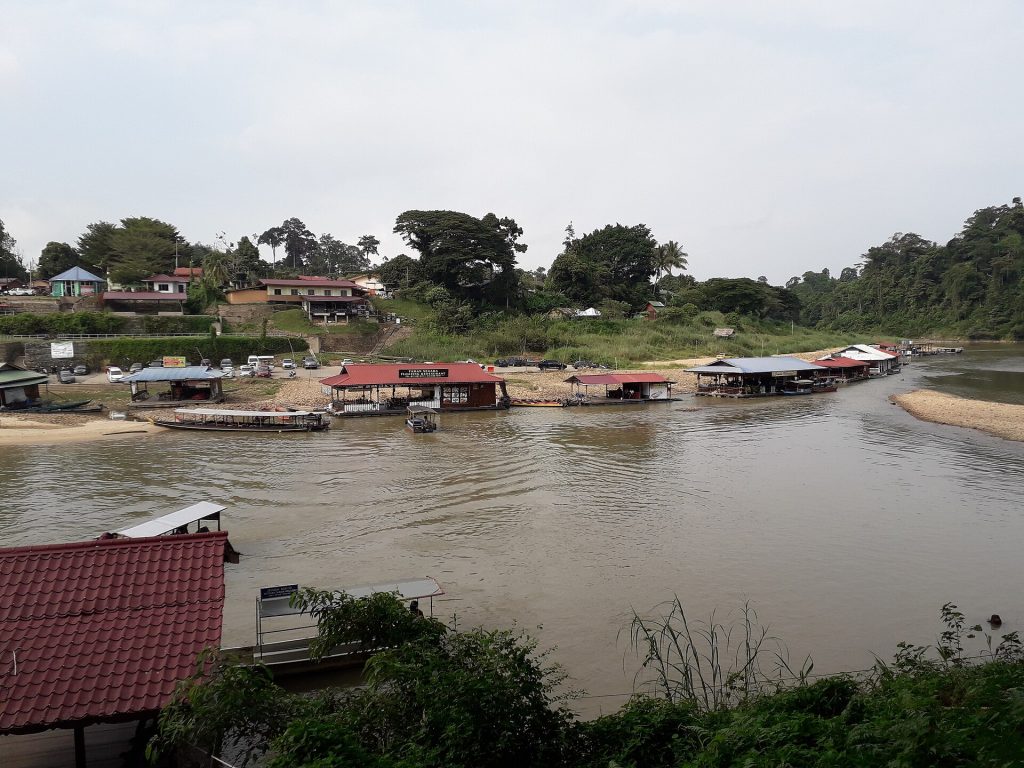
Kuala Tahan acts as the practical centre for exploring Taman Negara. The village offers accommodations ranging from basic guesthouses to mid-range lodges, along with local restaurants and boat services across the Tembeling River to the park headquarters. Guided tours, night walks, and multi-day treks typically depart from here. The area is structured to support visitors while maintaining minimal impact on the surrounding forest.
Activities and Access
Most travellers begin with short, accessible experiences:
- Canopy Walkway: A suspended walkway system offering views of the middle forest layer.
- Bukit Teresek Trail: A well-marked hike with viewpoints overlooking the forest canopy and Mount Tahan on clear days.
- River Trips: Longboat journeys along the Tahan or Tembeling Rivers, including visits to riverine rapids or Orang Asli settlements.
- Night Walks: Ranger-led walks near park HQ to observe nocturnal insects, reptiles, and plant activity.
More advanced routes—such as the trek to Gunung Tahan, the highest peak in Peninsular Malaysia—require permits and experienced guides.
Climate and Conditions
Taman Negara is hot and humid year-round. Rainfall is frequent, particularly from November to January, and trails can become muddy and slippery. Visitors are advised to prepare properly for tropical conditions: sturdy footwear, insect repellent, adequate water, and weather-appropriate clothing.
Why Taman Negara Matters
The park plays a critical role in Malaysia’s conservation strategy by protecting an extensive section of lowland dipterocarp forest that has largely disappeared elsewhere. It functions as a biodiversity reservoir and a field site for scientific research, while also providing controlled access for eco‑tourism. For visitors, Taman Negara offers the opportunity to experience a rainforest ecosystem that has remained relatively unchanged for millions of years.
Quick Facts: Costs & Transport
Getting to Kuala Tahan
- From Kuala Lumpur: Travel by bus to Jerantut (approx. 3–4 hrs), then continue by local bus or taxi to Kuala Tahan (approx. 1 hr).
- Self‑drive: Around 3.5 hrs from KL via Route E8. Parking is available in the village.
- Traditional river route: From Kuala Tembeling Jetty, longboats travel upriver to Kuala Tahan (approx. 2.5–3 hrs). Schedules depend on river conditions.
- From other regions: Connections from the Cameron Highlands or Kuantan typically route through Jerantut.
Park Fees
- Entrance permit required for all visitors (issued at park HQ).
- Camera/video license charged separately.
Check the Pahang National Park website for latest prices. Currently, entrance permits are RM1.00 per person. Fishing license costs RM10.00 per fishing rod and a camera license is RM5.00 per camera.
Activity Costs
- Canopy Walkway: Fixed per‑person entry fee. See the note below.
- Guided hikes: Bukit Teresek, night walks, and short jungle routes are priced per activity or per group.
- River trips: Longboat journeys (rapids, villages, or wildlife routes) vary by itinerary and operator.
Accommodation
- Kuala Tahan offers budget guesthouses to mid‑range lodges, generally more affordable than major resort towns.
- Advance booking is recommended in peak periods.
Practical Notes
- Cash is essential for small shops, local transport, and many tours.
- Weather can affect boat services and trail conditions, especially during the monsoon months.
Canopy Walkways
As of March 2026, the Taman Negara canopy walkways are closed. The Bukit Teresek canopy walkway (530m) was damaged by a fallen tree and has been fully closed since September 2024. Repair work began in 2025 but has not been completed. The new Seberang Ara canopy walkway (700m) was completed but never opened due to structural damage, also caused by fallen trees. Authorities are still assessing the extent of repairs required.