

Travel guides and resources
Indonesia: Lombok
Lombok: An Island of Quiet Corners and Slow Journeys
A Brief History of Lombok
Lombok’s story is shaped by waves of migration, kingdoms, trade and cultural interweaving. For centuries, the island was home to the Sasak people, whose traditions, language and architecture still define much of Lombok’s identity today. From the 16th century onward, Lombok found itself influenced by powerful neighbours—first the Balinese, who established several western districts and introduced aspects of Hindu culture, and then the Makassarese and Buginese traders who brought new connections across the archipelago. In the late 19th century, Dutch colonial forces seized control after a series of conflicts, weaving Lombok into the wider narrative of the Dutch East Indies.
Independence in the mid‑20th century brought change but also continuity: villages still celebrate age-old ceremonies, weaving traditions thrive, and the blend of Islamic and ancestral customs gives the island a character distinct from Bali yet equally compelling. Today, traces of Lombok’s layered past appear everywhere—from the Balinese temples scattered across the west to the traditional Sasak villages inland—quiet reminders that the island’s calm exterior has been shaped by centuries of movement, resilience and exchange.
Visiting Lombok
Lombok is just a short ferry ride east of Bali and west of Sumbawa, forming part of Indonesia’s Lesser Sunda Islands. Covering around 4,725 square kilometres and home to over three million people, the island combines dramatic mountain landscapes, lush forests, fertile valleys, and long, untouched coastlines. Its beauty is unmistakable—and despite its increasing popularity, there are still quiet corners where time seems to slow down.
I’ll admit, I was a little disappointed to read that Lombok is “fast becoming the go-to place in Indonesia”. I had quietly hoped to slip onto the island for a few blissfully Instagram-free days. But with the island’s mix of volcanic ridges, hidden bays, traditional villages and reef-lined waters, it’s easy to see why word is getting out.
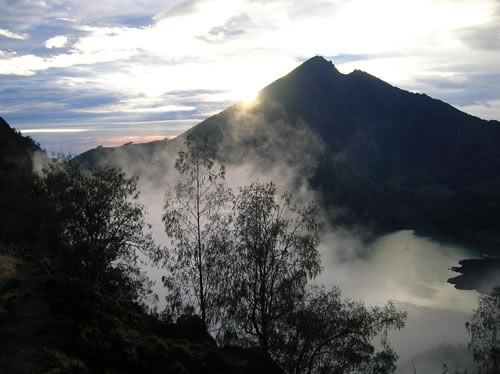
We have no plans to tackle Mount Rinjani—one of Indonesia’s highest and most formidable volcanoes—however stunning the views from its rim might be. Nor will we be heading to the island’s southern beaches for surfing (though the coastline does look very tempting) or spending much time in Mataram. Instead, our intention is simple: get off the plane, find a taxi, and make our way directly to Sekotong in southwest Lombok.
Sekotong: Quiet Shores & Small Islands
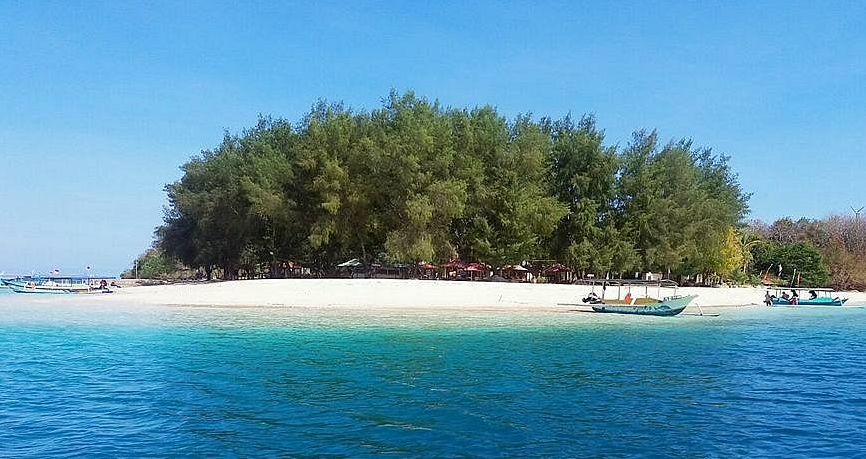
Sekotong remains delightfully off the beaten track, though it’s hard to understand why. The region offers sweeping white-sand beaches, quiet coves, coral-rich waters, and a near‑scattered chain of tiny islands perfect for slow boat trips and day explorations. Between the diving opportunities, the laid-back pace, and the gentle rhythm of coastal life, it feels like the perfect place to exhale.
Our goal here is unmistakably simple: relax. With a few days at leisure, we’ll likely take a boat trip out to the little island of Gili Kedis—a sand‑ringed gem barely big enough for a hammock—as well as make good use of the hotel’s snorkelling gear. If we’re feeling energetic, we might walk up Bukit Baital Jemur. At roughly 150 metres high, it’s certainly no alpine expedition, and offers views without the need for oxygen tanks. The only challenge, it seems, is the hotel search—prices appear to have doubled since we first looked, so a Plan B may be on the horizon.
Heading North: Senggigi… and Then a Change of Plan
From Sekotong, the original idea was to head north for a few days of well‑earned idleness in Senggigi. Once promoted as Lombok’s main tourist strip, the area saw significant development in the late nineties. But regional instability in the early 2000s—including riots triggered by extremist groups in 2000 and the Bali bombing in 2002—halted progress. As a result, the Gili Islands to the north and Kuta to the south surged ahead, leaving Senggigi quieter and less developed than once envisioned.
However, after some reflection, we decided to trade “doing nothing” for something a little different.
Senaru: Cool Air & Waterfalls
Our revised plan takes us to Senaru, perched on the northern slopes of Mount Rinjani, at that lovely altitude where the air thins just enough to feel clean again and the world takes on that mist‑and‑mountain softness you only get in the highlands. It’s the sort of place where mornings start cool and clear, afternoons drift by under slow‑moving cloud, and the jungle seems to lean in protectively around the village. People describe it as the “base camp” for Rinjani trekkers, which is technically true but perhaps a slightly grand term making it sound far busier and more rugged than it is, for trekkers heading up toward Rinjani’s rim, but we’ll be taking a gentler approach.
In reality, Senaru feels surprisingly gentle — a little pocket of calm carved into the hillside — and an easy place to simply exist for a few days.
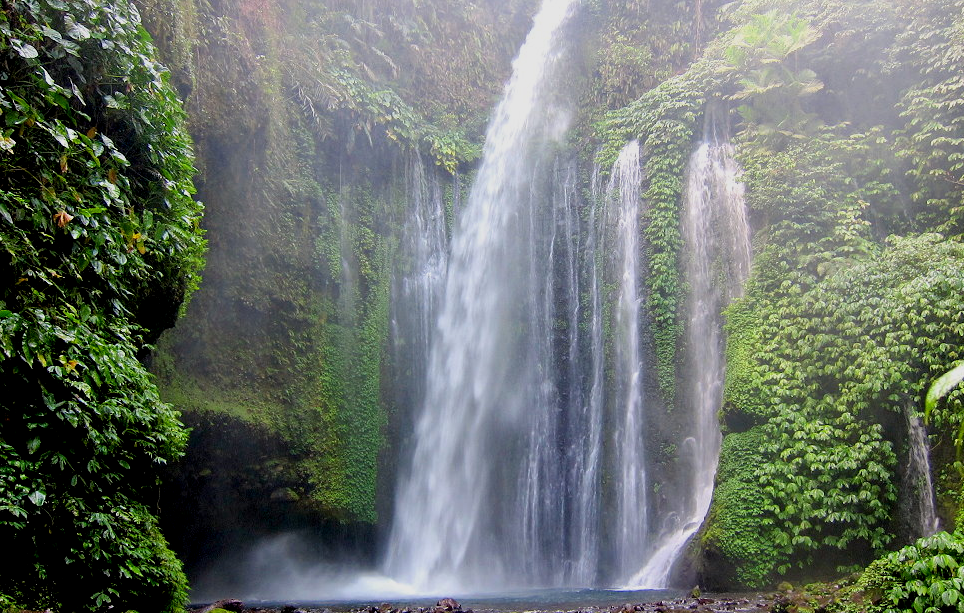
The draw to the area are the waterfalls. Sendang Gile is the first: a tall, elegant sheet of water tucked into the forest, reached by a short wander down shaded steps. Then comes Tiu Kelep, the one everyone secretly came for.
Sendang Gile (Easy‑Moderate)
A short, shaded wander down a set of steps — enough to feel like you’ve “earned it,” but not enough to make you question your choices. Ideal for anyone who likes their waterfalls accessible and their effort minimal.
Tiu Kelep (Moderate, with a dash of adventure)
Senaru is that perfect middle ground between adventure and ease: fresh mountain air, paths that make you feel mildly heroic without actually suffering for it, and waterfalls that reward every step. It’s quieter than the coast, greener than you expect, and just remote enough to feel special — the kind of place you end up liking far more than you meant to. I am really looking forward to it!
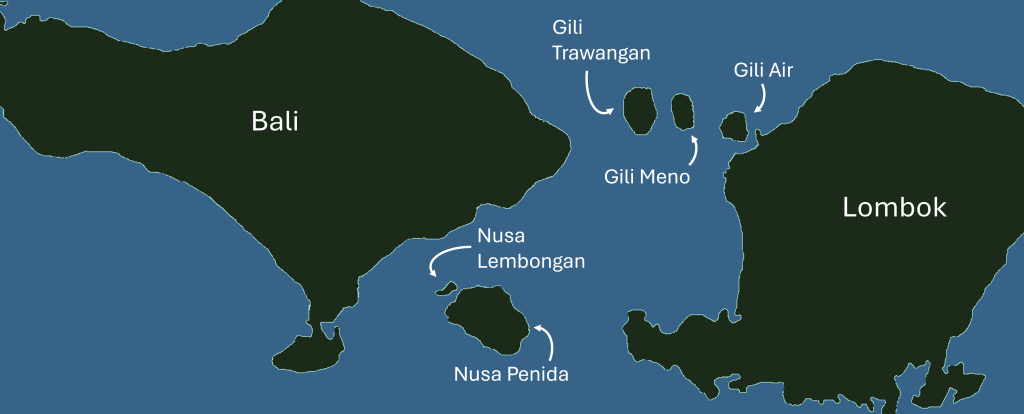
Lombok may sit quietly beside Bali, but it holds an impressive diversity within its shores. Slightly larger than its neighbour at around 80km from north to south and 70km from east to west, the island contains everything from soaring volcanic slopes and lush forests to sweeping rice fields, hidden bays, and reef‑lined coastlines. Dominated by the massive presence of Mount Rinjani—one of Indonesia’s highest volcanoes—Lombok’s landscapes shift quickly between cool mountain air, fertile valleys, arid eastern plains, and warm turquoise seas. It is an island of contrasts, with scenery that feels expansive yet wonderfully easy to explore.
Quick Info Box
Difficulty
- Sendang Gile: Easy–moderate; a short downhill walk with some steps.
- Tiu Kelep: Moderate; includes a longer forest trail, river crossings, and mossy paths.
Estimated Time
- Sendang Gile: 15–20 minutes each way (short, shaded, straightforward).
- Tiu Kelep: 40–50 minutes each way (deeper jungle walk with water crossings).
Cost
- Entrance fee: IDR 20,000 (£0.88) per person for access to both waterfalls.
- Guide (common practice): ~ IDR 250,000 (£11.00) per group, recommended for navigating river crossings and supporting the local community.
- Parking: Free
What to Wear
- Footwear:
- Sendang Gile → walking shoes or sturdy sandals.
- Tiu Kelep → water shoes or grippy sandals (you will get wet).
- Clothing: Quick‑dry layers or swimwear under lightweight clothes.
- Extras: Small towel, waterproof bag for phone (because of their natural affinity to water), and a dry change if you plan to swim.
What to Expect
- Sendang Gile: An easy wander through cool, shaded forest ending at a tall, elegant cascade — refreshing spray guaranteed.
- Tiu Kelep: A more adventurous trail with river crossings leading to a dramatic multi‑tiered waterfall draped in jungle mist. Cool plunge pools and cinematic views await.
Visiting notes for Lombok
Transport on Lombok is refreshingly uncomplicated, although public transport is somewhat limited:
- Taxis are readily available at the airport and in larger towns; Blue Bird taxis are generally reliable. There is no Grab or Gojek in Lombok
- Private drivers are easy to arrange through hotels and offer flexibility for exploring areas like Sekotong or Senaru where public transport is limited.
A possible transfer service: WhatsApp +62 817 369 010 (min. a day in advance), or email: trekkingrinjani@gmail.com, who can provide a private transfer and send their representative to meet you with a paging board. See their page for more info: Private Transfer in Lembar harbour (Point to Point).
- Scooters are widely used and popular with visitors, though road conditions vary; confidence and caution go hand-in-hand here.
- Boats and island‑hopping services can be arranged for trips to Gili Kedis and the nearby “secret Gilis.”
Best Time to Visit
The dry season (May to September) offers sunny days, calmer seas and pleasant trekking conditions. The wet season (October to April) brings higher humidity and occasional downpours, but also lush landscapes and quieter destinations—ideal if you prefer fewer crowds and a slower pace.
Money & Practicalities
Lombok uses the Indonesian Rupiah (IDR). ATMs are common in Mataram, Kuta and Senggigi, but more limited in remote areas like Sekotong and Senaru, so it’s wise to withdraw cash in advance.
- Credit cards are accepted in hotels and larger restaurants, but small shops often prefer cash.
- Internet access is decent, with most hotels offering Wi‑Fi, though speeds vary outside major towns.
- Power sockets use the European two‑pin plug (Type C/F).
Health & Safety
Lombok is generally safe, with friendly communities and a relaxed atmosphere.
- Hydration and sun protection are essential; the heat can be deceptively strong, even on cloudy days.
- Mosquito repellent is helpful, particularly in coastal or forested areas.
- Tap water is not potable—stick to bottled water, which is widely available.
- If trekking in Senaru’s foothills (but not the full Rinjani trek), sturdy shoes and a light jacket are usually sufficient.
Culture & Etiquette
Lombok is more conservative than Bali, with a strong Sasak Muslim heritage.
- Light, respectful clothing is appreciated, especially in rural or religious areas.
- When visiting waterfalls or villages, a friendly greeting and a smile go a long way.
- Photography is generally welcomed, but it’s courteous to ask before taking close-up shots of people or ceremonies.