

Travel guides and resources
Indonesia: Gili Air
Gili Air: A Quiet Edge of the Archipelago
Unlike its neighbours, Gili Air balances calm with just enough activity to feel lived‑in. It avoids the heightened nightlife of Gili Trawangan and the near‑complete stillness of Gili Meno, settling instead into a rhythm shaped by long swims, slow breakfasts and the soft chorus of bicycles rolling along sand paths. Motorised vehicles are absent by design, leaving walking, bicycles and horse carts (cidomo) as the only modes of movement—an arrangement that keeps the island’s soundscape anchored to waves, wind and the occasional bell on a passing cidomo.
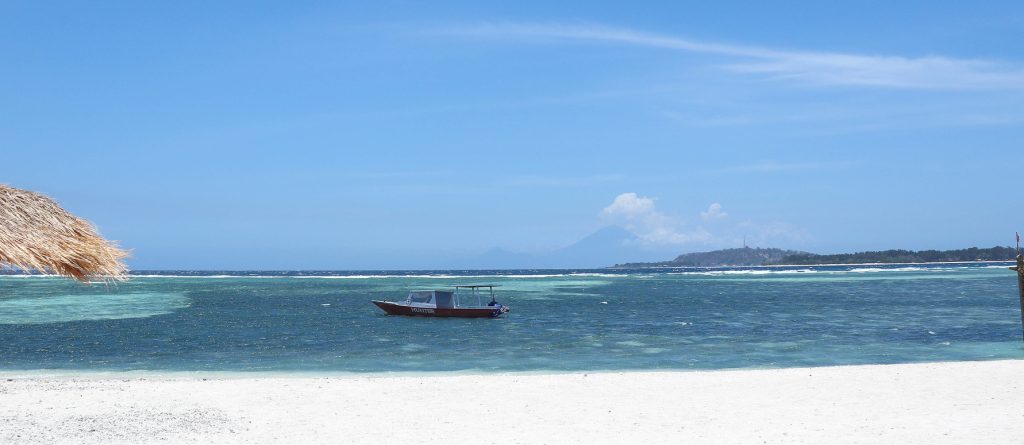
The draw of Gili Air has always been its edges. Waters around the island shift from clear turquoise to a deeper blue within a few metres of shore, revealing coral gardens that sit startlingly close to the surface. Snorkelling here often requires little more than stepping into the water at high tide. Sea turtles are regular visitors, moving through the shallows with an unhurried confidence that sets the tone for the day.
Culturally, Gili Air reflects its Lombok roots more strongly than its Balinese counterparts. The island’s mosques set the rhythm of daily life, and small family‑run eateries serve dishes linked to Sasak culinary traditions. Despite its modest size, the island manages to create a blend of hospitality and local character that feels neither overly curated nor exaggerated. Tourism is indeed present, but the island maintains an easygoing authenticity shaped by fishing families, dive instructors, café owners, and sea‑dependent livelihoods.
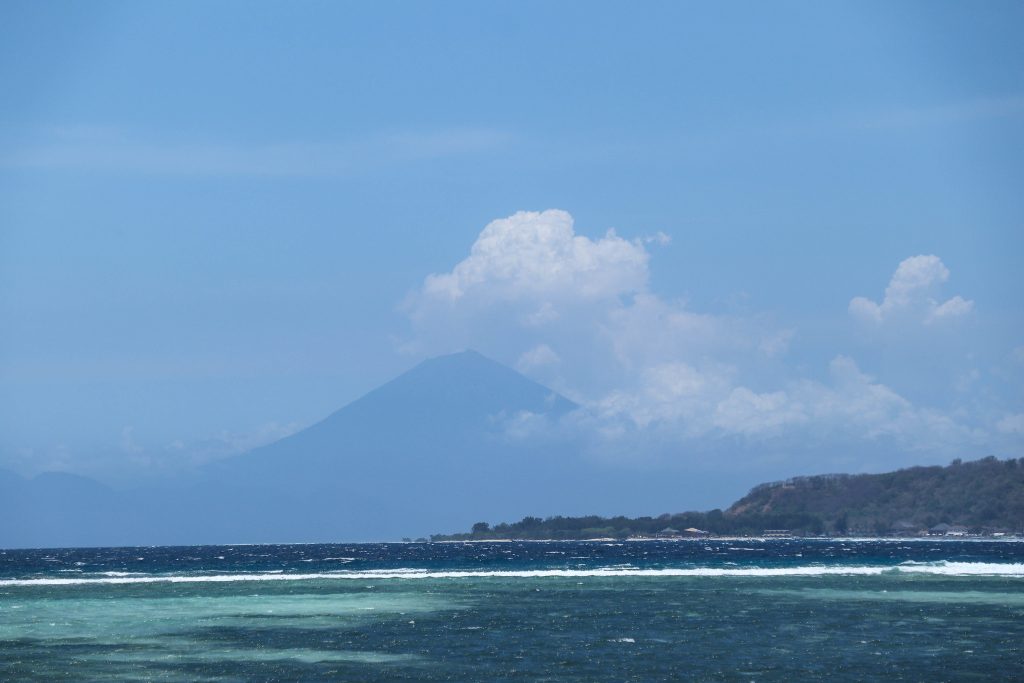
Evenings on Gili Air tend to be understated. As the heat softens, people drift towards the western shore to watch the sun drop behind Bali’s volcanic silhouette—Mount Agung often rising in sharp outline on clear days. Beachfront bars set out low tables, beanbags and lanterns, but the atmosphere remains more murmured than loud. It is a place where the night settles slowly rather than arrives abruptly.
Gili Air does not promise dramatic temples, cliffs or ancient monuments. Its appeal lies in smaller, simpler textures: the warmth of shallow water at noon, the sound of oars against a wooden boat, the sight of fishing nets drying in the sun, and a general sense that the island’s boundaries—both physical and emotional—are softened by the sea. It is not a destination that insists on an itinerary; it offers presence more than activity, pauses more than pursuits.
For travellers looking for somewhere unhurried yet gently social, Gili Air occupies an appealing middle ground—an island shaped by ocean, community and a kind of quiet that doesn’t need isolation to feel complete.
A Brief History of Gili Air
Gili Air’s story stretches back centuries, shaped by its location along important maritime routes between Lombok, Bali, and Sulawesi. Early visitors were predominantly Bugis and Sasak fishermen, who used the island as a temporary base while moving along traditional trading and fishing paths. With limited freshwater and little permanent infrastructure, the Gili Islands remained sparsely inhabited for much of their early history, functioning mainly as stopovers for sailors and seasonal fishing operations. Archaeological evidence and cultural accounts suggest that settlement activity on Gili Air dates back as far as the 8th century, revealing its long‑standing role in regional exchange networks. Over time, the island absorbed influences from Lombok, Bali, Java, and wider trading communities, creating a layered cultural identity that still echoes in local customs and languages.
More substantial settlement on Gili Air began when Bugis, Mandar, and Makassar sailors from Sulawesi established coconut plantations and expanded fishing activities, ushering in a more permanent island community. As tourism expanded across Lombok in the late 20th century, Gili Air evolved from a modest fishing‑and‑farming outpost into a laid‑back travel destination known for its quieter charm compared to its sister islands. Despite the growth of guesthouses, dive shops, and cafés, the island has maintained much of its original character—largely due to local efforts to protect cultural traditions and manage development carefully. Today, Gili Air is home to the largest local population among the three Gilis, balancing its deep‑rooted Muslim Sasak heritage with the international influences brought by decades of visitors.
Visiting Notes
Best time to visit: Early morning brings calmer seas, cooler air and fewer boats arriving. Afternoon light on the west coast is particularly striking, especially toward sunset when Bali’s volcanic silhouette sharpens on the horizon.
Dress and modesty: Although Gili Air is a relaxed island, it is culturally tied to Lombok’s Muslim Sasak communities. Swimwear is normal on beaches, but covering up when walking through village areas is respectful.
Expect sandy paths: The island has no motorised vehicles. Paths are sandy, uneven in places, and best navigated by bicycle or on foot. Avoid wheeled suitcases if possible.
Heat and exposure: Shade is limited on some coastal loops. Bring water, sunscreen and a hat—especially when cycling around the island. Midday sun can be intense.
Snorkelling conditions: Many spots can be accessed directly from the beach at high tide. Coral sits close to the surface in places; water shoes help avoid cuts. Boat traffic at popular sites increases late morning—early starts are quieter.
Mind the currents: Currents between the Gilis and Lombok can be strong, especially around the northeast and southwest corners. Beginners are better off following marked snorkel zones or joining a guided trip.
Evening atmosphere: Nights on Gili Air tend to be quiet. Beachfront bars offer lantern‑lit seating and live music, but volume stays low compared to Gili Trawangan. Most paths are unlit —carrying a small torch is helpful.
Facilities: Basic ATMs exist but occasionally run out of cash. Snorkel and bike rentals are readily available across the island. Restaurants and cafés cluster along the east and southwest coasts, while the interior remains more residential and lower key.
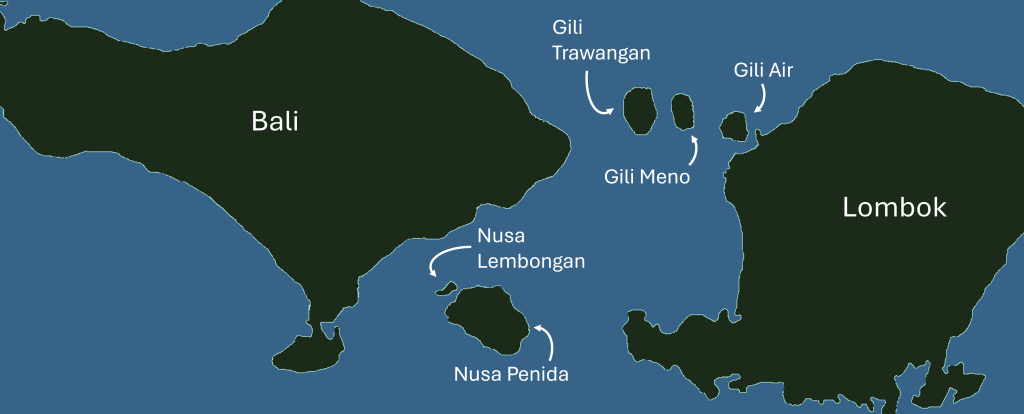
Getting there from Bali:
Fast boats (most common):
Fast boats depart from Padangbai, Sanur, Amed and Serangan, with Padangbai being the most direct option. Typical travel time is 2 hours, with Amed offering the shortest crossings at around 1 hour.
Schedules vary, but there are 20+ daily departures across operators. Prices average around £23
Getting there from Lombok:
Bangsal Harbour to Gili Air:
Fast boats and local ferries run regularly from Bangsal Port in Lombok to Gili Air, with journeys taking approximately 15–30 minutes. Options include inexpensive local public boats (running until around 5:00 pm), faster public speedboats departing hourly, and private speedboats available for faster, more flexible transport.
Public Slow Boat/Ferry: These depart when full (often 30–40 people) and typically run every 1–2 hours from around 8:00 am until late afternoon. Tickets are very cheap, often under £1.00.
Public Speedboats/Island Hopping: offers faster, scheduled boats, costing around IDR 130,000–140,000 (£5.60 – £6.10), departing frequently, sometimes hourly.
Private Speedboats: Available for flexible, direct, and faster travel, usually either pre-booked or arranged at the harbour for roughly IDR 300,000–450,000 (£13 – £20) per boat.
Best Location to Book: The official Koperasi Karya Bahari ticket office is located on the harbour. When you walk through to the harbour, turn right, go to the end, then take a slight right and look for the pale pink hut. You can buy your tickets there. IDR 18,000 (£0.80) each. Or book through websites like 12Go and easybook.com (LINKS NEEDED)
Tips:
- Be aware of ticket touts; head directly to the official ticket counter to avoid overpaying.
- Boats stop running in the late afternoon/early evening.