

Travel guides and resources
Indonesia: Bali
A Journey Through Beaches, Culture, and Sacred Places
The Island of Offerings
Long before Bali became known for its emerald rice terraces and temple-lined coastlines, it was believed to be an untamed wilderness—an island shaped as much by the spiritual world as by the natural one.
According to Balinese Hindu tradition, the island was named by the Hindu priest Rsi Markandeya, with its name derived from the word wali, meaning offering. His story is woven deeply into Bali’s spiritual identity and helps explain why ritual and devotion are still part of everyday life here.
In the 8th century, the wandering sage Rsi Markandeya journeyed east from Java. From the slopes of Mount Ruang, he looked across the narrow straits and saw Bali—lush, wild, and unexplored. Drawn by the land, he crossed the water and travelled eastward until he reached the island’s most sacred peak, Mount Agung.
But the expedition was struck by disaster. Plague and misfortune devastated his followers, forcing them to retreat back to Java. There, Rsi Markandeya meditated for 35 days and nights, seeking guidance. Legend says that during this deep meditation, a divine voice revealed how to protect the land and its people from unseen forces. He was instructed to purify Bali through offerings—offerings to the gods, to the ancestors, and to the land itself.
When Rsi Markandeya returned to Bali, he performed a powerful purification ritual that involved burying symbols of the five cosmic elements:
- Earth (Prithvi)
- Water (Apas)
- Fire (Agni)
- Air (Vayu)
- Ether or Space (Akasha)
Remarkably, this ritual is still practised today. Before a house or temple is built in Bali, offerings representing these elements are placed into the ground to restore balance between the physical and spiritual worlds.
Through these rituals, Rsi Markandeya came to understand that every action addressed the Tri Loka—the three realms of existence:
- Bhur Loka – the underworld
- Bwah Loka – the human realm
- Swah Loka – the divine realm
Only when offerings unite these realms, he believed, can people find their rightful place in the greater cosmos.
For this reason, the island was named Bali—the land of offerings. Even today, as you walk past roadside shrines fragrant with incense or witness daily ceremonies filled with flowers and prayer, you are witnessing the living legacy of that belief. Bali is not just a destination; it is an ongoing act of devotion.
Balian Beach — Slowing the Pace on the West Coast
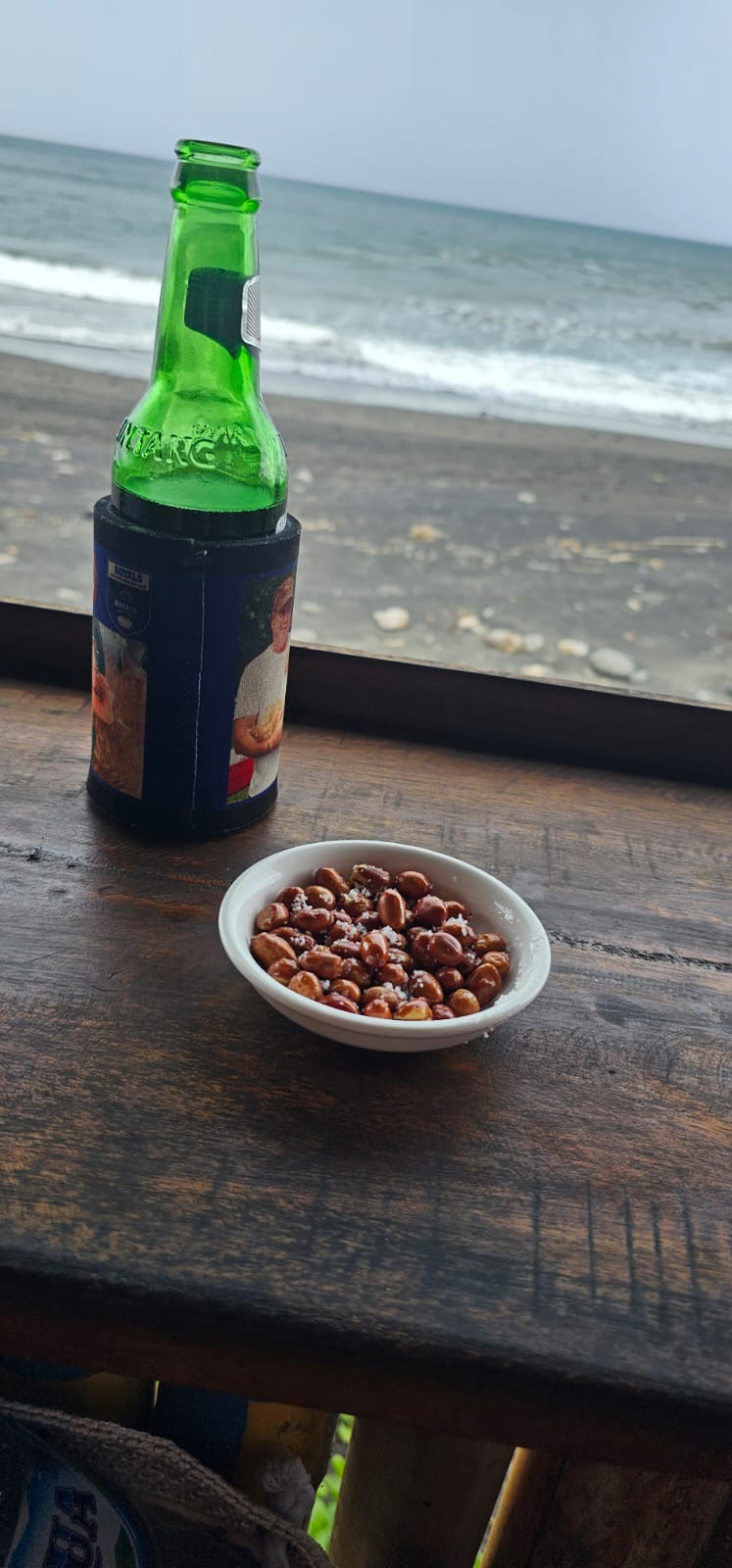
Balian Beach feels like a different Bali. Far enough north to escape the island’s familiar hotspots, it’s a quiet stretch of coast where time slows and the days seem shaped more by tides than timetables. There’s good surf, a handful of relaxed places to stay, affordable food, and beachside warungs with cold beers and peanuts. It’s the kind of place that doesn’t ask much of you—and that’s exactly its appeal.
Getting here, however, takes a little effort. Balian Beach sits around 60 kilometres from the airport and isn’t well connected by public transport. Buses do run from Denpasar towards the port further north for travellers heading to Java, and some stop at Lalallinggah, the village marking the turn‑off to Balian. At around £20, it’s only slightly cheaper than arranging a private transfer or using Grab, which often ends up being the easier option.
Part of Balian’s charm is that it still reflects a Bali that people reminisce about before “it was spoiled by over tourism”—but that also means limited options. There isn’t a long list of activities or accommodation choices here, and once you arrive, there’s nowhere to rush off to. For us, that was the point. Balian is a place to consciously change down a gear and let the days unfold slowly.
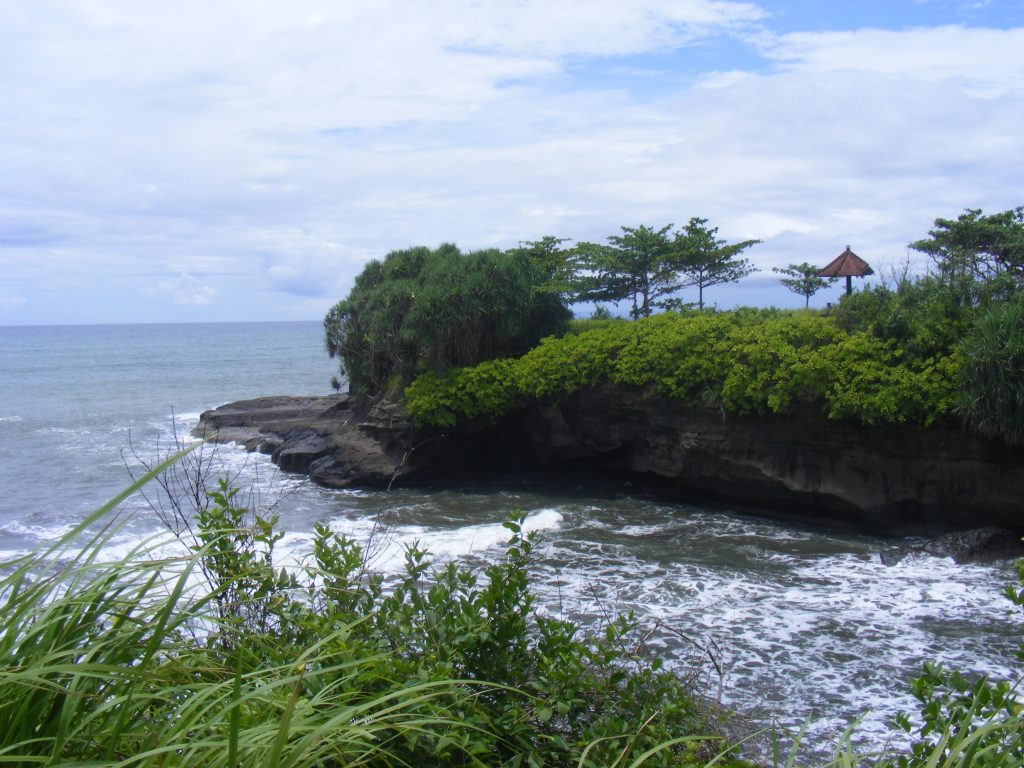
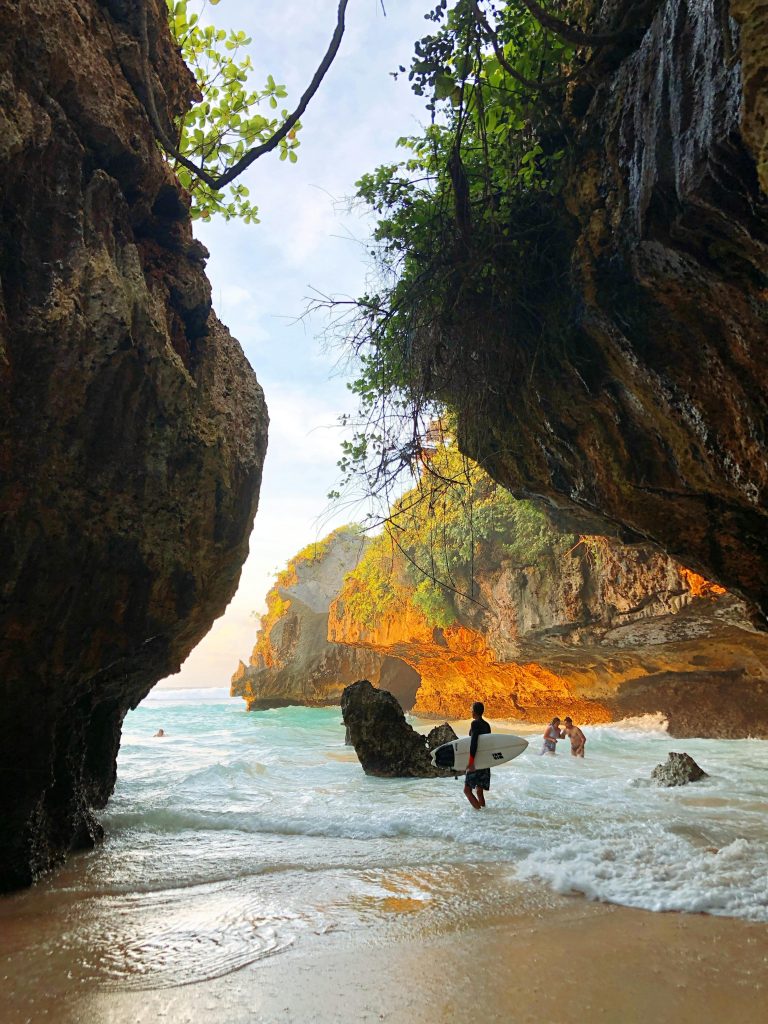
Just north of Balian Beach sits Gajah Mina Beach Resort, where we began the final stretch of our last Bali trip. Below the resort is its aptly named Secret Beach, a small cove reached via a set of uneven—and often slippery—stairs. It is surrounded by cliffs, and the caves carved into the northern cliff face are home to bats, and standing at the cave entrance, you can hear them rustling above the constant thrum of the surf – did I mention you can also smell them!
At the top of the stairs, turning right brings you to the bar at Gajah Mina Resort. Turning left leads to Tebing Balian, a scenic cliffside viewpoint with sweeping views up and down the west coast. From there, a short walk through woodland and across an open field takes you to the road from Jalan Batu Mejan. Drop down from here and you’ll find yourself on Mejan Beach—mile after mile of untouched sand, with no warungs, no hotels, and not another person in sight.
We walked along this beach optimistically expecting to stumble across a coffee or a small shack. After about two kilometres, reality set in, and we decided it was wiser to turn back and head towards Balian instead. It turned out to be the right decision.
Back near the village, we found a welcoming beachside warung, stocked with cold beer, peanuts, and excellent company. We sat there as a storm rolled dramatically down the coast of East Java. Nothing more was needed. In that moment, Balian revealed itself not as a destination, but as a pause.
Munduk, Wanagiri & Bedugul — Into the Cool of the Mountains
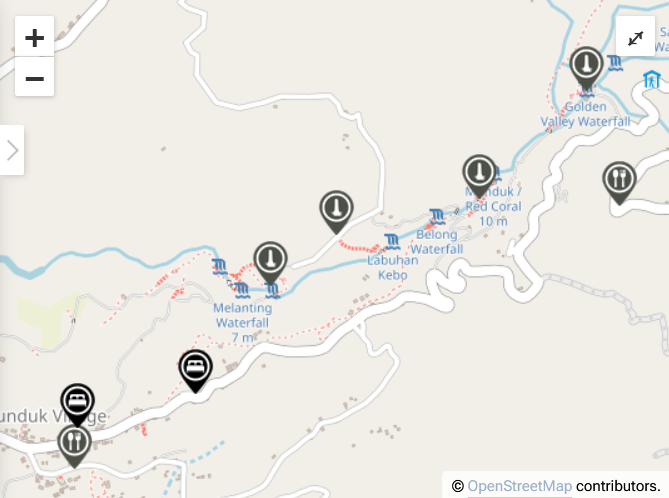
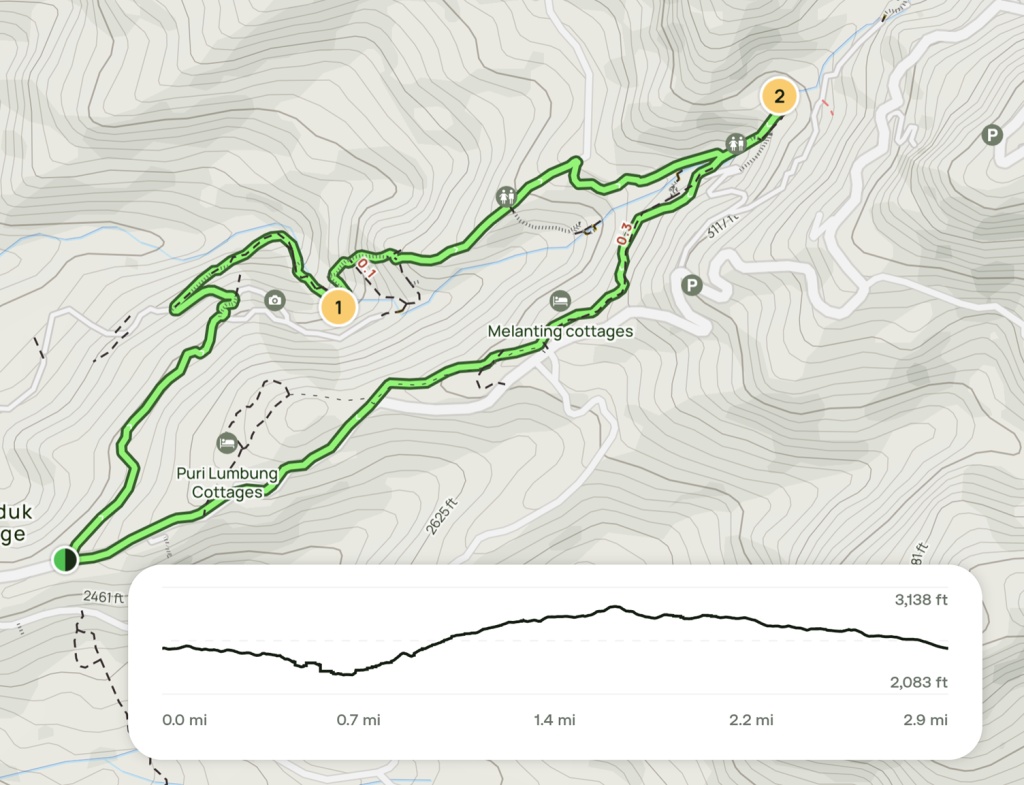
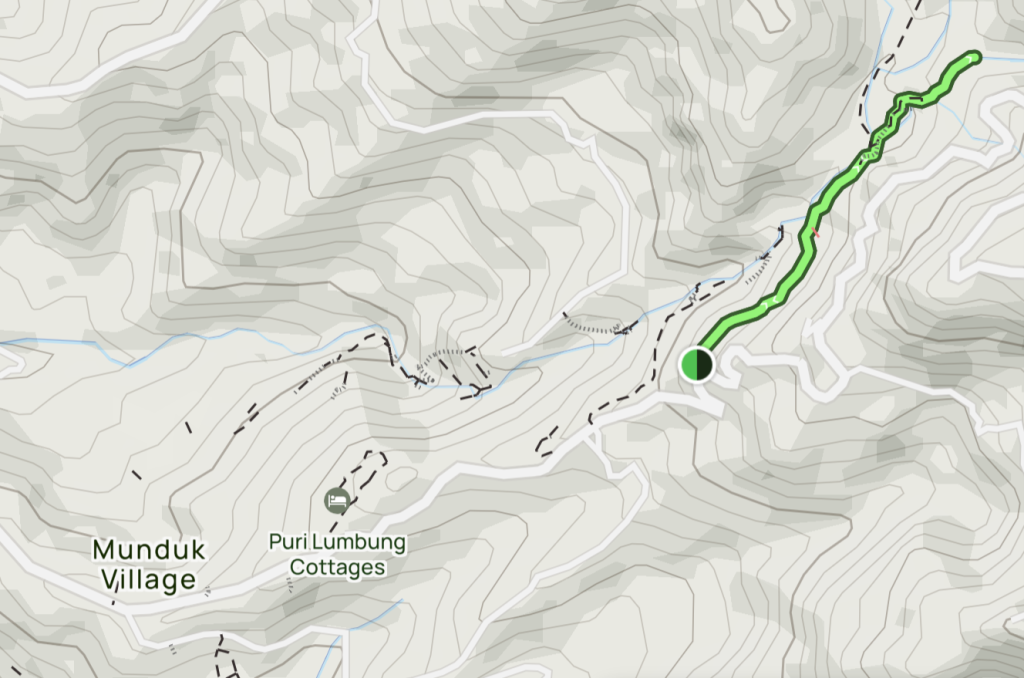
Munduk is a sleepy mountain village in northern Bali, surrounded by forested hills, waterfalls, and cooler air —a welcome contrast to the humidity of the lowlands. The area is home to several waterfalls worth visiting, as well as sacred lakes and temples that regularly appear on Bali “top 25” so whilst Munduk sits slightly off the usual tourist trail, its growing reputation means it’s increasingly being targeted by day tours. .
Historically, Munduk served as a retreat for Dutch colonists escaping the heat of Singaraja, the largest city in northern Bali and the former colonial administrative centre for not only Bali but the whole of the Lesser Sunda Islands (the archipelago stretching east from Bali to Timor). That legacy persists in the climate—cooler, fresher, and much more conducive to walking. The area invites slow exploration, with trails winding past waterfalls, through clove plantations, and around misty lakes.
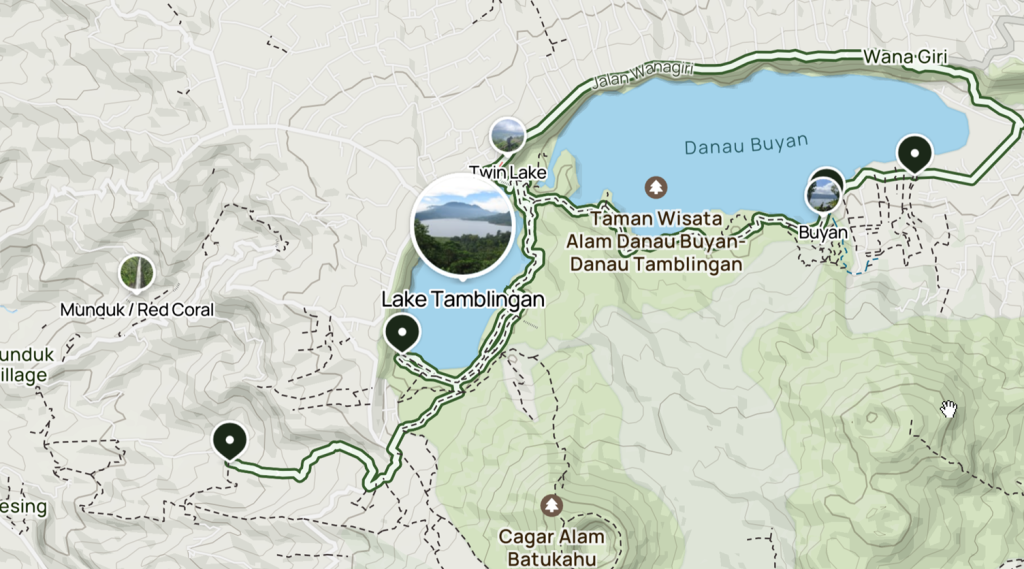
Our plan is to spend just over a week in this region, starting in Bedugul, where we’ll stay for a three nights, visiting the Ulun Danu Beratan Temple, and the Bali Botanic Garden. From there, we intend to walk around Danau Buyan, continue on to Wanagiri, and then follow the trail past Lake Tamblingan, finishing the week in Munduk itself.
Ubud — Between Reverence and Reality
Most of the things I read wax lyrical about Ubud and is often spoken of in reverent tones. It is often considered to be the cultural heart of Bali. A place of art, ritual, and healing. And while all of that may be true, my strongest memories are more grounded: traffic snarling through narrow streets, broken pavements demanding constant attention, and monkeys with a disarming confidence in their own authority.
We stayed just south of the Monkey Forest, where things softened noticeably. The area was quieter, with a handful of genuinely good restaurants—one in particular that we returned to more than once for excellent seafood—and it offered an easy, shaded walk through the Monkey Forest into the centre of town. Still, I’m aware that Ubud has layers I haven’t fully explored. So, while I’d happily return to the same area, there’s a sense that staying east of the centre will be best for our current plans.
Historically, Ubud carries real weight. It sits at the heart of Gianyar Province and was once a royal seat when Gianyar was a kingdom in its own right. Its recorded history reaches back to the 8th century, with the arrival of Hindu priests led by Rsi Markandaya, the same figure woven into Bali’s origin story. The town’s name comes from ubad, meaning medicine, a reference to the abundance of healing plants and herbs that once grew here. Long before yoga studios and wellness retreats, this was a place of genuine medicinal significance.
In the late 19th and early 20th centuries, Ubud’s royal families played a key role in nurturing artists, dancers, and sculptors, embedding creativity into daily life. That legacy deepened in the 1930s when figures like Walter Spies—a German-born artist and musician—settled here and helped introduce Ubud to the outside world. Tourism followed, slowly at first, then all at once.
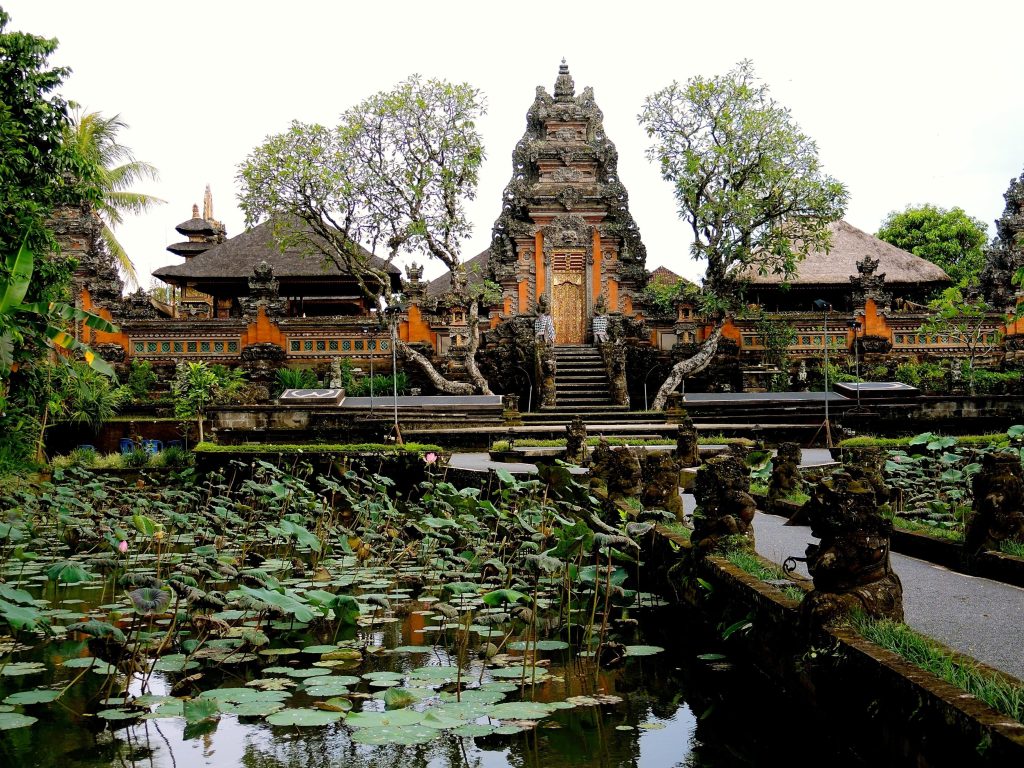
Getting there: From Padang Bai to Ubud
It is possible to get a bus (Perama Tour and Travel) Depart 13:30 (Karangasem Jl. Pelabuhan, near the port) and Arrive at 15:30, dropping off near to the Coco Supermarket for about £5 per person. Alternatively, we can take a taxi for about £18 (12go.asia).
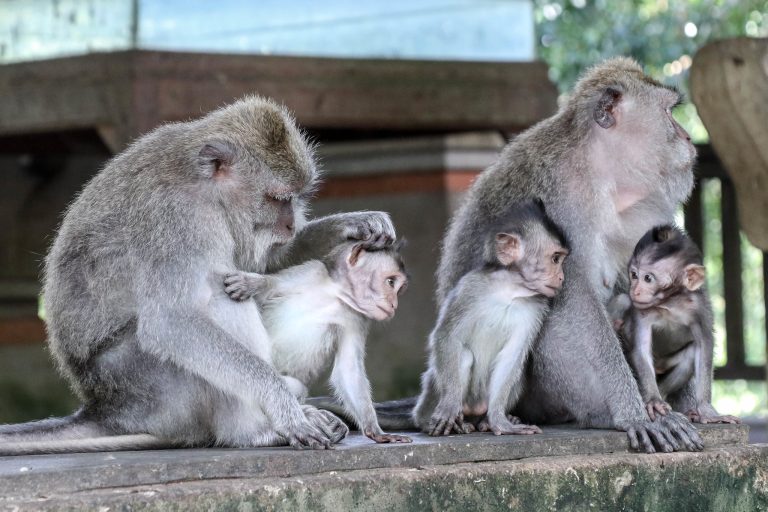
Sites that might be worth Exploring Along the Way
Google will quickly reveal this is far from an exhaustive list; it’s just the places we haven’t visited yet. I might expand it one day, although it’s currently enjoying a very relaxed position on the to‑do list.
Goa Gajah
Goa Gajah, often translated as the Elephant Cave, sits just outside Ubud, but it feels far removed from the town’s noise and intensity. Set into a steep river valley, the site is less about grandeur and more about transition—a place designed to be entered slowly and left thoughtfully.
Despite the name, there were never elephants here. The term Gajah is thought to refer either to the nearby Petanu River, once known as Lwa Gajah, or symbolically to Ganesha, the elephant‑headed deity of wisdom and thresholds. Both interpretations fit. Goa Gajah is not a destination in itself so much as a passage.
The site dates back to around the 9th century, during a period when Hindu and Buddhist traditions coexisted closely in Bali. That coexistence is written into the stone. At the heart of the complex is the cave itself, its entrance carved into a dramatic, almost grotesque face—eyes bulging, mouth agape, fangs framing the doorway. The effect is deliberate. To enter, you step through the mouth, crossing from the outer world into a space of inward focus.
Inside, the cave is small and dark, more symbolic than functional. One side holds lingam and yoni, representing Shiva and Shakti—the creative balance of masculine and feminine energy. The other side houses a statue of Ganesha, reinforcing the idea of wisdom gained through passage and humility. This was a place for meditation, not congregation.
Outside the cave, the landscape opens unexpectedly. Stone steps lead down to a courtyard where ancient bathing pools were uncovered in the 1950s, their fountains carved as female figures holding water vessels. These pools are thought to have been used for ritual purification, preparing visitors before entering the cave. Their rediscovery reshaped how Goa Gajah is understood—not as an isolated shrine, but as part of a carefully structured spiritual journey.
Getting there:
A Grab from central Ubud to Goa Gajah typically costs IDR 65,000–100,000 (£3.50–£5.50) and takes around 5–10 minutes, though you may need to walk to a main road for pick‑up. Walking, it is about 4km from where we are staying, so about 50 minutes walk.
Give it space:
Goa Gajah works best when not rushed. Even a short pause near the pools or river reveals more than trying to see everything quickly.
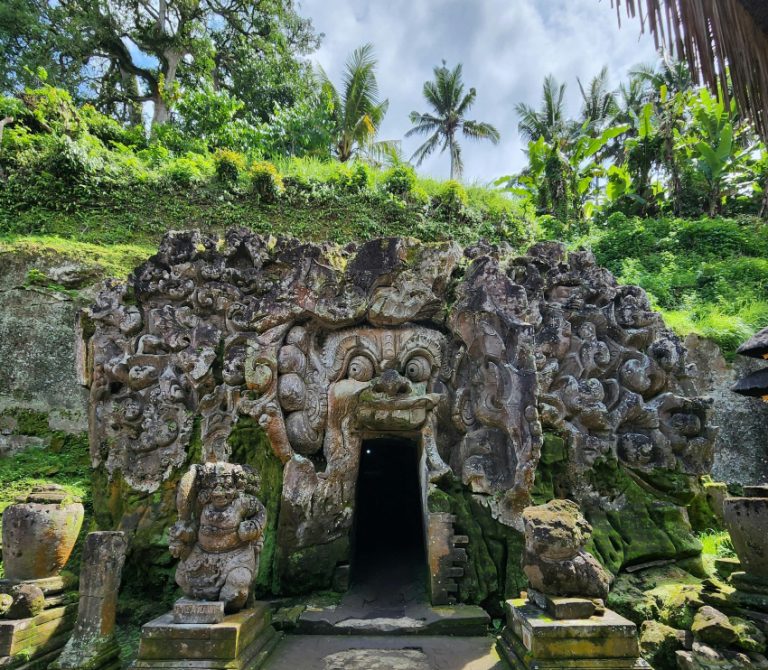
Visiting Notes:
Best time to visit: Early morning is ideal for cooler air and fewer tour groups that tend begin arriving mid-morning. Late afternoon can also work, but the valley is more humid.
Dress respectfully: Goa Gajah is an active temple site. Shoulders and knees should be covered; sarongs are usually provided, but bringing your own is more comfortable.
Expect steps: The complex sits in a steep ravine. Stone steps lead down to the pools and river paths and can be slippery after rain—take your time and wear decent footwear.
The cave itself is small: The interior is small and often busy. Enter respectfully, then spend more time exploring the bathing pools and paths below, which many visitors miss.
Be mindful inside: Keep voices low and avoid lingering at the entrance—this is still a place of worship.
Facilities: Basic toilets and small stalls near the entrance; bring water and don’t expect much shade once you descend.
Peliatan Royal Palace — Patronage and the Making of Ubud
Just east of central Ubud lies Peliatan, a village whose influence on Bali’s cultural life far outweighs its size. At its heart stands Peliatan Royal Palace (Puri Peliatan)—not grand in the way southern palaces announce themselves, but deeply significant in how Balinese art, ritual, and identity were shaped and sustained.
Peliatan was once a powerful royal seat in its own right, closely linked to the courts of Gianyar and Ubud. Unlike kingdoms that expressed authority through monuments alone, the rulers of Peliatan invested heavily in patronage—supporting painters, dancers, musicians, and mask‑makers at a time when artistic traditions were still embedded in ritual life rather than performance schedules.
In the early 20th century, this patronage proved decisive. When foreign artists and scholars began arriving in Bali—figures such as Walter Spies and Rudolf Bonnet—it was the royal households of places like Peliatan that provided protection, space, and legitimacy. Art here was not created for an outside gaze alone, but through collaboration, dialogue, and shared curiosity. What later became known as “Balinese art” was, in many ways, refined and preserved in these palace courtyards.
Peliatan also played a key role in the development of Balinese dance drama, particularly forms that blended narrative clarity with ritual depth. Court‑supported troupes rehearsed not for spectacle, but for ceremony—temple anniversaries, rites of passage, and calendrical festivals. The discipline and restraint that still characterise classical Balinese performance owe much to this courtly environment.
Today, Peliatan Royal Palace remains a lived space rather than a relic. Family shrines, ceremonial pavilions, and open courtyards continue to host rituals that follow the same rhythms as centuries ago. There is no clear boundary between past and present here; history is not displayed, it is maintained.
In contrast to Ubud’s increasingly public face, Peliatan feels inward‑looking. It offers a reminder that Bali’s cultural centre did not emerge spontaneously, nor solely from outside influence, but through deliberate stewardship by royal families who understood art as obligation rather than commodity.
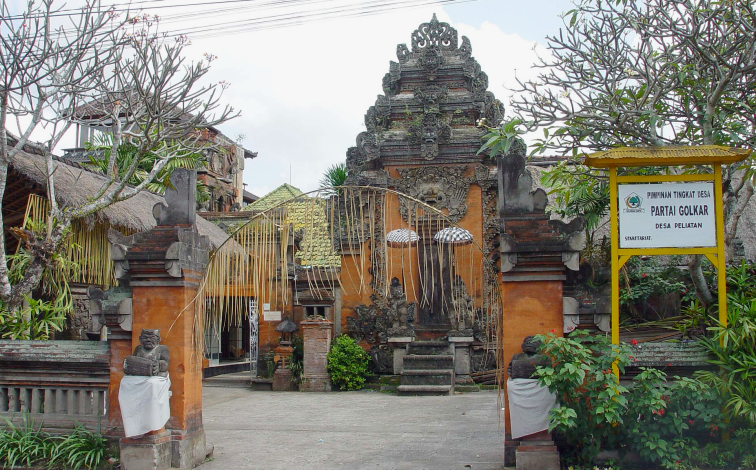
Visiting Notes:
Location: Peliatan village, just east of central Ubud—close enough to where we are staying to walk to.
What to expect: This is a living royal compound, not a museum. Access may be limited to outer courtyards, depending on ceremonies or family activity.
Best time to visit: Late afternoon tends to be quieter and less intrusive; mornings may coincide with household rituals.
Dress & behaviour: Dress modestly and move respectfully—this is a private, ceremonial space rather than a formal attraction.
Photography: Be discreet and ask before photographing people or ceremonies.
Time needed: Short visits are appropriate; this is a place to observe atmosphere rather than explore extensively.
Kajeng Rice Field
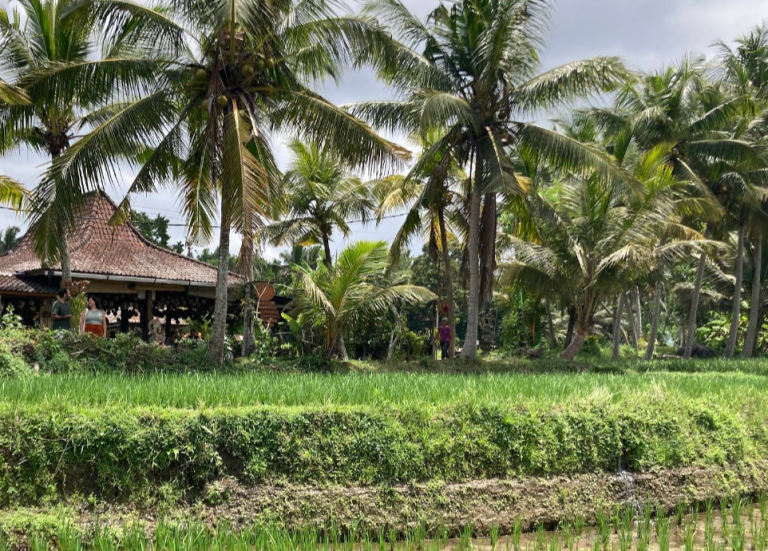
Kajeng Rice Field is a small but active rice‑growing area located on the northern edge of central Ubud, Gianyar Regency, Bali. It lies along Jalan Kajeng, within walking distance of Ubud Palace and Pura Desa lan Puseh (Puseh Temple of Ubud).
The rice fields form part of Bali’s traditional subak irrigation system, a communal water‑management network dating back at least to the 9th century. The subak system regulates planting cycles, water distribution, and ritual coordination among farmers and is recognised by UNESCO as Intangible Cultural Heritage. Kajeng’s fields are supplied by local water channels that originate upstream and are managed collectively by the farming community.
Kajeng Rice Field is not a designated tourist attraction or park. It is a working agricultural area, with rice planted and harvested according to seasonal cycles, typically two to three harvests per year depending on rainfall and water availability. The fields are bordered by a narrow concrete and dirt footpath that has become informally used by walkers.
Small field shrines (pelinggih), bamboo huts, and irrigation gates can be seen throughout the area, reflecting the religious and practical integration of agriculture in Balinese village life. The land remains under local ownership and cultivation rather than preservation status.
Visiting Notes:
Location: Jalan Kajeng, north of central Ubud, near Puseh Temple
Cost: Free (public footpath through private farmland)
Access: Open at all times; no gates or ticketing
Terrain: Narrow paths; uneven and sometimes muddy after rain
Best time to visit: Morning or late afternoon to avoid heat
Etiquette: Stay on paths; do not enter planted fields or disturb farming activity
Time needed: 20–40 minutes for a slow walk
Besakih: Where the Island Aligns Itself
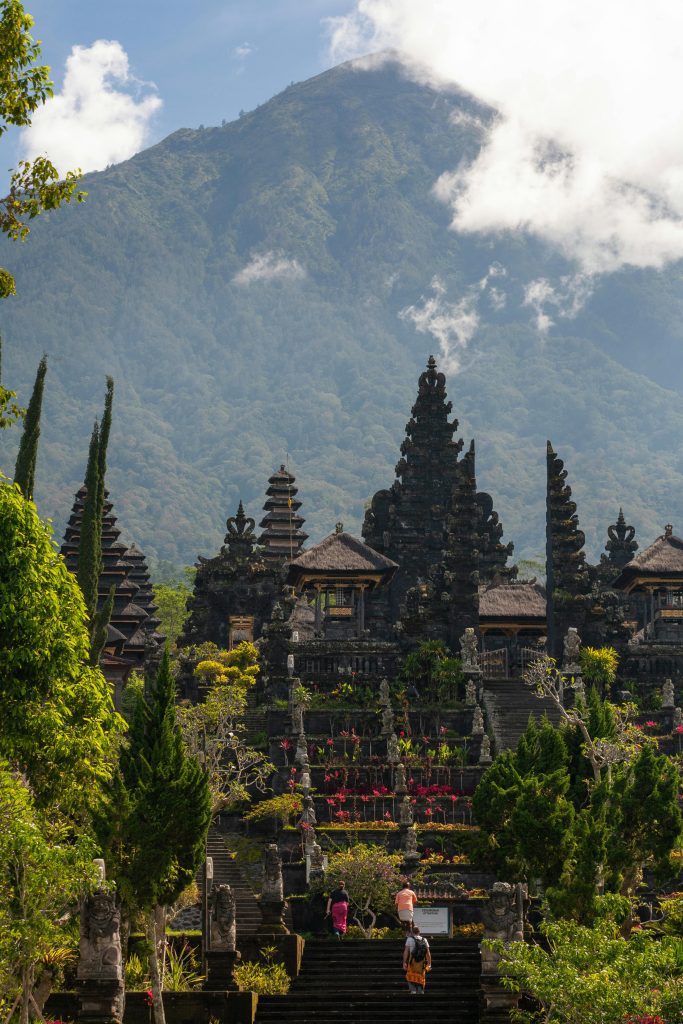
That belief finds its most complete expression at Pura Besakih, Bali’s most sacred temple complex. Built high on the slopes of Mount Agung, Besakih is not a single temple but a constellation of 86 temples arranged across parallel ridgelines, rising toward the volcano that dominates Bali’s spiritual geography.
Besakih is often called the Mother Temple, and not symbolically. It is here that the island’s cosmology is physically laid out. The complex mirrors the structure of the universe, built on seven ascending from the lower, earthly realms toward the divine. Each temple, courtyard, and stairway reflects a relationship between humans, gods, ancestors, and the land itself.
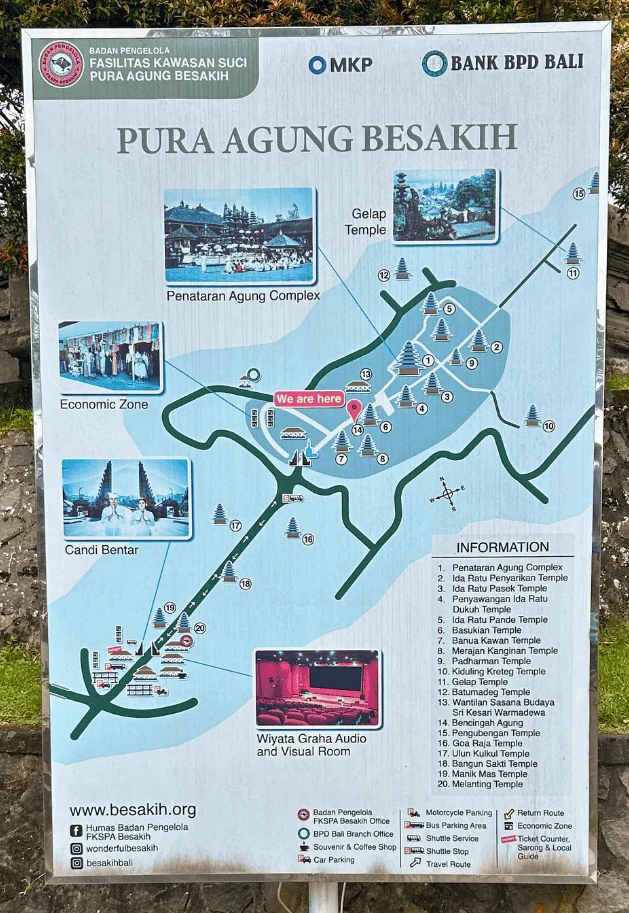
At the heart of the complex stands Pura Penataran Agung, the Great Temple of State, the primary site of worship. Its terraces represent the layered structure of the Hindu cosmos, guiding worshippers upward through increasingly sacred space. Nearby is Pura Basukian, believed to be the very place where Rsi Markandaya planted the five sacred metals during his purification ritual—anchoring Besakih as not just a temple site, but the spiritual origin point of Bali itself.
Other temples within the complex align with the cardinal directions, each governed by a deity:
- to the north, Pura Batu Madeg, associated with strength and stability;
- to the south, Pura Kiduling Kreteg, where prayers for harmony and relief from drought are offered;
- to the east, Pura Gelap, linked with illumination and divine energy;
- to the west, Pura Ulun Kulkul, where the wooden slit drum once called the community together in times of danger or ceremony.
Scattered among them are temples tied to holy water, ancestral worship, music, and myth. Ancient gamelan instruments are kept at Pura Merajan Selonding, believed to be the oldest in Indonesia. Dragon deities inhabit cave temples. Garuda, Vishnu’s divine mount, appears in stone and story, linking Bali not just to its own past, but to the wider Hindu world stretching back to India and Java.
And always, towering above it all, is Mount Agung—believed to be the axis of the island, a bridge between realms. Even today, Balinese people orient their homes, villages, and rituals in relation to the mountain, aligning daily life with the same cosmic order expressed at Besakih.
With so many temples and shrines to explore at Besakih and covering several kilometres it is not going to be possible to see them all in a single visit. Finns Beach Club have kindly listed the ones you should prioritise in a single visit.
The four main temples in the complex reflect the deities governing their respective compass points, Pura Batu Madeg in the north, Pura Kiduling Kreteg to the south, Pura Gelap in the east, and Pura Ulun Kulkul in the west.
Pura Penataran Agung – Pura Puseh
The “Great Temple of State” standing at the heart of the complex and the main place of worship.
It has zones representing the seven different layers of the Hindu universe and each has its own shrine.
Pura Basukian Puseh Jagat – Pura Desa
According to legend this is the place where five types of spiritual metal were planted by Rsi Markandeya and his followers. It is one of the three main temples at the site and one of the founding temples of all village temples in Bali.
Pura Dalem Puri – Pura Dalem
Pura Dalem Puri is a deeply significant temple in Balinese Hinduism, representing the soul’s journey after death. Its three-zone layout symbolises the progression from Tegal Penangsaran, the realm of suffering associated with bad karma, through Titi Gonggang, the spiritual bridge between hell and heaven, and finally to Surga Loka in the Utama Mandala, where purified souls are honoured as ancestral spirits. This structure reflects Siwa Sidhanta teachings on the transition from darkness to purification.
The temple plays a vital role in the Pitra Yadnya cycle, particularly after cremation rituals such as Ngaben and Memukur. Families must perform Mendak Nuntun at Pura Dalem Puri to welcome and guide the purified soul back to the family shrine, completing the ancestral journey. Neglecting this step is believed to cause misfortune or disharmony until the obligation is fulfilled, underscoring the temple’s importance as a spiritual court and gateway between the living and the dead.
Pura Gelap
At the northern end and at the highest point among the sacred structures is Pura Gelap takes its name from the Kawi language and means “lightning” signifying the source of illumination that radiates throughout the universe and is symbolised by the colour white. The main shrine is the ‘Meru Tumpang Tiga,’ which serves as a way to worship Batara Iswara as the manifestation of the protecting deity in the eastern direction of the universe.
Pura Batu Madeg
Pura Batu Madeg is to the Northwest of the main site and said to contain a holy scripture that provides evidence to show this temple is more than 1,000 years old. It is said that rituals conducted at Pura Batu Madeg will imbue strength and vitality and ensure that the rains come to bring a good harvest.
The shrine of Meru Tumpang Sebelas at Pura Batu Madeg houses the central stone, called batu ngadeg. This spot was where Vishnu is believed to have descended. Within the courtyard of Pura Batu Madeg, in front of Meru Tumpang Sebelas, you’ll find the Pesamuan shrine (quadrangular-shaped with 2 lines of 16 poles) which depicts how Vishnu’s power interrelates with the world.
Pura Batu Tirtha
It is said Pura Batu Tirtha is a place where kindness is planted into the hearts of worshippers. It is also a place where Hindus can study the ancient teachings of Balinese Hinduism and where holy water is sourced for the karya agung ceremonies at Pura Besakih and the local villages
Pura Kiduling Kreteg
Pura Kiduling Kreteg is to the South of the main complex and is in Besakih village. It is one of the four holy temples of the lotus flower and symbolises one of the flower’s petals. People come here to pray for creativity, truth, holiness and harmony and in times of drought, they come to pray for Lord Brahma to reduce the heat of the Earth.
Pura Ulun Kulkul
This temple houses a Balinese wooden slit gong (kulkul) which is used to send warning signals in times of trouble and to convey special messages on behalf of the temple.
Pura Hyang Haluh (Pura Jenggala)
This temple is adorned by statues of the mythical Garuda bird, the mythical lord of birds. Garuda’s origins trace back to his parents, father Kashyapa and mother Vinata. As the myth goes, Garuda was hatched from an egg after an incubation period of five centuries. His mother Vinata delivered the egg at his ‘first birth,’ and the momentous occasion saw the emergence of the fully-grown Garuda. His form was so formidable that it seemed to fill the skies, and the flapping of his wings created a great disturbance, shaking the very earth beneath him. His body, composed of a brilliant gold hue, radiated an intolerable luminosity that caused even the gods to mistake him for Agni, the revered god of fire. Vishnu possessed the power to control Garuda, who was bound by an unbreakable oath. Vishnu granted him the privilege of immortality and bestowed upon him the role of his divine vehicle.
A little side note: When flying in to Bali, the huge statue you can see is the Garuda Wisnu Kencana Statue in the GWK Cultural Park.
Pura Merajan Selonding
A small temple located to the north of Pura Ulun Kulkul. It is famous as the store of a traditional musical instrument called Slonding which is a type of Balinese gamelan (Indonesian percussion instruments) used during important religious ceremonies at the temple. The gamelan are the oldest set in Indonesia.
Pura Merajan Selonding (Kahyangan Salonding) was the place of worship for a king named Sri Wira Dalem Kesari who was a descendant of the Wisnuwangsa clan from Daha (East Java). He came to Bali and lived at Kahuripan in Besakih. He is considered the (first) great builder of Besakih Temple, including Pura Penataran Agung and Pura Dalem Puri.
Pura Peninjoan
About 20 minutes’ walk northwest, down a footpath to the valley and along the river is Pura Peninjoan. It has been built on a small hill, offering views which include all the shrines of Pura Penataran Agung, the coast and southern Bali in the distance.
Pura Pangubengan
Temple Pura Pangubengan is about a 30-minute walk along the river in the opposite direction, which is part of the holy water flow to Pura Batu Tirtha.
Pura Pangubengan is the most distant of the Besakih Temple Complex and is about a 30-minute walk of the main Pura Penataran Agung. It is located close to a pine forest and its position offers great vistas of the area.
On arrival you must go to the official ticket counter near the entrance gate to purchase your ticket and of course prices can vary, but currently looking at about £3. As with all popular tourist and religious sites in Bali, it gets very busy and may want to look at beating the crowds. The temple complex opens at 8am.
Pura Goa Lawah
Pura Goa Lawah, often referred to simply as Pura Gua, is one of Bali’s oldest and most sacred temples, dating back to the 11th century and founded by the priest Mpu Kuturan. Built around the mouth of a natural cave filled with thousands of bats, the temple is part of Bali’s Sad Kahyangan Jagad, the island’s six holiest temples that maintain spiritual balance. It serves as both a religious sanctuary and a unique natural site where the cave, its bat colony, and shrines coexist dramatically at the temple’s heart.
The temple is deeply tied to Balinese mythology and ritual practice. It is believed to be guarded by Naga Basuki, a sacred dragon spirit whose presence is connected to the cave, with legends claiming hidden tunnels stretch toward Mount Agung and Pura Besakih. Pura Goa Lawah plays a crucial role in purification ceremonies such as Melasti, and worship is dedicated to deities, including Dewa Maheswara. Its coastal location symbolises the powerful meeting of mountain and sea energies—an essential element of Balinese spiritual philosophy.
Pura Goa Lawah is 8km from Pandang Bai (6km if walking).
A Living Framework
Besakih is not frozen in time. Ceremonies continue. Pilgrims arrive daily. Major festivals draw thousands, moving in quiet waves up and down the stone staircases. It can be crowded, imperfect, even chaotic—but that, too, is part of its truth. This is not a museum. It is a functioning spiritual system.
Seen in this context, Bali’s countless roadside offerings, temple anniversaries, and purification rituals are not isolated customs. They are echoes of the same act that began on the slopes of Mount Agung over a thousand years ago.
Getting there: From Ubud:
Distance: Approx. 45 km northeast of Ubud
Travel time: 1.5–2 hours, depending on traffic and weather
Best option:
Private driver or taxi
– Most straightforward and flexible option
– Allows time to stop or return easily
– Expect to pay IDR 500,000–700,000 (£21.50 – £30.50) for a half‑day return trip.
Visiting Notes:
Location: Besakih Village, on the southwestern slopes of Mount Agung, eastern Bali
Cost: Temple donation typically IDR 60,000–100,000 (£3.50) (includes sarong and sash); parking fees may apply
Access: Open daily, generally from 8:00am–6:00pm; access may be restricted during major ceremonies
Terrain: Stone steps, uneven paving and sloped paths across a large temple complex; moderate walking required
Best time to visit: Early morning for cooler temperatures and clearer views; avoid midday heat and large tour groups
Etiquette: Sarong and sash required; dress modestly; do not enter restricted shrines; visitors are not permitted in inner temple areas during active ceremonies unless invited
Time needed: 1–2 hours to explore the main temple areas at a relaxed pace
Additional notes: Local guides may approach visitors at the entrance—official guiding is optional, but polite refusal is accepted
More information: www.besakih.org
Lovina & Pemuteran — The Northern Shore, Facing Inward
Lovina and Pemuteran are coastal towns shaped less by momentum than by endurance. This stretch of shoreline does not perform in the way Bali’s south does. There are no dramatic cliffs or curated vistas; the sea lies flatter, darker and quieter. Life here still revolves around routines that predate tourism—fishing boats pulled onto black sand at dawn, temple calendars setting the rhythm of the week, village Banjar meetings carrying more weight than visitor trends. Tourism exists, but it does not dominate the social order. The emphasis is on continuity rather than spectacle, offering a glimpse of a slower coastal Bali that recalls what places like Canggu once were, before acceleration became their defining force.
Lovina: A Gentler Rhythm
Lovina stretches loosely along Bali’s north coast, less a single town than a string of villages joined by the road that runs between them. It is often described as calm, even sleepy, and the description holds. The black‑sand beaches absorb light rather than reflect it, and the sea rarely raises its voice.
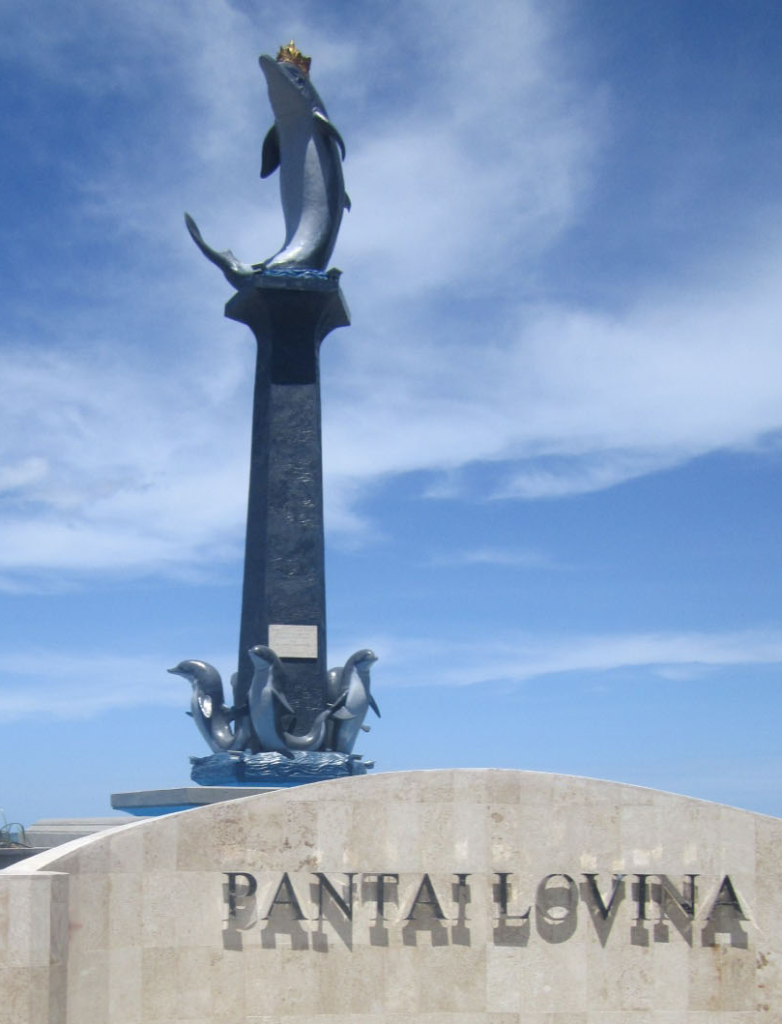
Lovina is best known for its sunrise dolphin tours, and while that reputation brings visitors, it does not define the area in the way a single attraction might elsewhere. Once the early boats return, the day settles into an unhurried rhythm: fishermen mending nets, small warungs opening without ceremony, the steady presence of the mountains behind the coast a reminder that Bali is never only about the sea.
There is a sense here of Bali before acceleration. Rituals continue, but quietly, often unnoticed. Lovina does not demand attention or interpretation; it allows itself to be passed through gently. Most visitors stay just one night. Like Padang Bai on the east coast, it feels transitional—a place to pause, recalibrate, and move on with a little more awareness than you arrived with.
Pemuteran: Where Balance Becomes Practical
Further west, the landscape shifts again. Pemuteran sits at Bali’s outer edge, facing the waters with views of Java and the island’s far western parks. The land here is drier, the hills barer, the sea clearer.
Pemuteran is often cited as a model for conservation, and unusually, the reputation appears earned rather than promoted. Once damaged by destructive fishing practices, the reefs have been gradually restored through community‑led initiatives and coral regeneration projects. Care here is not an abstract idea; it is visible along the shoreline and beneath the water. Snorkelling and diving feel different—not because the reef is more dramatic, but because it exists as something protected rather than consumed. The relationship is participatory rather than entitled, a subtle but meaningful shift in how visitors are expected to engage with the sea.
That attention to balance echoes older Balinese values. Pemuteran lies close to West Bali National Park, and the relationship between land, sea and spiritual responsibility feels especially present. Temples are smaller and less ornate, but no less significant. Rituals here are practical as much as symbolic—focused on sustaining harmony rather than displaying it.
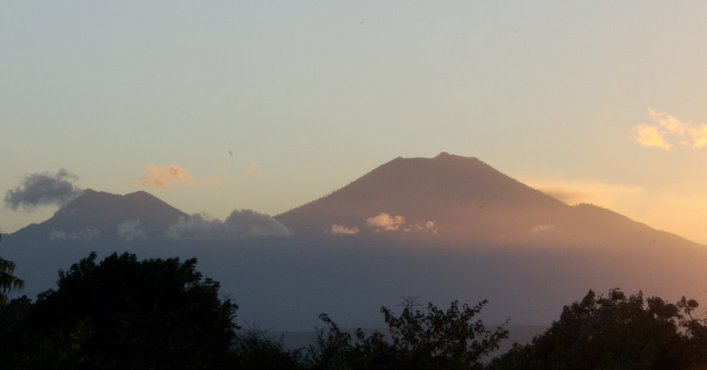
Pemuteran reveals itself slowly, and time of day matters more than itinerary. Early morning is when the place feels most open. Just after sunrise, the sea is often glassy and pale, the air still holding the cool of the night. On clear mornings, the silhouettes of East Java’s volcanoes emerge across the Bali Strait—Mount Ijen first, low and broad, sometimes joined by the sharper outline of Mount Raung behind it. They appear briefly, almost tentatively, before heat and haze soften their edges. It’s a reminder that Pemuteran sits not at the centre of Bali, but at its edge, facing outward.
Inland, Mount Batukaru rises broad and forested. It doesn’t dominate the skyline in the way Mount Agung does elsewhere on the island, but in the morning light it feels steady and grounding—less a spectacle than a presence. Batukaru is deeply sacred, and here it seems to hold the land rather than command it.
By midday, attention shifts downward. The sun brightens the water and reveals why Pemuteran is known for its reefs. Snorkelling and diving unfold at an unhurried pace, shaped by the understanding that the sea is something to be cared for, not conquered. Talk of coral restoration frames how people describe the water—not as a resource, but as a responsibility. The mountains recede from view as focus moves to what lies just beneath the surface.
Late afternoon softens the light again. The land appears drier than elsewhere in Bali, the hills barer, the colours more muted. Small temples and roadside shrines become more noticeable as activity slows. This is often when offerings appear, placed quietly and without ceremony, reinforcing the sense that spirituality here is lived rather than performed.
Sunset in Pemuteran is understated. The sun drops behind the water, and if conditions allow, Java’s volcanoes briefly re‑emerge as darker shapes against a fading sky. There is no dramatic framing, no soundtrack—just a short window where distance becomes visible again. It feels less like an ending than a reminder of continuity beyond the horizon.
By night, Pemuteran turns inward. The coast quiets, the sea becomes sound rather than sight, and the mountains disappear entirely. What remains is the sense of balance the place works to maintain—between land and sea, use and care, presence and restraint.
Getting there: From Munduk to Lovina:
When we started to plan this trip it was possible to get a bus (Perama Tour and Travel) from Munduk to Lovina, but not too sure it is still operating. Alternatively, we can take a taxi for about £13.
Getting there: From Lovina to Pemuteran:
There might be a bus as I know there i one that runs across the north coast, but information is limited at best and I cannot see any bus stops on Google maps. The alternative is a taxi, currently looking at northbalitransport.com (£15). From what i can work out there is some strong local opposition to Grab etc.
Padangbai — A Threshold Between Islands
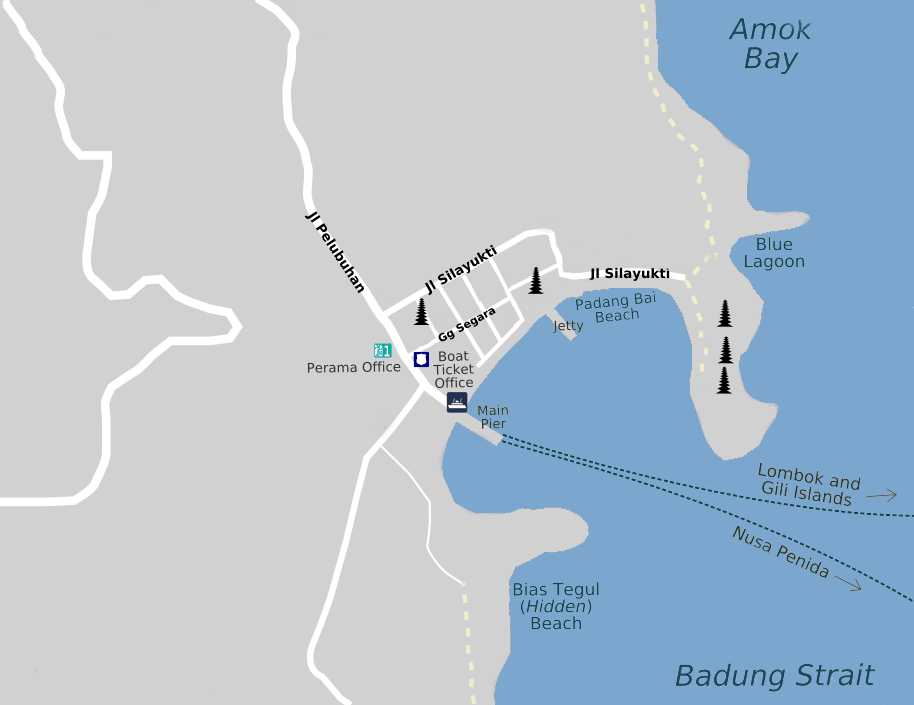
Tucked into Bali’s south‑eastern coastline and framed by headlands and calm bays, Padangbai is a small seaside town set amid striking natural scenery. It is often presented as a place with “plenty to do,” though in practice its appeal lies less in variety than in simplicity: a handful of beaches, a couple of temples, and easy access to the sea. There is usually a practical reason people visit Padangbai: the ferry port. That function shapes the town’s atmosphere. People arrive, pause briefly, and move on. The place feels suspended, as though it understands its role is transitional rather than final. Yet it isn’t without quiet beauty. Other than the port, diving and snorkelling are the town’s main draws, with healthy marine life just offshore, and in case you did not get to see enough of the sea life during the day, there is plenty of opportunity to see more at the many places open for dinner.
Blue Lagoon Beach, about 1.5 kilometres northeast of the port, sits in a sheltered bay with clear water and bright light, well suited to swimming and snorkelling. White Sand Beach (Bias Tugel), reached by a short walk over a hill southwest of town, feels more secluded, its calmer eastern end offering the best conditions for both swimming and marine life. Local vendors rent snorkelling gear and sell cold drnks—just enough infrastructure to support a long, unhurried afternoon.
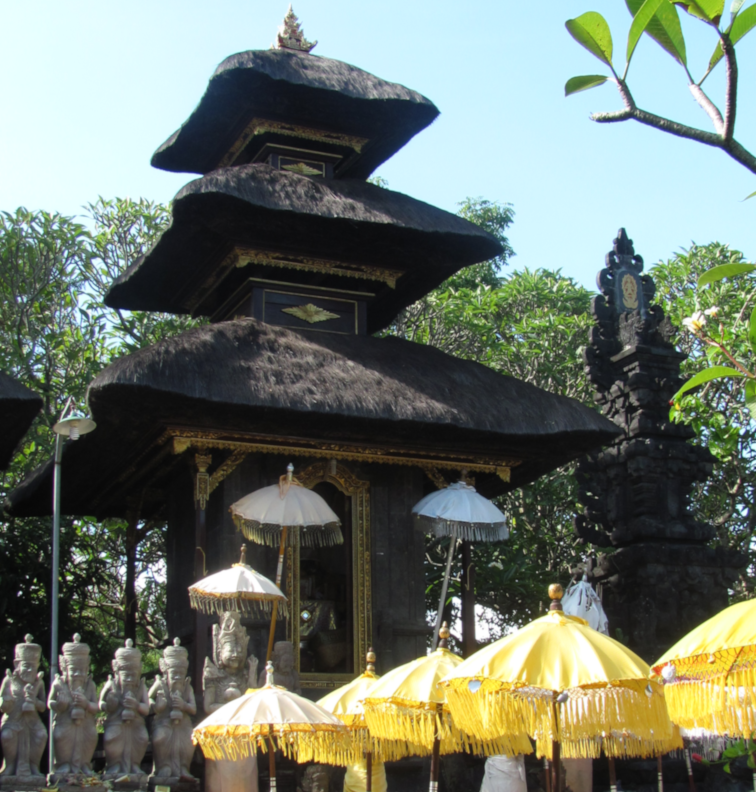
Above the town, on a headland overlooking both Padangbai and Blue Lagoon, stands Pura Silayukti, an 11th‑century Hindu temple believed to be the resting place of Mpu Kuturan, one of the most influential figures in the formation of Balinese religious life. From here, sunrise and sunset feel expansive rather than theatrical. A nearby warung serving fresh fish and beer makes it easy to linger longer than intended. A coastal path links the temple to Pura Tanjung Sari and Telaga Mas, tracing the edge of the peninsula and reinforcing the sense that sacred sites here are not isolated monuments but part of a connected landscape.
Padangbai is not without its flaws. As in many parts of Bali, inadequate waste management is impossible to ignore. Rubbish gathers where it shouldn’t, and damage to the very ecosystems that draw visitors is visible. The contrast is frustrating, and increasingly urgent. Padangbai may be a place people pass through, but what happens here—quietly, between arrivals and departures—matters more than its transient reputation suggests.
Just a note:
The general attitude toward Grab in Padangbai is hostile due to the presence of a local taxi mafia that tightly controls the port area. Although Grab and Gojek are technically allowed in Bali, they are not permitted to pick up passengers anywhere near Padangbai Harbour. Local drivers actively prevent Grab/Gojek cars from entering the port zone, and many tourists report aggressive behaviour and intimidation when trying to use app-based transport.
Getting there: From Gili Air to Padangbai
The most direct way is by fast boat. The boats run daily stopping at the other Gili islands. The crossing using takes around two hours. Tickets need to be booked in advance and will cost between £10 and £20 per person.
Uluwatu: Cliffs, Surf, Sunset and Temples
Uluwatu is often introduced through superlatives: sheer cliffs carved by centuries of wind, surf breaks that draw riders from every corner of the world, and sunsets that cast the entire peninsula in molten colour. Yet beyond the postcard drama lies a landscape shaped as much by exposure and endurance as by beauty. This is a coast where the sea behaves with relentless intent and the land responds by rising abruptly, forming a limestone rampart that defines the character of the entire region.
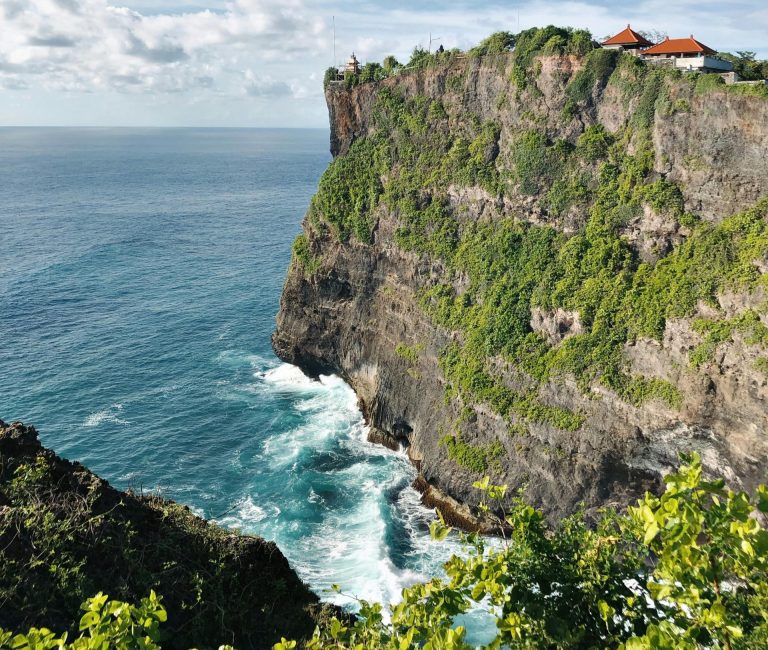
Much of Uluwatu’s terrain requires a certain commitment. Beaches are reached by descending narrow stairways cut into the cliff, turning a simple outing into a kind of descent from one world into another. The reward is a series of small coves and hidden stretches of sand – assuming the tide is right. Atop one of the highest cliffs sits Pura Luhur Uluwatu, one of Bali’s key directional temples and a spiritual sentinel for the island’s southwestern edge. The temple’s placement is deliberate: a guardian looking out over waters traditionally understood to carry both danger and transformative energy. Despite the number of visitors drawn here for sunset, the setting retains a quiet authority. The Kecak fire dance, performed in an open-air amphitheatre above the sea, gains much of its power not from choreography alone but from the natural stage over which it unfolds. Monkeys roam the temple paths with a confidence long established, adding a layer of unpredictability characteristic of many Balinese sacred sites.
Modern Uluwatu has grown rapidly, shifting from a scattered surf outpost into a mixed landscape of cliff‑top venues, contemporary cafés, villas and yoga studios. Yet the area has not slipped entirely into polish. Winding roads still trace the contours of the peninsula; offerings appear on thresholds each morning; and ceremonies continue to weave their way through the community. Despite development, the rhythm of life remains tied more to tide charts and temple calendars than to outside expectations.
Historically, Uluwatu’s significance has been rooted in spirituality rather than royal or artistic legacy. As one of Bali’s oldest sea temples, its role has been connected to protection, balance and the negotiation between the island and the forces of the open ocean. The cliffs themselves seem to participate in this guardianship—weathered, towering, and shaped by an element that never rests.
Uluwatu today occupies a space between raw landscape and curated experience. It is not defined by the complexity of a town centre, nor by dense tradition layered over centuries of settlement. Instead, it offers something more elemental: a meeting point of wind, stone, ritual and sea. The result is a place that encourages stillness as much as exploration, a coastline that asks visitors to look outward and consider the scale of the world beyond the cliff edge, and well, that means it could be a good place to get over the jetlag and wind down into our tour.
Historical Context of Pura Luhur Uluwatu
The history of Pura Luhur Uluwatu stretches deep into Bali’s past, shaped by sages, shifting religious landscapes, and a cliff that has long been regarded as a natural boundary between the seen and the unseen. The temple’s origins are traditionally traced to the 10th or 11th century, when the Javanese sage Empu Kuturan played a defining role in establishing Bali’s Hindu spiritual order. He expanded an existing shrine on this cliff edge and helped shape the wider Balinese temple system that endures to this day.
The temple’s significance was further deepened in the late 15th to early 16th century through the arrival of Dang Hyang Nirartha, one of the most influential religious figures in Balinese history. He is credited with introducing architectural forms such as the padmasana shrine and with advancing the island’s Shaivite traditions. According to Balinese belief, Nirartha ended his earthly journey at Uluwatu, attaining moksha—a moment remembered locally as ngeluhur, meaning “to go up.” This event is the origin of the word Luhur, marking the temple as a site of extraordinary spiritual elevation.
The temple occupies a crucial place within the Sad Kahyangan, the six directional temples that serve as spiritual anchors for Bali. Uluwatu protects the island from the southwest, a direction historically associated with powerful oceanic forces. It is dedicated to Sang Hyang Widhi Wasa in the form of Rudra, a deity linked to storms, the sea, and cosmic balance. The cliff’s placement—70 metres above the ocean—gives the temple a vantage point that is both physical and symbolic, a meeting of earth and water that reflects the delicate equilibrium central to Balinese cosmology.
Much of Uluwatu’s story survives through a blend of recorded history and layered folklore. In Balinese oral tradition, the rock on which the temple stands is sometimes described as a fragment of Dewi Danu’s petrified boat, connecting the site to older myths of creation and water deities. While not part of academic chronology, such stories help explain why the temple occupies an almost elemental place in the Balinese imagination.
Over the centuries, Uluwatu has remained an active site of worship. Despite periods of political change—including Dutch colonial presence and modern development—the temple has continued to host festivals, offerings, and daily rituals. Its role as both a spiritual guardian and a community sacred space has persisted with remarkable consistency. By the 20th century, restoration efforts sought to protect the complex from erosion and lightning strikes, ensuring that the structures remained intact despite the perilous position on the cliff edge.
What emerges from this layered history is a temple shaped not only by religious doctrine but by natural setting, myth, and centuries of devotion. Pura Luhur Uluwatu’s cliff‑top position is not merely scenic—it is integral to its identity, expressing a longstanding belief that places at the island’s edge act as thresholds between worlds. The temple’s endurance across a millennium speaks to its enduring importance: a sentinel of the southwest, a monument to spiritual passage, and a reminder of how Balinese culture binds story, stone, and sea into a single landscape.
Visiting Notes:
Best time to visit: Sunset is the most atmospheric time, but it is also the busiest. Late afternoon offers the strongest light on the cliffs, while early morning provides cooler air, calmer paths, and far fewer visitors. Mid‑morning to mid‑afternoon tends to draw tour groups, especially on days with a scheduled Kecak performance.
Dress respectfully: Pura Luhur Uluwatu is an active temple and follows standard Balinese dress expectations. Sarongs and sashes are usually provided at the entrance, though bringing your own is more comfortable and avoids queues. Shoulders and knees should be covered.
Expect exposure: The temple sits on an open cliff edge with minimal shade. Paths can feel hot and reflective by midday, and the combination of heat and wind can be surprisingly draining. A hat, water and sunscreen are worthwhile.
Take care on the paths: Cliff‑side walkways have uneven stones, occasional steps and sections where railings are minimal. The sea breeze can be strong; take your time, especially near the steeper drops.
Be mindful of monkeys: The resident macaques are bold and have developed a talent for opportunistic theft. Loose items—sunglasses, phones, hats—are best kept in a bag. Avoid holding food or dangling anything that might attract attention.
Kecak performance: If staying for the evening Kecak dance, arrive early to secure a seat. The open-air amphitheatre fills quickly, particularly during peak seasons. The performance ends after sunset, so paths may be darker on the walk back—keep a phone torch handy.
Behaviour inside: As with all Balinese temples, voices should be kept low, and visitors are asked not to block access points or shrine areas. Photography is allowed in most spaces, but not during certain rituals.
Facilities: Basic toilets are available near the entrance, along with small stalls selling drinks and simple snacks. Once inside the temple grounds, amenities are limited, and there is little shade—carry what you need.
Entrance fees: For international visitors, entrance tickets are IDR 60,000 (£2.60) per adult. Lower prices are quoted for locals and children. Tickets are purchased directly at the gate.
Kecak Dance tickets: The Kecak performance requires a separate ticket. On‑site prices are approximately IDR 150,000 (£6.50) for adults, though these can vary with operator and season. Online booking through authorised vendors offers a small reduction.
Parking: Parking is paid separately: IDR 4,000 for cars and IDR 2,000 for motorbikes.
Payment methods: Ticket counters accept cash and, in most cases, QRIS digital payments such as GoPay, OVO and DANA. International debit and credit cards are not consistently accepted, so carrying cash is advised.
What the ticket includes: Entrance covers access to the temple grounds, clifftop paths, and sunset viewing areas. Sarongs and sashes are provided at the entrance at no extra charge. The Kecak performance is not included and always requires a separate ticket.
Kekak Fire Dance Show
Seated in the open-air amphitheatre, facing the setting sun, the performance begins not with instruments but with voices. Around sixty male dancers descend onto the stage in a rhythmic wave, arms extended, hands trembling, chanting their hypnotic “cak, cak, cak” chorus. The Kecak Fire Dance evolved from the ancient Sanghyang ritual, in which dancers enter a trance believed to invite spirits, enabling communication with gods and ancestors. In its modern form, the performance retells the great Hindu epic The Ramayana, celebrated around the world during the festival of Diwali.
The Story
The Ramayana centres on Rama, a noble warrior prince and avatar of the god Vishnu, and Sita, his devoted and courageous wife, herself an avatar of Lakshmi. Their peaceful life is shattered when Ravana, the ten‑headed demon king, becomes infatuated with Sita and vows to claim her.
One day in the forest, Ravana disguises himself as a wounded deer to lure Rama away. Compassionate by nature, Sita urges Rama to help the injured creature, not realising it is a trap. Before leaving, Rama draws a protective magic circle around her—a boundary she must not cross.
Seeing his moment, Ravana transforms again, this time into a thirsty beggar. Wanting to offer help, Sita steps beyond the circle, and Ravana instantly resumes his true form, seizing her and spiriting her away to his fortress on the island of Lanka.
Distraught on discovering her disappearance, Rama searches the forest until he encounters Hanuman, the monkey king and an incarnation of Lord Shiva. Hanuman pledges his help and travels across oceans and mountains in search of Sita, eventually finding her imprisoned in Ravana’s palace. He brings news back to Rama, who gathers an army of monkeys and builds a mighty bridge to reach Lanka.
A vast battle ensues, lasting ten days. Finally, with a divine arrow gifted by the gods, Rama strikes Ravana down. Reunited at last, Rama and Sita begin their journey home. To guide them safely, every household in the kingdom lights an oil lamp—a luminous welcome still echoed in the Diwali tradition today.
The Modern Adaptation
Although the Ramayana dates back to at least the sixth century, the modern Kecak Fire Dance is surprisingly recent. Developed in the 1930s through a collaboration between Balinese dancer Wayan Limbak and German artist Walter Spies, this adaptation blends ritual, performance, and theatre.
In this version, Ravana captures Hanuman and attempts to burn him alive. As the flames rise and the circle of dancers intensifies their chants, Hanuman—empowered by supernatural strength—escapes the blaze. The moment he rises, unscathed and triumphant, is the dramatic climax of the performance and the reason the Kecak is often called the fire dance.
A fusion of myth, ritual and spectacle, the Kecak Fire Dance remains one of Bali’s most atmospheric and unforgettable cultural experiences.