
Packing for the Journey, Not the Catwalk
I can remember seeing footage on Pathe News — no, I am not that old, but that is how history works (side stepping a rant I have playing out in my head) — of the England cricket team setting off for Australia for the Ashes. The voice‑over would announce something like:
“The MCC leave for Australia in the Orient liner Orontes, to face the old enemy once again, with captain Douglas Jardine confident he can bring home the Ashes.”
That would have been 1932. In those days the journey alone took four to six weeks. There was time to settle in, time to unpack, and even an expectation to dress for dinner. No wonder the amount of luggage taken was fairly substantial.
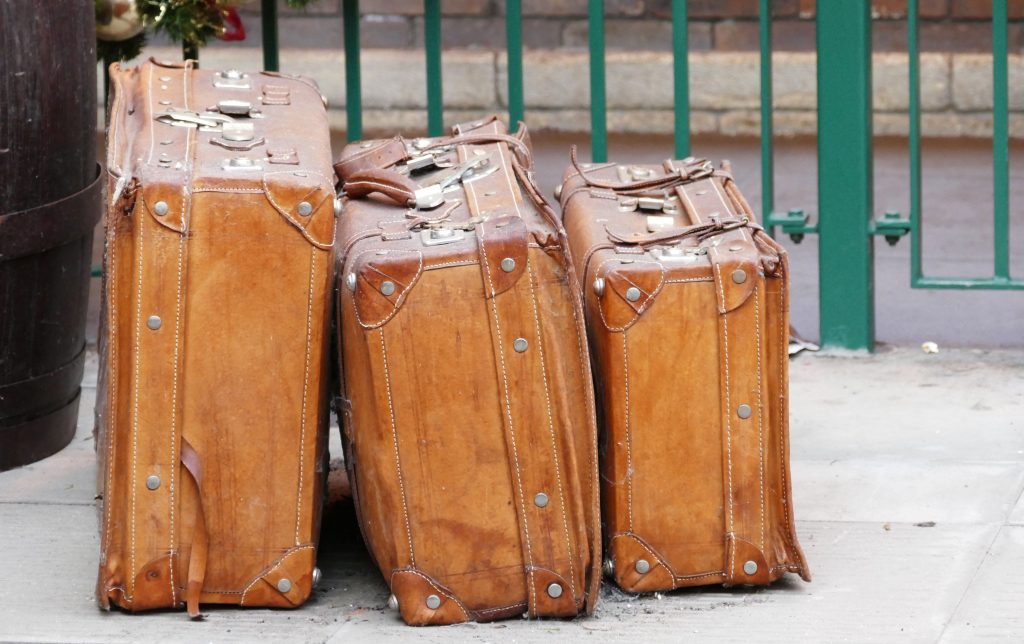
Today, a similar journey takes less than a day, yet somehow the luggage has not become any lighter.
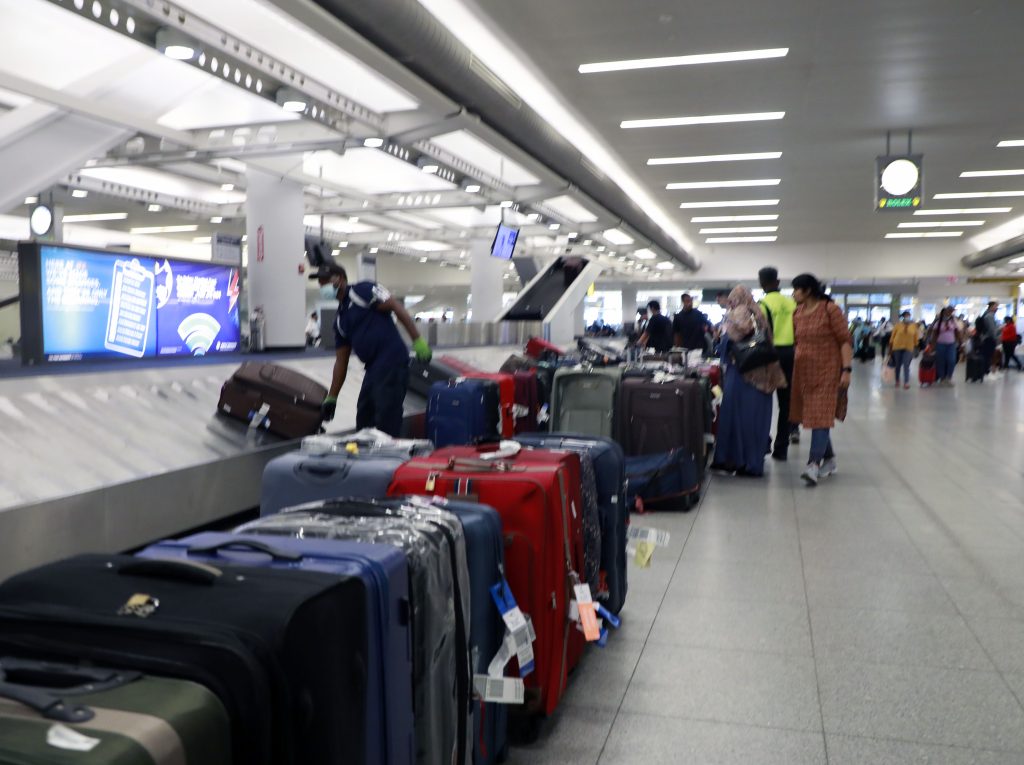
I always smile at the people pushing airport trolleys that seem to have a mind of their own, stacked high with suitcases as though the maximum baggage allowance is a challenge that must be met. We all know people who travel this way. Fourteen days away, ten pairs of shoes packed, two pairs worn, and a selection of clothes that never see daylight until they are unpacked again at home.
Then there is the environmental cost — not of flying itself, but of what we choose to take with us.
The carbon cost of luggage
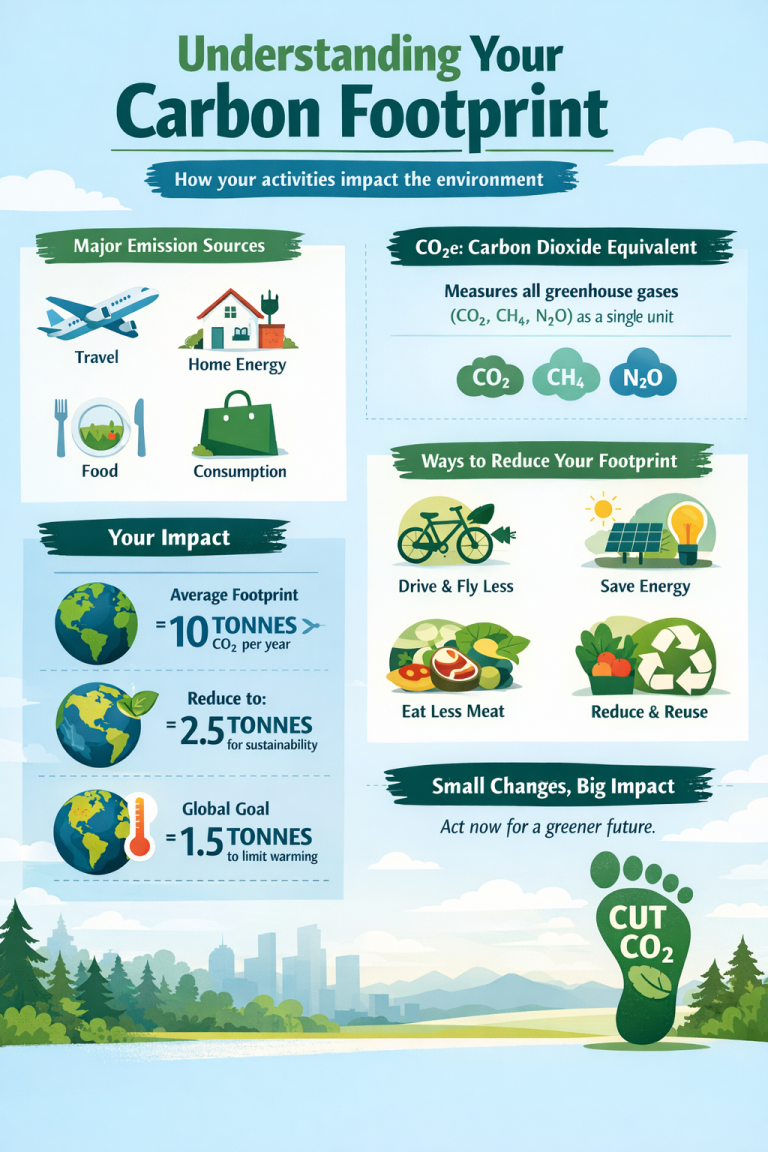
A commonly used figure for long‑haul economy flying is around 0.12 kg of CO₂‑equivalent per passenger per kilometre. That figure assumes an average passenger plus checked baggage mass of around 100 kg.
If emissions are roughly proportional to mass, that gives us a useful way of thinking about luggage:
- 0.12 kg CO₂e /passenger-kilometre/ 100 kg
- ≈ 0.0012 kg CO₂e /kg /km
Which can be restated more practically as:
- ≈ 0.0012 kg CO₂e /kg of luggage /km
- ≈ 1.2 kg CO₂e /g of luggage /1,000 km
So, for a 25 kg bag on a 10,000 km long‑haul flight:
25 kg × 10,000 km × 0.0012 ≈ 300 kg CO₂e
That is the carbon cost of the bag alone, not the seat, not the aircraft, just the additional weight.
From this we can derive a simple formula:
CO₂e (kg) = luggage weight (kg) × flight distance (km) × 0.0012
Applying it to a real journey
The distance from London to Bali, with a layover in Kuala Lumpur, is approximately 12,570 km.
Using the same 25 kg bag:
25 kg × 12,570 km × 0.0012 ≈ 377 kg CO₂e
That is the distance the aircraft must carry each additional kilogram.
Now consider packing differently. If the same trip is done with 10 kg of luggage:
10 kg × 12,570 km × 0.0012 ≈ 151 kg CO₂e
Simply by packing more thoughtfully, the emissions associated with luggage fall by more than half.
Packing for reality, not appearances
To be honest, for me at least, the days of needing several outfits per day on holiday are long gone. On a trip like this we will not be doing fine dining — although I am sure we will be eating plenty of good food — and we will not be camped in one place for long. More importantly, I care far less than perhaps I once did about what anyone else might think.
So, we will be working to the 5‑4‑3‑2‑1 packing principle:
- 5 pairs of socks and underwear
- 4 shirts, tops, or T‑shirts
- 3 shorts or trousers
- 2 pairs of shoes
- 1 jumper, hat, light coat
With a little thought about colours and layers, that comfortably delivers a dozen workable outfit combinations. It is a classic one‑bag, carry‑on‑only approach.
In total each of us are looking to carry about 5kg clothing.
A note on scale and perspective
I know there will be people who argue that long-haul flights are destroying the planet. Aviation does account for around 2.5% of global CO₂ emissions, which is not trivial, but scale matters.
In England alone, emissions from drained agricultural peatlands have been estimated at around 8.5 million tonnes of CO₂ equivalent per year, roughly 3% of national greenhouse gas emissions. Restoring and managing those peatlands offers orders of magnitude more climate benefit than arguing about how many shirts someone took to Bali.
That does not mean individual choices are irrelevant. It does mean climate action works best when it focuses on proportion, leverage, and things we can change.
I may not be able to re‑wet a fen this year, but I will continue to work with others so that we can make a significant difference and help meet the country’s climate targets (see paludiculture.org.uk). And, at the same time, I can decide not to take ten pairs of shoes halfway around the world.
In the modern age, that feels like a reasonable place to start.