
Cameron Highlands: Green Corduroy Hills and Plastic‑Wrapped Slopes
Cameron Highlands wasn’t supposed to be a major stop on this trip. It was meant to be a brief pause between destinations, a cool breather before heading back into the lowland heat. Instead, it became one of those places that quietly ambushes you. With misty mornings, monsoon afternoons, and tea valleys that look borrowed from postcards. What began as a short paragraph turned into an unexpectedly memorable chapter. Part hill‑station nostalgia, part agricultural dystopia, part strawberry‑themed fever dream.
When we left Munduk in Bali we thought about the next time we hit the mountains would be during our transition down the centre of the Malaysian peninsular and that seemed a long way off, well time once again makes fools of us all and here we are, currently on the bus on the descent from the hill town of Tanah Ratah to Kuala Lumpur, winding our way down a road that seems to have been designed by someone with a grudge against straight lines.
The descent is a choreography of bends: hairpins, half‑hairpins, corners that appear without warning, and long looping curves that reveal entire valleys before snatching them away again. The vegetation changes from tea plantations and cloud forest at the top to oil palms and banana plants at the bottom. We passed stalls selling strawberries in plastic punnets, durian stacked like spiky cannonballs, baskets woven from rattan, and the Lata Iskander Waterfall, a big roadside waterfall, a wide, tiered cascade spilling over golden‑brown rock, fanning out into shallow pools before slipping under the bridge and continuing down the valley. A little worrying, there are several packs of dogs (if three or four dogs in a group is a pack) that seem to be feral. Occasionally the road narrows to almost a single nervous lane where erosion has eaten away the verge, the bus edging past with the confidence of a vehicle that has done this a thousand times and survived every attempt by gravity to intervene. It’s a descent that keeps you awake, whether you want it to or not.
Our original plan was to spend three days here before moving on to Kuala Tahan, to visit what is claimed to be the oldest rain forest in the world, but noted during the preparation work for this trip that some of the facilities were currently closed and others in need of repair, so we decided to head back to Kuala Lumpur and spend some more time there. However, we were a little disappointed at what Kuala Lumpur had to offer so started to look at some alternatives, heading back up to Ipoh was a much-considered option, or heading to the small town of Raub to visit Robinson Hill, but in the end decided to extend our stay in Cameron Highlands. Perhaps it was the view from the balcony across the valley, watching the monsoon clouds roll in with clockwork precision every afternoon. Perhaps it was the tandoori chicken Jay ordered almost every night. Perhaps it was the climate, pleasantly cool, like late May back home. Or perhaps it was the simple luxury of a room with a bath and unlimited hot water. Most likely it was a combination of all of the above.


Doh!: A Valley of Tea and Tourists
I’ll admit I expected the Highlands to resemble Sri Lanka, where it seems like the hills from Ella to Kandy are carpeted with tea in every direction. Online photos certainly give that impression, endless green terraces rolling into misty horizons. But the reality is patchier: pockets of immaculate tea valleys separated by stretches of forest, farmland, and more than the occasional eyesore. Even Tanah Rata seems aware of this last point. There’s an information panel in town explaining the history of the region, and it’s surprisingly blunt about the lack of planning behind the Highlands’ continued expansion. You would have thought the board was written by the same people who approve the planning permissions, but apparently even they’ve reached the point of politely admitting that things may have got a little out of hand. It’s a strange moment: standing in a place famous for its cool air and colonial charm, reading an official sign that gently suggests the whole area could do with a rethink.
To go and see one of the tea plantations we joined a very cheap tour, the sort of Instagram‑friendly outing where you try to look like you are the only people on the hillside while perhaps one hundred other people do exactly the same thing around you.
The trip was in the back of a Land Rover. Having driven a Land Rover that had been round the clock a couple of times, dropping down a slip road onto the A14 thinking “oh, we are going to die” as water trickled down your neck from the leak in the roof and you reached the top speed of 40 mph, I thought it was an unnecessary addition to the tour. The driver admitted it wasn’t necessary but insisted it was a great piece of British heritage. He wasn’t alone: the plantation car park and roads around the area looked like a tribute to the great British motor industry, or possibly a Top Gear special filmed in a tea valley. On ours the passenger door came open every time we hit a bump, which added a certain frisson to the experience.
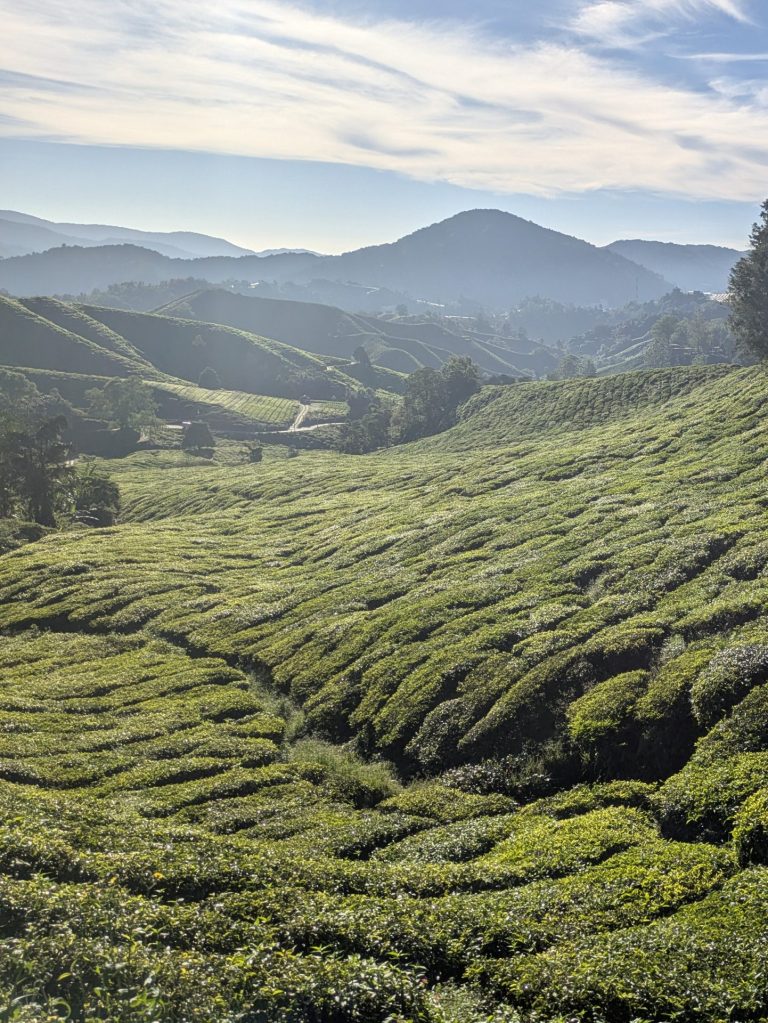
Still, the valley itself was stunning: neatly manicured tea bushes arranged in perfect rows, rolling down the slopes like green corduroy under a clear morning sky. After a brief explanation of Malaysian tea production, some of which I agreed with, some of which I may need to Google, we drove down to the BOH plantation factory and visitor centre. We expected a range of teas: green, English breakfast, maybe something floral. Instead, the offerings were instant tea with milk and sugar already added (“just add water”), green tea with milk powder (and no doubt tonnes of sugar), and a tea‑coffee hybrid that sounded like the sort of thing Deano in Gavin and Stacey might drink. We did not try it. Jay asked someone who had, and the “it’s nice” reply didn’t quite reach his eyes. Having seen tea production in Sri Lanka, we skipped the tour and headed to the café for a green tea and an Earl Grey.


The Mossy Forest: A Short Walk at Altitude
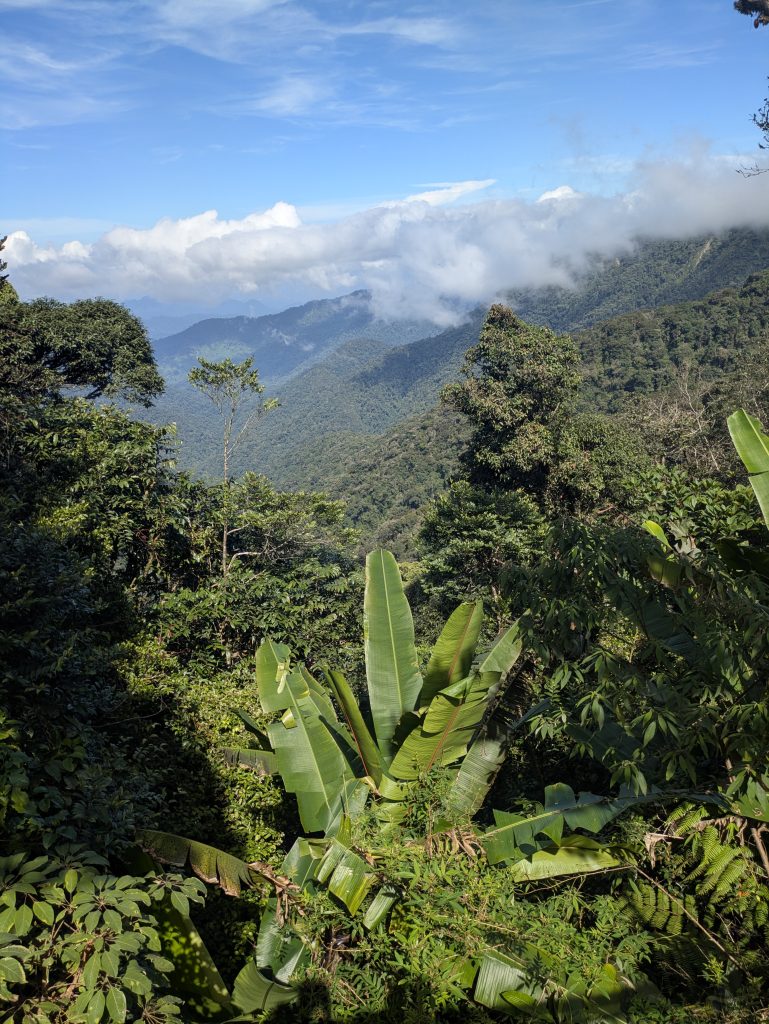
Pleasantly refreshed, we left the plantation and headed further up the mountain to about 2,000 metres above sea level. We were visiting a patch of forest that promised sweeping views, and on a good day a view of the sea and Pangkor Island shimmering faintly on the horizon. I guess they use the same advertising company as the Eryri National Park Authority, albeit we could see further than the three metre view I usually get from the top of Snowdon.
The Forestry Commission charges for entry, but the route was shorter than advertised thanks to a landslide and a general air of neglect. The entire region has only thirty park rangers, who cannot keep up with the maintenance and knowledge exchange work they are expected to do. If they want people to visit, perhaps they should invest in making the trails safe and the forest accessible. A good example is the waterfalls around Munduk, where someone collects your entrance fee but the paths are immaculate, the steps secure, and the experience worth every rupiah. In Cameron Highlands, by contrast, you pay for the privilege of walking a few hundred metres through a forest on a boardwalk that feels as though it’s waiting for someone to remember it exists. The guide informed us that this is in fact the oldest forest in Malaysia, not Kuala Tahan or one of the other pretenders, but they do not make the claim so they can reduce the number visitors and reduce the impact on their precious water source.
Our guide also explained that there are no large animals in the forest because of high UV levels at altitude, not completely convinced as there are plenty of examples around the world (snow leopard, yak, and bar-headed goose for a start) who also do not have the canopy for protection. You cannot help but think that the miles of polytunnels, where much of Malaysia’s fruit and vegetables are grown, and the tea plantations might also have something to do with the lack of diversity.
The polytunnels stretch across entire hillsides, gleaming white and plastic, giving parts of the Highlands the look of an agricultural dystopia. Their environmental impact is not just visual and habitat destruction, the reflective surfaces also contribute to rising temperatures in the Highlands (the albedo effect), reducing rainfall in a region whose water catchment supports well over a million people downstream.



Matlock Bath, with Strawberries
The Cameron Highlands themselves have a long history: developed as a British hill station in the 1920s, they became a retreat for colonials escaping the lowland heat. Tea plantations followed, along with vegetable farms, strawberry patches, and eventually the weekend crowds from Kuala Lumpur. The region today is a mix of nostalgia, agriculture, and tourism, charming in places, chaotic in others.
If Tanah Rata is Matlock, then Sungai Bertam is Matlock Bath, only with strawberries. Sungai Bertam is a riot of colour and noise: stalls selling strawberry ice cream, strawberry jam, strawberry tea, strawberry magnets, and strawberries dipped in chocolate; motorbikes weaving through gridlocked traffic; families posing for photos well just about anywhere. It was packed, clearly a favourite weekend spot for locals, and, like Matlock Bath, offered no chance of a decent cup of coffee (although to be fair it has been over twenty years since we last passed through Matlock Bath).
Following the road out of the chaos, we came across The Smokehouse, a Tudor‑style hotel and restaurant built in the 1930s. It looks like someone airlifted a slice of Surrey into the Highlands: timber beams, manicured gardens, fireplaces, stocks in the garden and afternoon tea served with the sort of ceremony that suggests the British Empire never quite ended. We’d remembered reading about it once, then promptly let it slip into the fog, a gentle reminder that our research habits could do with a tune‑up. Every so often we stumble into something marvellous entirely by accident, usually a place or story we did know about once, tucked away in the mental attic. It does make you wonder what else is out there, quietly waiting, missed only because we forgot to look in the right drawer.
We continued up into the hills on one of the few circular routes in the area, giving us a chance to see what we’d been looking at through binoculars from our balcony. It was little more than a pleasant leg‑stretch, but we did spot a troop of silver‑thighed surillo, small, agile monkeys with pale fur on their legs and expressive faces, watching us from the trees, not sure whether to run away or carry on eating.
Cameron Highlands turned out to be one of those places that is both exactly what you expect and nothing like it at all. The cool air, the tea valleys and the misty hillsides were everything the brochures promised, but so too were the eroded trails, the plastic‑wrapped slopes, and the weekend chaos that seems to descend the moment the sun comes out. Yet somewhere between the monsoon clouds rolling in with military punctuality, the tandoori chicken eaten with near‑religious devotion, the improbable Tudor hotel, and the silver‑thighed surillo watching us with mild suspicion, the Highlands grew on us. Not in the polished, postcard way of Sri Lanka’s tea country, but in the way of places that reveal themselves slowly, quirks and flaws included. As we packed our bags and prepared to head back down the mountain, it felt less like leaving a destination and more like stepping away from a slightly eccentric friend, one who doesn’t always make the best decisions, but whose company you end up enjoying all the same.

