

Travel guides and resources
Cambodia
Where Ancient Wonders Live On
Information and links
Quick facts
🏙️ Capital City: Jakarta (transitioning to Nusantara)
🗣️ Main Language: Bahasa Indonesia
🕌 Main Religion: Islam (approx. 87%)
🕒 Time Zones: GMT +7 (Sumatra, Java), +8 (Bali, Lombok), or +9
👥 Population: 284 million
Money and Payment
🪙 Currency: Indonesian Rupiah (IDR)
🏧 ATMs widely available in cities; limited in rural areas
💵 Cash preferred in markets and small shops
🎁 Tipping appreciated (5–10% in restaurants)
Climate and Weather
☀️ Dry season: May–September
🌧️ Wet season: October–April
🌡️ Indonesia: 26–28°C (warm and tropical)
Even in the mountains, it’s pleasantly cool rather than cold (typically 18–24°C)
🏝️ Weather varies by island
Health and Safety
🦟 Use mosquito repellent (dengue & some malaria‑risk areas)
🚰 Drink bottled water
🚨 Emergency Numbers:
General Emergency: 112
Ambulance: 118 / 119
Police: 110
Fire: 113
Natural Disaster: 129
Transport
✈️ Domestic flights common across islands
Link
🚕 Gojek & Grab for city travel
Link
⛴️ Ferries/boats frequent but weather‑dependent
Link
Trains
Link
Connectivity
📶 Cheap local SIM cards (Telkomsel, XL, Indosat) or eSIM such as Airalo
🌐 Fast internet in cities; slower in remote areas
☎️ Telephone Code: +62
Cultural Etiquette
🙏 Dress modestly at religious sites
🤝 Use your right hand for giving/receiving
👞 Remove shoes when entering homes or sacred buildings
Entry and visas (from UK)
🛬 Visa on Arrival available for many nationalities.
60-day visa, often known as the B211A Visit Visa, is vailable for tourism, business, or family visits. It is obtained as an e-Visa online at evisa.imigrasi.go.id before arrival for approximately IDR 1,500,000
📘 Passport must have 6 months validity
Public Holidays - Key 2026 Indonesia Public Holidays
January 1: New Year’s Day
January 16: Isra Mi’raj (Prophet Muhammad’s Ascension)
February 17: Chinese New Year (Imlek)
March 19: Nyepi Day (Bali Day of Silence)
March 20-21: Idul Fitri (End of Ramadan)
April 3: Good Friday
May 1: International Labor Day
May 14: Ascension of Jesus Christ
May 27: Idul Adha
May 31: Waisak Day (Buddha’s Birthday)
June 1: Pancasila Day
June 16: Islamic New Year
August 17: Independence Day
August 25: Prophet Muhammad’s Birthday
December 25: Christmas Day
Collective Leave Days (Cuti Bersama) 2026
Feb 16: Chinese New Year
Mar 18 & Mar 20–24: Nyepi and Idul Fitri
May 15 & May 28: Ascension/Idul Adha
Dec 24: Christmas Eve
The Never Ending Archipelago
Indonesia isn’t just about the beaches and beach clubs in a small area of Bali—it’s a mix of wild nature, rich history, and vibrant culture. Whether visiting a volcano, swimming in crystal-clear waters, or exploring ancient traditions and culture, this archipelago will not disappoint.
The vast spread of the archipelago and its global positioning mean there is an incredible variation of bustling cities, serene beaches, volcanoes, impressive waterfalls, remote jungles, and coral-fringed islands. Each Indonesian Island has its own vibe—Java is all about culture and history, temples like Borobudur and Prambanan. Bali is recognised for a mix of beaches and spirituality (although there is much more to it than that), and Sumatra is an area of great biodiversity.
The sheer size of the country means you can spend months exploring and still not see it all. We have taken the decision to explore the western end of the archipelago – starting in Bali, then Lombok, Gili Air and back to Bali, heading north through the centre and across the northern coast and into Java. We could visit one of the smaller islands on the way to Singapore but will certainly spend some time in Sumatra towards the end of this part of the journey. We will also visit Borneo but will be on the Malay side rather than the Indonesian side. A possible trip for a future journey will be to head east to Flores for Komodo dragons and Sulawesi.
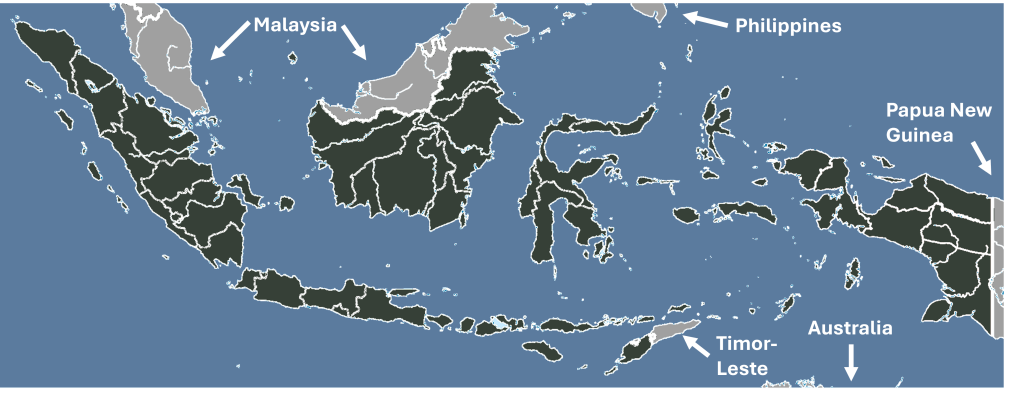
Indonesia is the largest archipelago on Earth, with over 17,500 islands stretching from the Malay Peninsula all the way to Queensland, Australia. A distance of about 5,100km—12% of the Earth’s circumference! As a result, Indonesia has the second-longest coastline in the world—around 54,716km (if interested Canada’s coastline is four times longer). Its land area is roughly 8 times that of the UK.
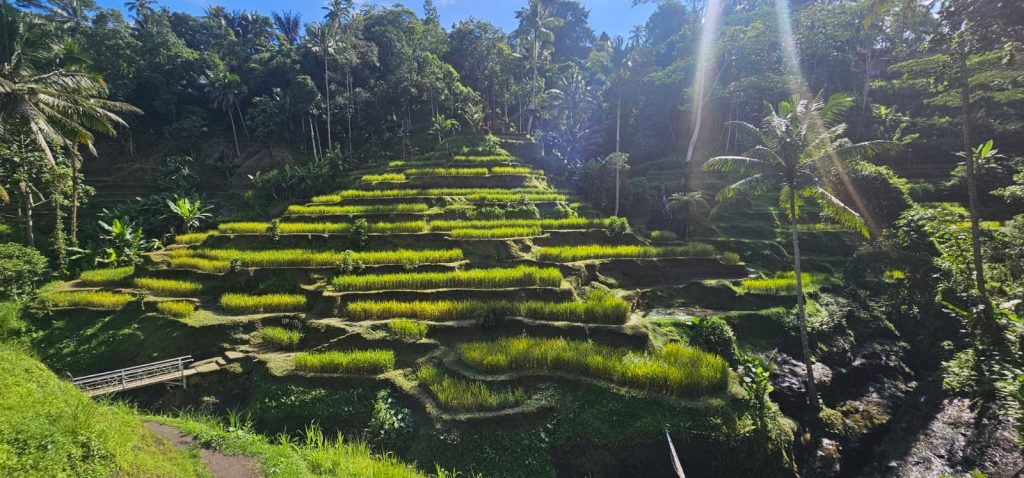
Volcanoes
Indonesia sits on the Pacific Ring of Fire, so expect drama—over 130 active volcanoes with regular reports of activity. The volcanoes have shaped the land and created lush, fertile soils. Famous volcanoes include:
- Mount Bromo: A surreal sunrise spot in East Java. We may join the parade of vehicles heading towards this are during the early hours to view the sunrise over the volcanic landscape (trust me I am under no illusion that we will be up there on our own!)
- Mount Rinjani: Situated on Lombok. It reaches an elevation of 3,726m, making it the second-highest volcano in Indonesia. We will spend some time in the shadow of this volcano visiting the lush landscape and waterfalls around Senaru.
- Mount Merapi: One of the most active volcanoes in the world and the most active in Java, situated only 32km north of Yogyakarta. It is the most active volcano in Indonesia. A small eruption occurs on average every three years and a major one every ten to fifteen years. The volcano has been consistently erupting throughout 2025, characterised by frequent pyroclastic flows, lava avalanches, and ash plumes.
- Mount Marapi: Did I forget to mention there were two of them, well almost? This one is on Sumatra, and like the quasi-homonym on Java, its name means “Mountain of Fire”. We plan to travel between the small village of Bukit Lawang and Lake Singkarak, which lies in the shadow of this volcano.
- Mount Semeru: Standing at 3,676 meters above sea level, is the highest mountain on the island of Java. It is also only about 50 meters shorter than Mount Rinjani, the second-highest volcano in Indonesia. Semeru remains highly active, with near-continuous eruptive activity characterised by daily ash emissions and occasional pyroclastic flows. The volcano is currently at Alert Level 3 (Siaga). Authorities have warned residents and visitors to avoid the summit area and to stay clear of the Kobokan drainage, where there is an elevated risk of hot volcanic clouds and lava flows. Activity is centered at the Jonggring Seloko crater, which frequently produces explosive eruptions that send ash plumes 400–1,000 meters into the air. These eruptions are often accompanied by incandescent lava avalanches descending Semeru’s southeastern flanks, underscoring the persistent hazards posed by the volcano. We have booked to stay at a hotel 12km south of the summit.
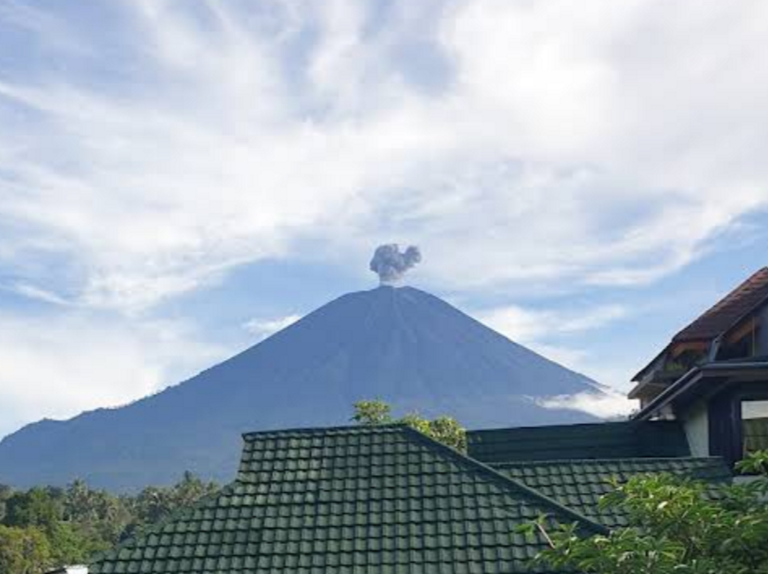
Biodiversity (Almost) Like Nowhere Else
From the prehistoric might of Komodo dragons to the enchanting beauty of Wilson’s bird-of-paradise, Indonesia offers wildlife encounters that are as rare as they are unforgettable. Its vast mosaic of ecosystems—shaped over millions of years by shifting continents, volcanic activity, and evolutionary isolation—makes the archipelago one of the most extraordinary places on Earth for nature exploration.
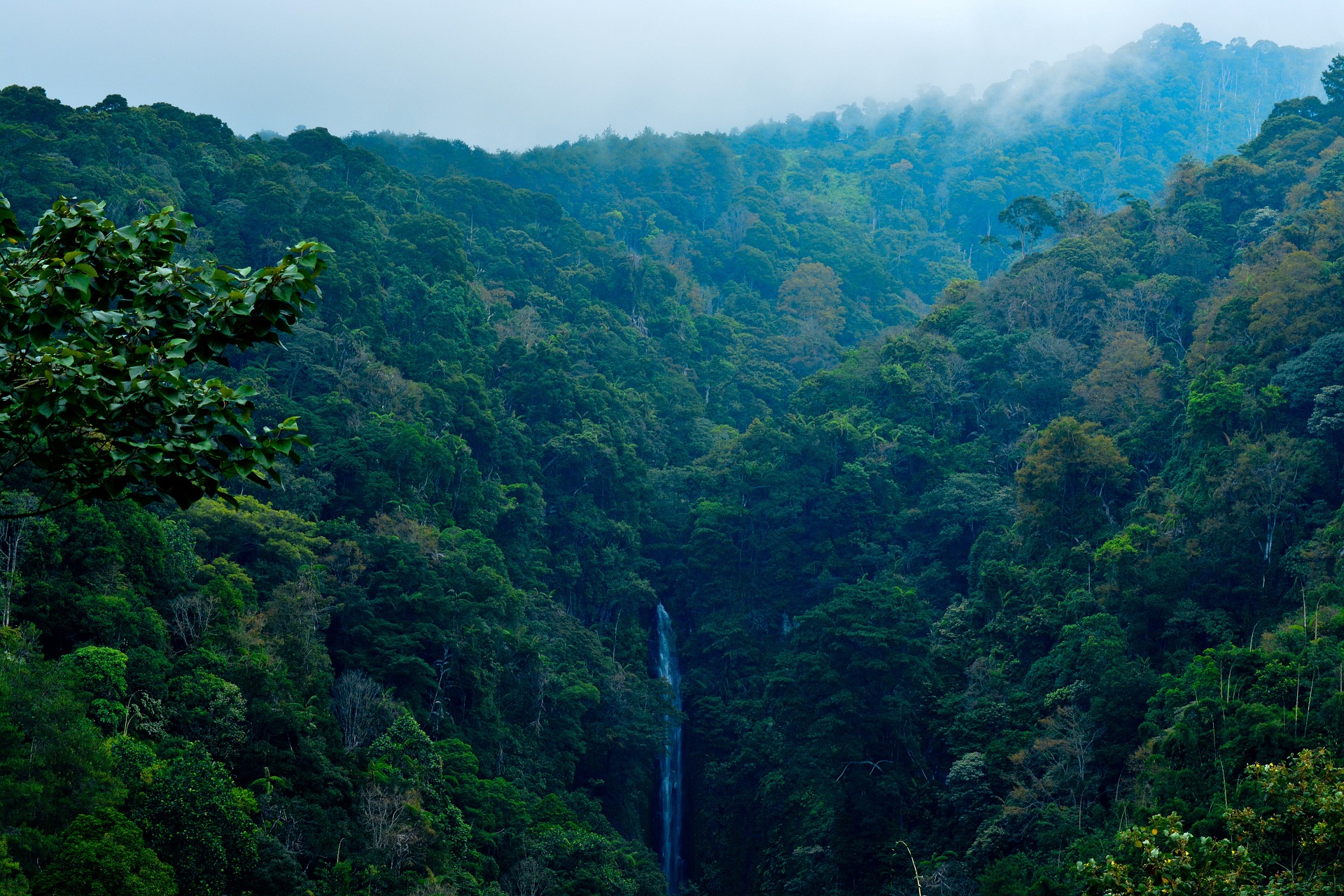
Indonesia also ranks second in the world for biodiversity, a distinction due to its diverse landscapes and unique ecological history. Tall rainforests shelter iconic species such as orangutans, while its surrounding waters lie within the Coral Triangle, home to some of the most vibrant marine ecosystems on Earth.
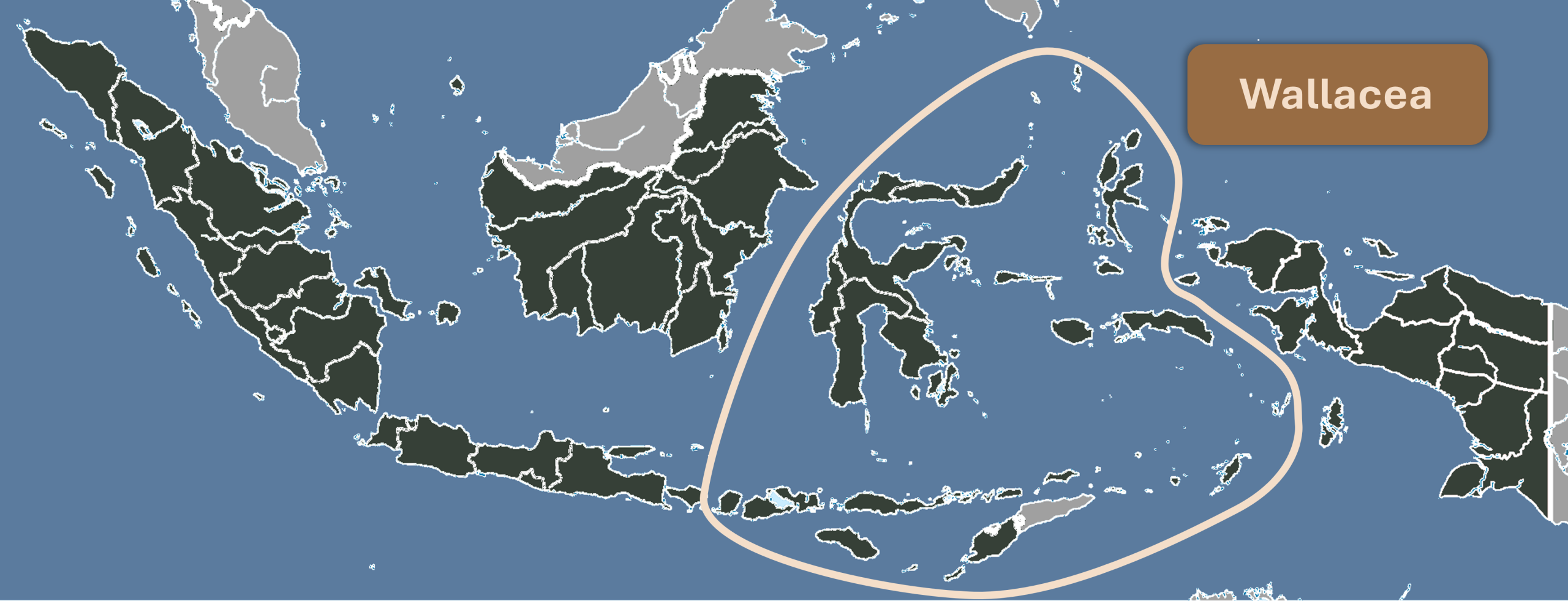
This vast natural wealth is split into two major biogeographic regions — Sundaland in the west and Wallacea in the east. The two areas are separated by the Wallace Line, a conceptual boundary proposed by Alfred Wallace in 1859 that follows the deep water straits dividing the Indonesian archipelago into two regions.
Sundaland
Sundaland includes Sumatra, Java, Borneo, Bali and the smaller surrounding islands to the west of Bali, whose fauna share similar characteristics with the mainland Asian fauna. During the ice age, lower sea levels connected the Asian continent with the western Indonesian archipelago. This enabled animals from the Asian mainland to migrate over dry land to Sundaland.
Wallacea
Wallacea marks the biogeographical crossroads between Sundaland and the Australasian region. The deep‑water straits mean it has always been isolated from both sides and the islands have been colonised only through over‑water dispersal, resulting in a unique mix of species found nowhere else. Wallacea covers about 338,494 km² with a varied landscape that supports a remarkable range of endemic flora and fauna. The region includes distinct ecoregions such as the mountain and lowland zones of Sulawesi, the islands of North Maluku, Buru, Seram, the Lesser Sundas (with Sumba standing alone as its own ecoregion), Timor, and the biodiversity‑rich islands of the Banda Sea.
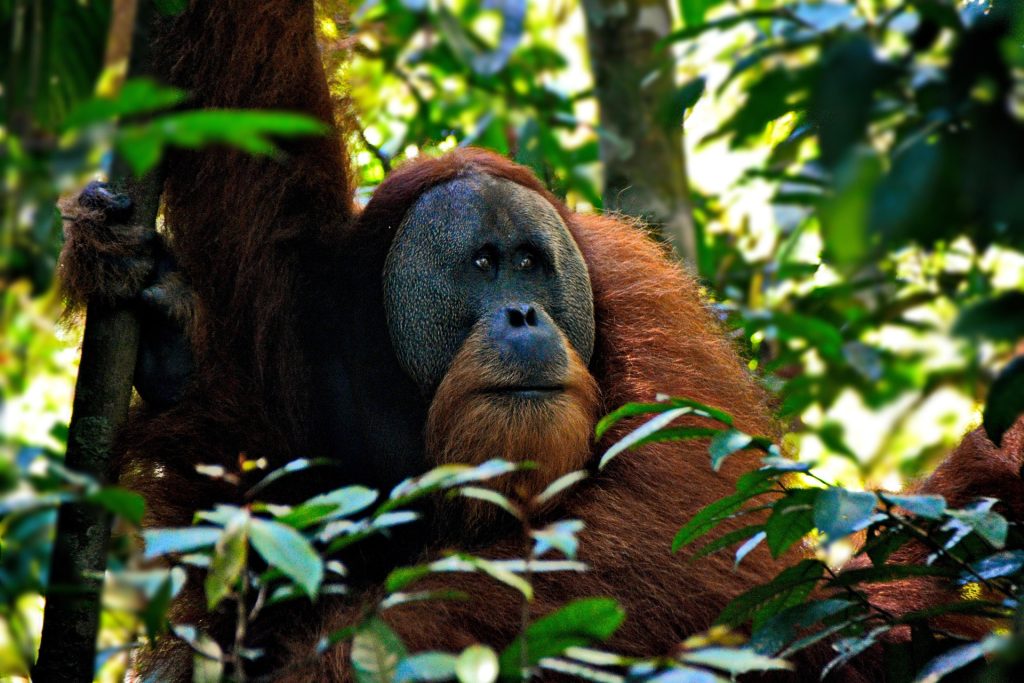

Indonesian Wildlife Highlights
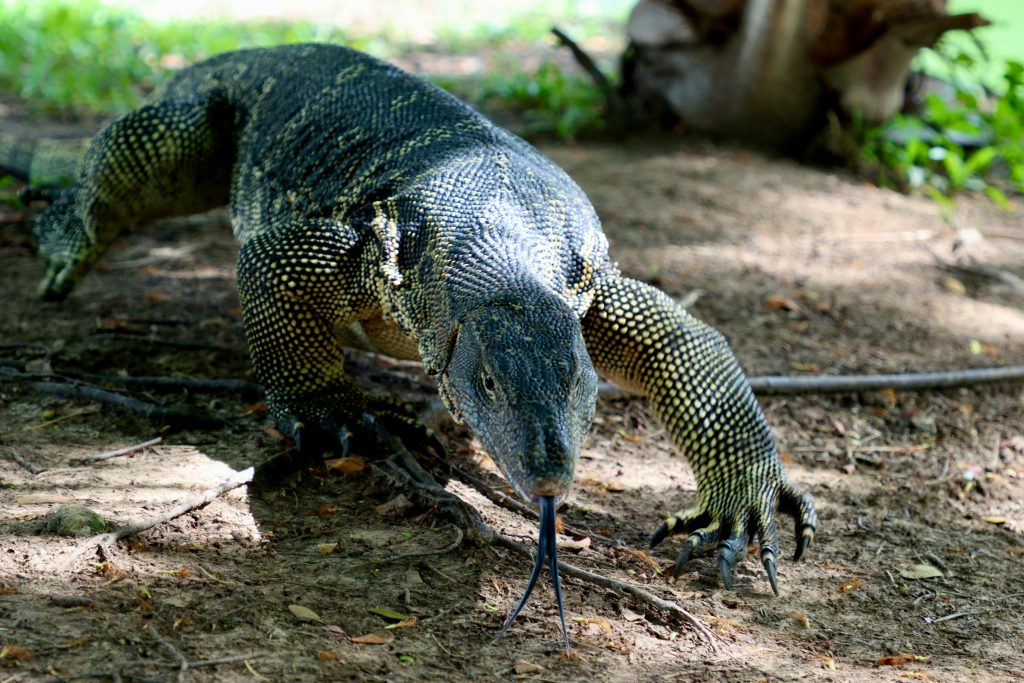
Komodo National Park — Realm of the Dragons: Walk the rugged savannas of Komodo, Rinca, or Flores to meet the legendary Komodo dragon, the world’s largest lizard and Indonesia’s national animal. These powerful reptiles are found naturally on only a handful of islands.
Sumatra & Borneo — Home of the Great Apes: The rainforests of Sumatra and Indonesian Borneo (Kalimantan) are among the last strongholds of the orangutan. Sumatra hosts not only the Sumatran orangutan but also the Tapanuli orangutan, the world’s rarest great ape.
These forests are also home to other critically endangered mammals, including:
- Sumatran tiger, the smallest surviving tiger subspecies.
- Sumatran rhinoceros, one of the world’s most threatened large mammals.
- Sumatran elephant, a subspecies of Asian elephant.
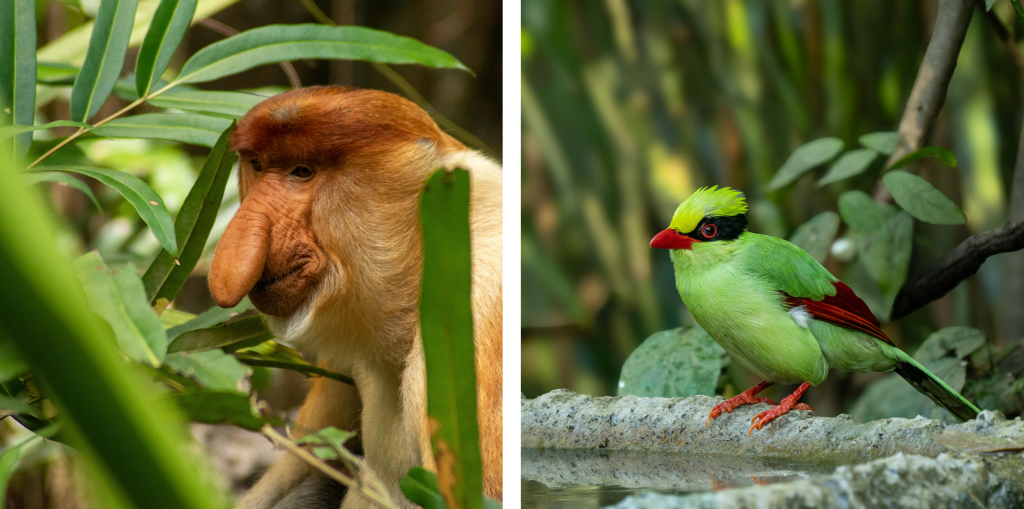
- Proboscis monkey, endemic to the island of Borneo and on the IUCN red list of threatened species primarilly because of habitat loss because of logging and oil palm plantations
Java — Rare Forest Specialists: Java’s forests shelter species found nowhere else, such as:
- Javan rhinoceros, restricted to Ujung Kulon and considered critically endangered.
- Javan leopard, an elusive predator living in scattered forest reserves.
- Javan hawk‑eagle and Javan green magpie, striking birds of mountain forests.
Sulawesi — Evolution in Isolation: Sulawesi’s unique shape mirrors its exceptional wildlife. Long isolated from the Asian and Australian continents, the island is home to:
- Celebes crested macaque, a charcoal‑black primate known for its expressive face.
- Mountain and lowland anoa, a dwarf buffalo species found only in Sulawesi.
- Maleo, a remarkable bird that buries its eggs in volcanic sand heated by the earth.
- Babirusa, a deer‑pig with distinctive curled tusks.
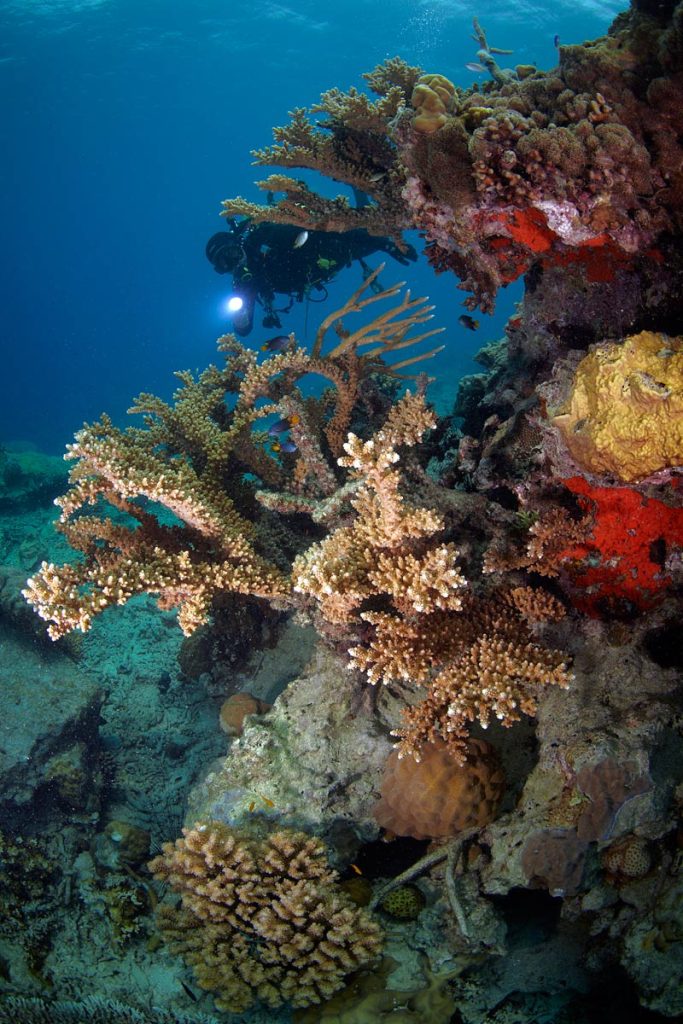
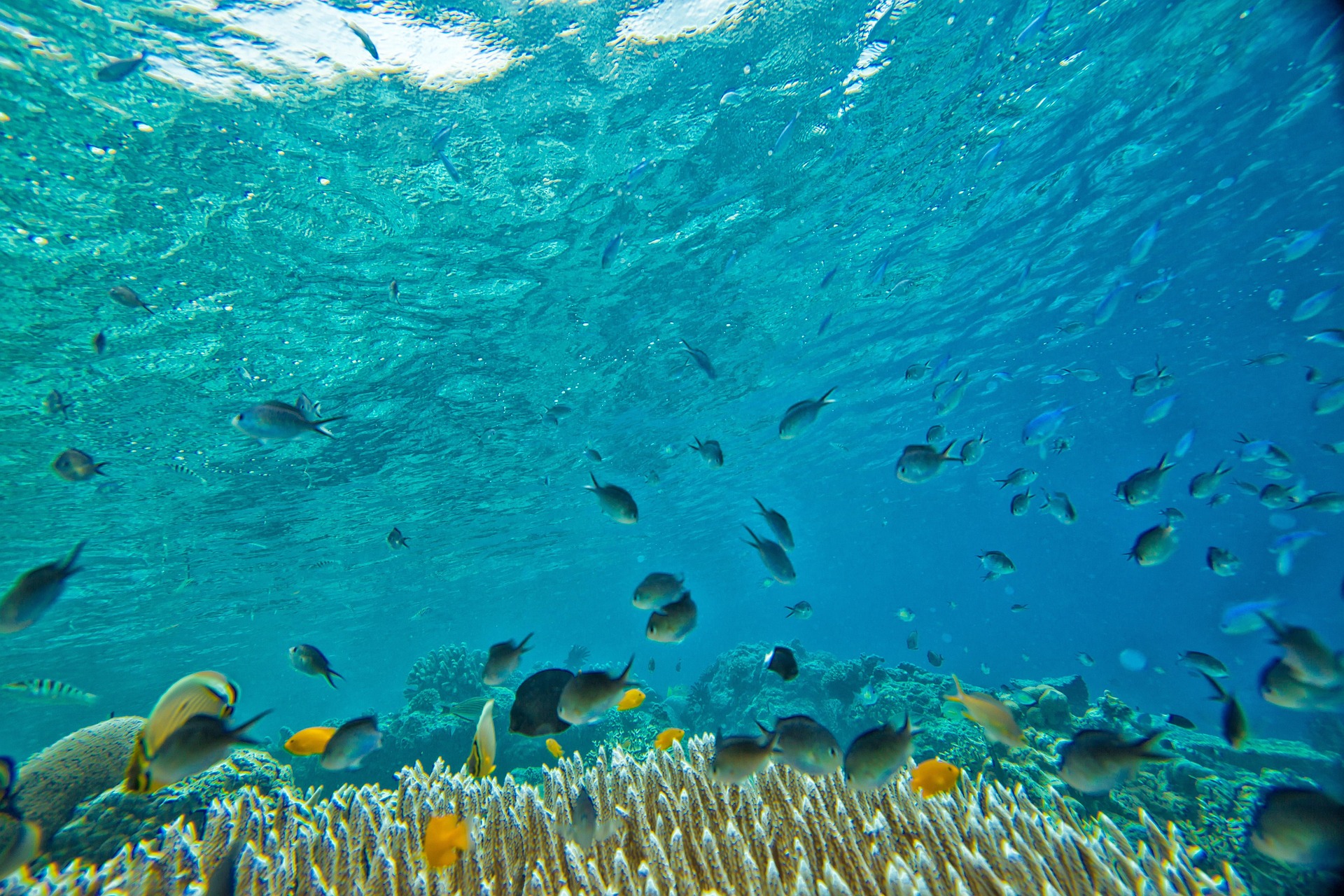
Raja Ampat & Bunaken — The Jewels of the Coral Triangle: The Coral Triangle, often described as the “Amazon of the Seas,” is home to more than 1,650 species of coral reef fish, making it one of the most important marine biodiversity hotspots on the planet. Its reefs support everything from reef fish to sea turtles, manta rays, and whales, forming the backbone of ecosystems that millions of people rely on for food, livelihoods, and coastal protection. The Coral Triangle stretches across six countries (Indonesia, the Philippines, Malaysia, Papua New Guinea, Timor‑Leste, and the Solomon Islands) and plays a vital role in global coral reef conservation. This vast region hosts over 76% of the world’s coral species and 37% of reef‑fish species, making it the richest centre of marine life on Earth.
Religion in Indonesia: Unity in Diversity
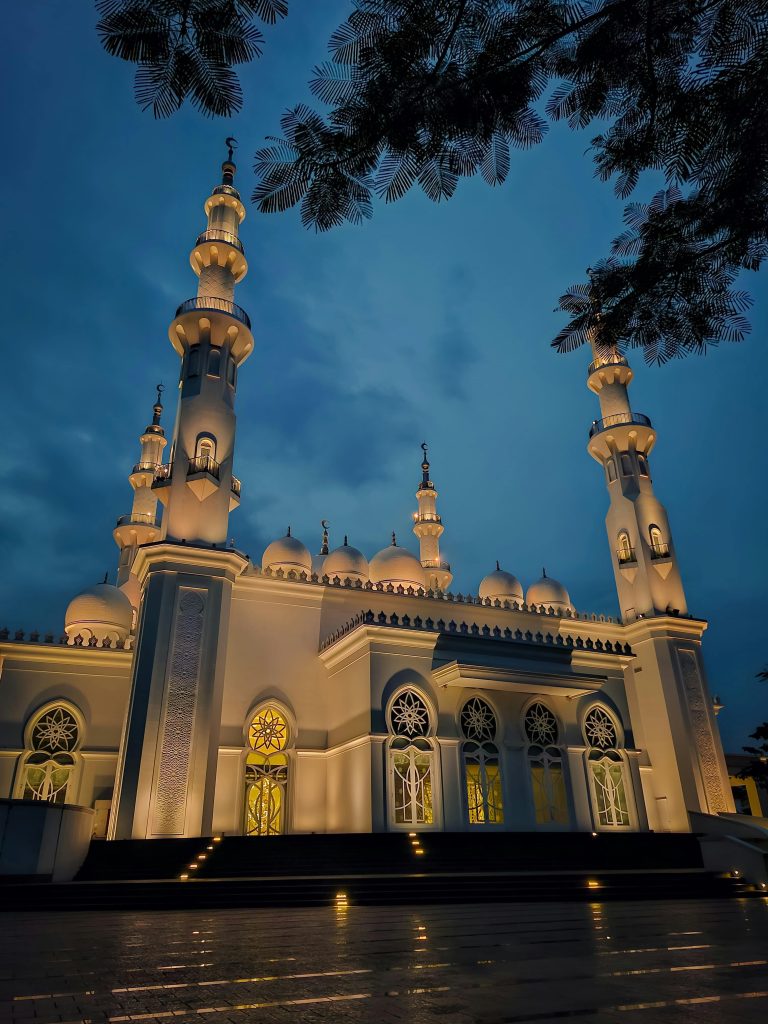
Indonesia isn’t just diverse in landscapes—it’s also a melting pot of faiths. While Islam is the principle religion (about 87% of the population), the country officially recognises six religions:
- Islam
- Protestant Christianity
- Catholic Christianity
- Hinduism
- Buddhism
- Confucianism
This mix reflects centuries of cultural exchange and position on the trade routes. Hinduism and Buddhism arrived from India, leaving behind stunning temples like Borobudur and Prambanan. Islam came later through trade routes, and today Indonesia is home to the largest Muslim population in the world. Christianity spread during the colonial era, and Bali remains a stronghold of Hindu traditions.
Climate: Warm and Tropical All Year
Indonesia’s climate is as inviting as its beaches—think tropical vibes, high humidity, and plenty of sunshine. Here’s what you need to know:
- Tropical Climate: Indonesia sits near the equator, it enjoys a warm, humid climate year-round. Perfect for beach lovers and outdoor adventurers!
- Wet and Dry Seasons: Indonesia has two seasons:
- Wet Season: Usually November to March, thanks to monsoon rains.
- Dry Season: Typically, April to October, ideal for travel and outdoor activities.
- Temperature: Consistently warm, with average temperatures around 26–28°C. Even in the mountains, it’s pleasantly cool rather than cold.
Culture Meets Geography
Majapahit and Srivijaya: Maritime Giants That Shaped Southeast Asia
When the story of the ancient world is told, Southeast Asia often appears at the margins—yet its seas, straits, and islands were engines of global exchange long before European caravels cut across the Indian Ocean. Two empires, Srivijaya and Majapahit, stood astride these waters. One leveraged strategic choke points to build a maritime federation; the other used bureaucratic craft, agricultural wealth, and naval power to assert hegemony across an island world. Together, they knit the archipelago into a shared cultural and commercial sphere that still resonates today.
- Srivijaya Empire (7th–13th Century)
- 600s: Founded near Palembang, Sumatra
- 700s–900s: Peak influence across Sumatra, Malay Peninsula, and southern Thailand
- 1025: Chola raids from South India disrupt power
- 1200s: Influence declines, archipelago’s center of gravity shifts to Java
- Majapahit Empire (1293–1527)
- 1293: Founded after Mongol Yuan expedition, new court in East Java
- 1350s–1380s: Gajah Mada leads golden age, expands control over much of maritime Southeast Asia
- 1400s: Gradual decline; regional powers rise
- 1527: Majapahit falls, marking a new era in Indonesian history
Each period showcases the maritime prowess, political developments, and cultural influence that defined Southeast Asia across centuries.
Srivijaya Empire (7th–13th Century): The Maritime Powerhouse
Origins & Geography
Srivijaya emerged on the banks of the Musi River with its core at Palembang in Sumatra. By sitting near the mouth of both the Strait of Malacca and the Sunda Strait, Srivijaya could tax, protect, and regulate the flow of ships carrying silk, ceramics, spices, and gold between the Indian Ocean and the South China Sea. Its influence rippled across the Riau-Lingga archipelago, southern Thailand, and the Malay Peninsula, often through suzerainties (where a superior country controls the foreign policy and international relations of a subordinate country) rather than direct annexation.
Political Structure & Power
Rather than a land empire of contiguous territories, Srivijaya was a maritime network of nodes held together by naval power, tribute, diplomacy, and the ability to guarantee safe passage. Rulers styled themselves as guardians of trade and patrons of religion, and they balanced port polities and inland partners. The control of sea lanes mattered more than strict borders.
Economy and Trade
The driver of Srivijaya’s prosperity was intermediation. Merchants from Tang and Song China, South Asia, and the Arab world converged at its ports to exchange high-value, low-bulk commodities: cloves and nutmeg from the Moluccas, benzoin and camphor from forests, gold from Sumatra’s interior, and woven textiles and ceramics arriving from abroad. Pilots, shipwrights, and navigators were in demand, as were scholars, scribes, and translators who enabled multilingual commerce. The state levied harbour dues and provided convoy protection while hosting warehouses and guilds.
Religion and Culture
Srivijaya served as an intellectual and spiritual centre of Mahayana Buddhism. Monastic communities flourished, and royal sponsorship connected the empire to centres such as Nalanda in India. Pilgrims and scholars travelled through Palembang en route to the Buddhist world, carrying texts and ideas in both directions. Artistic expressions—statuary, inscriptions, and ritual architecture—show a blend of Buddhist iconography with local Austronesian motifs.
Diplomacy and External Relations
Envoys travelled frequently to the Chinese courts, securing recognition and access to tributary trade. Srivijaya also forged ties with Indian states and Persian Gulf merchants. This diplomacy both reflected and reinforced its gatekeeper role over the Malacca passage.
Challenges and Decline
From the late 10th century, rival groups contested Srivijaya’s hold over the strategic straits. The most dramatic shock came with the Chola expeditions from South India around 1025 CE, raided key ports, seizing shipping and disrupting Srivijaya’s networks. Whilst the empire survived in diminished form, fragmentation accelerated and by the 13th century, the centre of the archipelago shifted decisively to Java, where new powers—culminating in Majapahit—redefined the political map.
Majapahit Empire (1293–1527): The Archipelago’s Golden Age
Beginnings in a Time of Upheaval
The origin story begins with the Mongol Yuan expedition to Java. In 1293, Javanese leaders leveraged the chaos of invasion to topple rivals and establish a new court in East Java. From this emerged a state with unusual administrative sophistication and an ambition to project power far beyond Java’s shores.
Administration and Bureaucracy
Majapahit combined court ritual with practical governance. Royal chronicles and inscriptions describe layered offices, tax systems, land grants, and a cadre of officials managing ports, irrigation, and provincial relations. The famed prime minister Gajah Mada articulated an expansive vision through his Sumpah Palapa (Palapa Oath), pledging to forgo personal pleasure until he unified the archipelago under Majapahit’s sway.
Economy: Agriculture Meets the Sea
Unlike purely maritime Srivijaya, Majapahit balanced robust rice agriculture—sustained by sophisticated irrigation and communal labour—with long-distance trade. Java’s fertile lowlands supported dense populations and craft production; coastal cities linked this agrarian base to spice islands, Borneo’s forests, the Malay Peninsula, and beyond. Control over shipping lanes, strategic ports, and commercial privileges underwrote revenue.
Military and Naval Reach
Majapahit projected force through a mix of land armies and fleets. Command of estuaries and straits allowed it to coerce tribute, secure trade, and intervene in disputes among port users. Naval power also facilitated symbolic acts of sovereignty—processions, envoys, and ritual exchanges that affirmed Majapahit’s status across the island world.
Culture: Hindu–Buddhist Syncretism
Court culture fused Shaivite and Buddhist elements with indigenous Austronesian traditions. The literary masterpiece Nagarakretagama (c. 1365) catalogues the realm’s places, rituals, and cosmology, positioning the king within a sacred geography. Temples and terraced sanctuaries integrated local aesthetics with Indic symbolism. Artisans produced ornate reliefs, bronzes, and textiles, while performing arts—dance, wayang (shadow theatre), and music—flourished under royal patronage.
Diplomacy and Networks
Majapahit maintained envoy relations with neighbouring groups and interacted with Chinese courts and traders. Its influence extended through suzerainty and alliance rather than uniform administration, with local rulers acknowledging Majapahit’s primacy while retaining autonomy.
Decline and Transformation
Internal factionalism, succession disputes, and shifting trade patterns eroded Majapahit from the late 15th century. Meanwhile, Islamic sultanates, including Demak on Java’s north coast, rose to prominence, reorienting trade and religious life. By the early 16th century, Majapahit’s courtly institutions had largely dissolved or migrated, but its cultural imagery endured.
Colonial Shadows: Dutch VOC, Japanese Occupation and Indonesian Independence
Indonesia’s colonial past is a story of commerce, coercion, and resilience. Two foreign powers—the Dutch East India Company (VOC) and Imperial Japan—shaped the archipelago’s trajectory from the 17th century to World War II. Their legacies reveal how global trade and conflict transformed local societies and ignited the struggle for independence.
Dutch East India Company (VOC): A Corporate Empire (1602–1799)
The VOC was founded in 1602 and was not an ordinary trading firm, being granted quasi-state powers, able to wage war, sign treaties, and govern territories. Its headquarters in Batavia (modern Jakarta) became the nerve centre of a spice empire that stretched across Asia.
Monopoly and Control
The VOC enforced monopolies on nutmeg, cloves, and pepper, often through brutal tactics. Any resistance was met with massacre, as in the Banda Islands.
Banda Islands nutmeg and clove production became crucial to colonialist countries from 1520s until 1800s. The fight to secure the monopoly for nutmeg and cloves was so extreme that in 1621, more than 13,000 Orangkaya were massacred by the VOC, led by J.P. Coen, leaving only 500 Orangkaya survivors.
The Dutch East India Company’s economic system was designed to funnel wealth from the archipelago to Europe. It taxed local rulers heavily, imposed forced deliveries of spices and other commodities, and monopolised shipping routes to control every stage of trade. These policies stripped communities of autonomy and redirected profits to Amsterdam, leaving local economies dependent and vulnerable. Farmers were compelled to grow export crops instead of food staples, creating cycles of scarcity and hardship. Over time, this exploitative structure not only enriched Dutch shareholders but also sowed resentment among Indonesians, fueling uprisings and shaping the contours of colonial resistance.
Cultural Imprint and Social Stratification
Dutch colonial influence reshaped the physical and institutional landscape of the Indonesian archipelago. European architectural styles appeared in urban centres, from stately government buildings in Batavia to orderly canal systems and grid-based street layouts. Legal frameworks modelled on Dutch civil law replaced many indigenous systems, and urban planning introduced zoning and administrative districts that reflected European ideals of order. Yet these changes were not neutral—they reinforced rigid social hierarchies. Access to new urban spaces, education, and legal privileges was stratified along racial and class lines, favouring Europeans and select elites while marginalising the majority of Indonesians. This dual legacy of modernisation and exclusion became a defining feature of colonial society.
Decline
By the late 18th century, corruption and competition led to bankruptcy. In 1799, the Dutch state absorbed VOC holdings, ushering in formal colonial rule.
Collapse of the VOC and Transition to State Rule
By the late 18th century, the Dutch East India Company was crumbling under the weight of corruption, mismanagement, and fierce competition from British and French traders. Its once-profitable spice monopoly had eroded, and mounting debts made survival impossible. In 1799, the company was formally dissolved, and its vast holdings—including ports, plantations, and administrative structures—were absorbed by the Dutch state. This marked a turning point: Indonesia shifted from corporate colonialism to direct state governance, laying the foundation for a more centralised and bureaucratic colonial regime that would dominate the 19th century.
Japanese Occupation: A Brief but Brutal Interlude (1942–1945)
World War II shattered Dutch control on the region. In 1942, Japan invaded the Dutch East Indies, promising liberation from Western imperialism—but reality was harsh.
Propaganda and Mobilisation
Japan’s occupation strategy relied heavily on propaganda to legitimise its presence and the dismantling of Western influence. Anti-Western slogans and promises of “Asia for Asians” were broadcast through posters, radio, and at schools, framing Japan as a liberator rather than a conqueror. Indonesians were encouraged to join auxiliary forces and participate in labour programmes under the banner of regional unity.
Forced Labour (Romusha)
Behind the rhetoric lay harsh realities. Millions of Indonesians were conscripted as romusha—forced labourers—tasked with building roads, railways, and military infrastructure. Conditions were appalling, inadequate food, rampant disease, and brutal oversight led to widespread suffering, famine, and death. Families were torn apart as men were sent to distant worksites, often never returning.
Nationalism’s Opportunity
Paradoxically, the occupation created political openings. Japanese authorities allowed nationalist leaders like Sukarno and Hatta to organise mass movements, train cadres, and spread ideas of independence—albeit under supervision. These networks became the backbone of Indonesia’s post-war revolution. When Japan surrendered in August 1945, the resulting power vacuum enabled Indonesia to declare independence, setting the stage for a fierce struggle against returning Dutch forces.
Contrasting Legacies and Enduring Lessons
Both the Dutch East India Company and Imperial Japan exploited Indonesia’s resources, but their methods and impacts diverged sharply. The VOC institutionalised a system of colonial economics that endured for centuries, embedding monopolies, taxation, and social hierarchies into the fabric of governance. In contrast, Japan’s brief yet brutal occupation disrupted that order, accelerating nationalist movements and dismantling European dominance in the region. These twin histories underscore how global commerce and conflict shaped Southeast Asia’s destiny—and how resilience and political imagination transformed oppression into independence. Today, their legacies remain visible in Indonesia’s legal frameworks, urban landscapes, and national identity, reminding us that the struggle for sovereignty was forged in the crucible of both corporate colonialism and wartime upheaval.
Proclamation of Independence: August 17, 1945
After centuries of colonial domination and three years of Japanese occupation, Indonesia seized a historic moment in August 1945. The surrender of Japan at the end of World War II created a power vacuum across Southeast Asia. For Indonesian nationalists, this was the opportunity they had long prepared for.
The Road to Proclamation
During the Japanese occupation, nationalist leaders like Sukarno and Mohammad Hatta had organised mass movements under Japanese supervision, building networks that would later become critical for independence. When Japan capitulated on August 15, 1945, these leaders faced a race against time: Dutch forces were preparing to return, and Allied troops were en route.
The Historic Day
On August 17, 1945, Sukarno and Hatta read the Proclamation of Independence at Sukarno’s residence in Jakarta. The text was brief but powerful, declaring Indonesia free from foreign rule and calling for the establishment of a sovereign state. The proclamation was broadcast via radio and printed in newspapers, igniting celebrations across the archipelago.
Immediate Challenges
Independence was declared but not yet secured. The Dutch sought to reassert control, leading to a four-year armed struggle known as the Indonesian National Revolution (1945–1949). Guerrilla warfare, diplomacy, and international pressure eventually forced the Dutch to recognise Indonesian sovereignty in December 1949.
Legacy
The proclamation remains a cornerstone of Indonesian identity. Every year on August 17, the nation commemorates this moment with flag-raising ceremonies and patriotic events, honouring the resilience and unity that turned a declaration into reality.