Bali to Lombok: Leaving the Crowds Behind

It occurred to us on the drive back to the airport from Uluwatu that we’d made a small but fairly fundamental mistake. At no point during our time in Bali had we allowed ourselves to stay anywhere that wasn’t, in one way or another, a tourist hotspot. The route was already set: Uluwatu—very much a destination, with new holiday properties pushing relentlessly into every available gap. Padang Bai, Lovina and Pemuteran, each a beach resort with its own particular reason for existing. Munduk and the surrounding hills, less overtly touristic perhaps, but still largely dependent on visitors, and finally Ubud, the cultural centre, where at least the beer is marginally cheaper than in other places aimed squarely at the fortnight‑in‑Bali crowd. According to several other blogs, this exact list is also the perfect way to avoid the tourist crowds, so I am perhaps being a little harsh on our plans.
In hindsight, we probably could have sacrificed a night in Uluwatu and explored somewhere a little further off the well‑worn path. Jimbaran, for example. Aside from variety, it would also have shortened the journey back to the airport, although it was around here that the traffic jams began to assert themselves properly as a defining feature of Balinese travel.
Scroll through social media for long enough and you’ll inevitably find countless posts that begin with Rate my itinerary. Most of them feel as though they’ve been assembled by an AI with an excellent grasp of destinations and absolutely no concept of geography, traffic, or human endurance. There’s rarely any consideration given to how you’re meant to get from A to B, beyond the vague assumption that it will all somehow work itself out. Our own approach has been to write off travel days entirely, on the basis that everything will take longer than you expect, no matter how optimistic the plan.
A good example was the move from Uluwatu to Senggigi in Lombok. Breakfast was at 7:30, which seemed sensible with an airport transfer pencilled in for 8:30. Somehow—through means still unclear to me, but probably something to do with the site we used to book the transfer, had originally been booked for 10:00. Had we stuck with that, I’m fairly confident the plane would have taken off and passed over our heads while we were still staring at the same stretch of stationary traffic. As it was, the flight departed at 11:51, and made good time, landing at 12:24, and was followed by a 90‑minute drive to Senggigi. By the time we checked in it was mid‑afternoon, and there was time for exactly one thing: a beer.
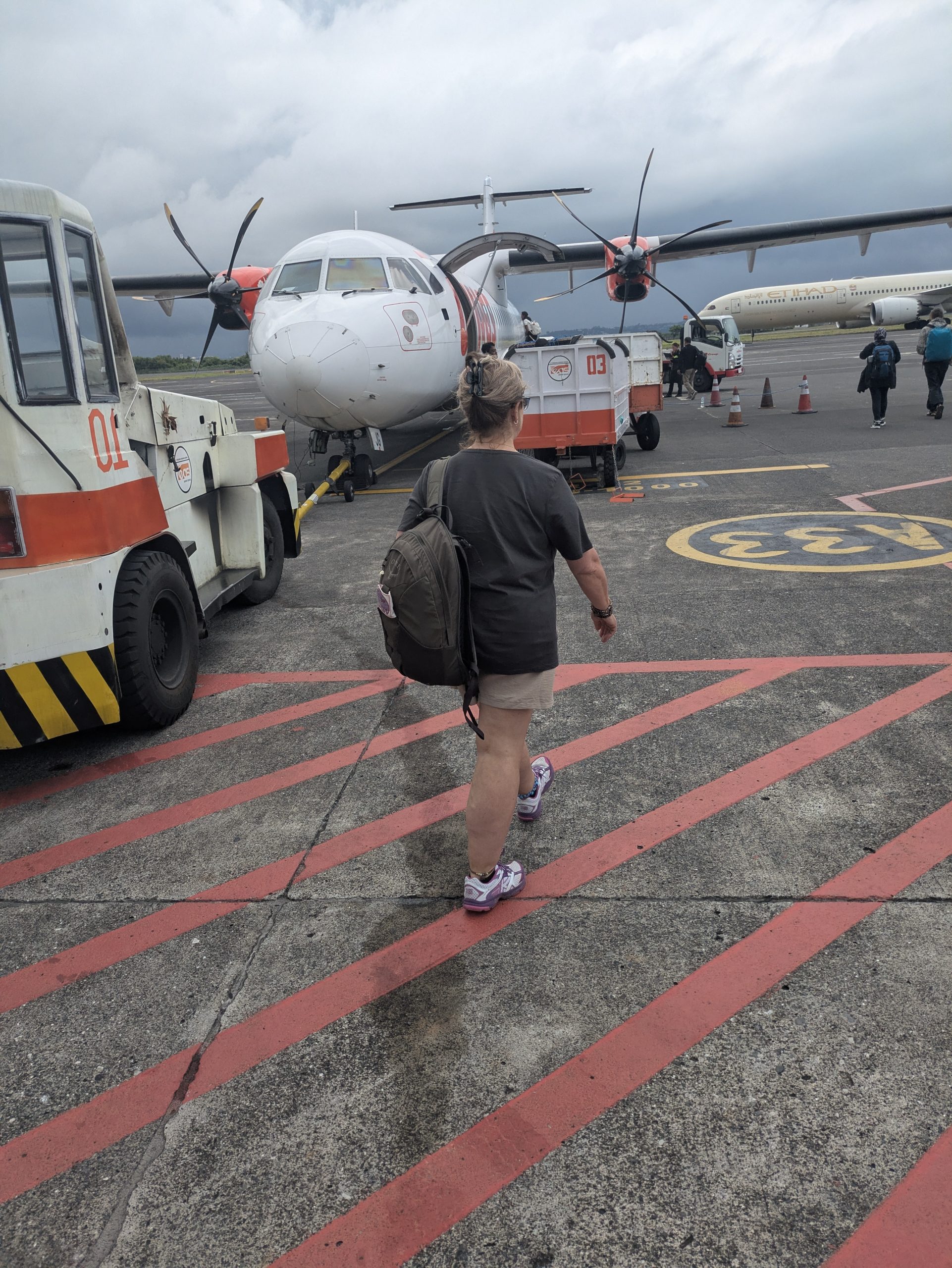
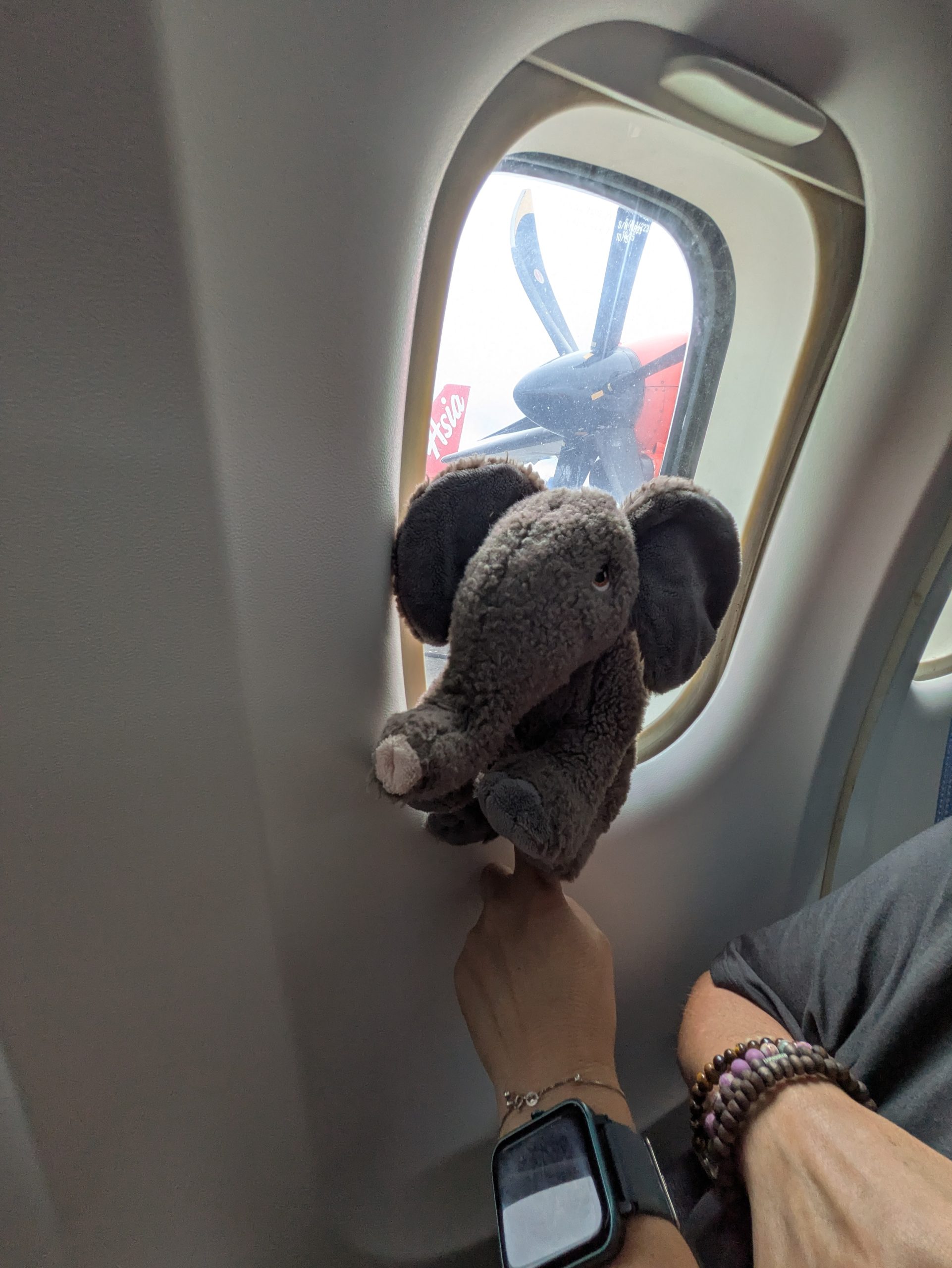
The flight itself was blessedly uneventful. We were flying with Wings Air—imagine EasyJet, but cheaper, and with more legroom. The aircraft was an ATR 72‑600 and looked as though it might have been in service since the early 1960s. When it arrived at Denpasar, you half‑expected Elizabeth Taylor and Richard Burton to descend the six steps onto the tarmac. Being a twin‑engine turboprop did little to calm Jay’s nerves. The experience was much like the Norwich‑to‑Amsterdam hop: no sooner had we reached cruising altitude than we were already thinking about landing, and even the stewardess didn’t bother undoing her harness. There was no juice, no biscuits, and very little ceremony.
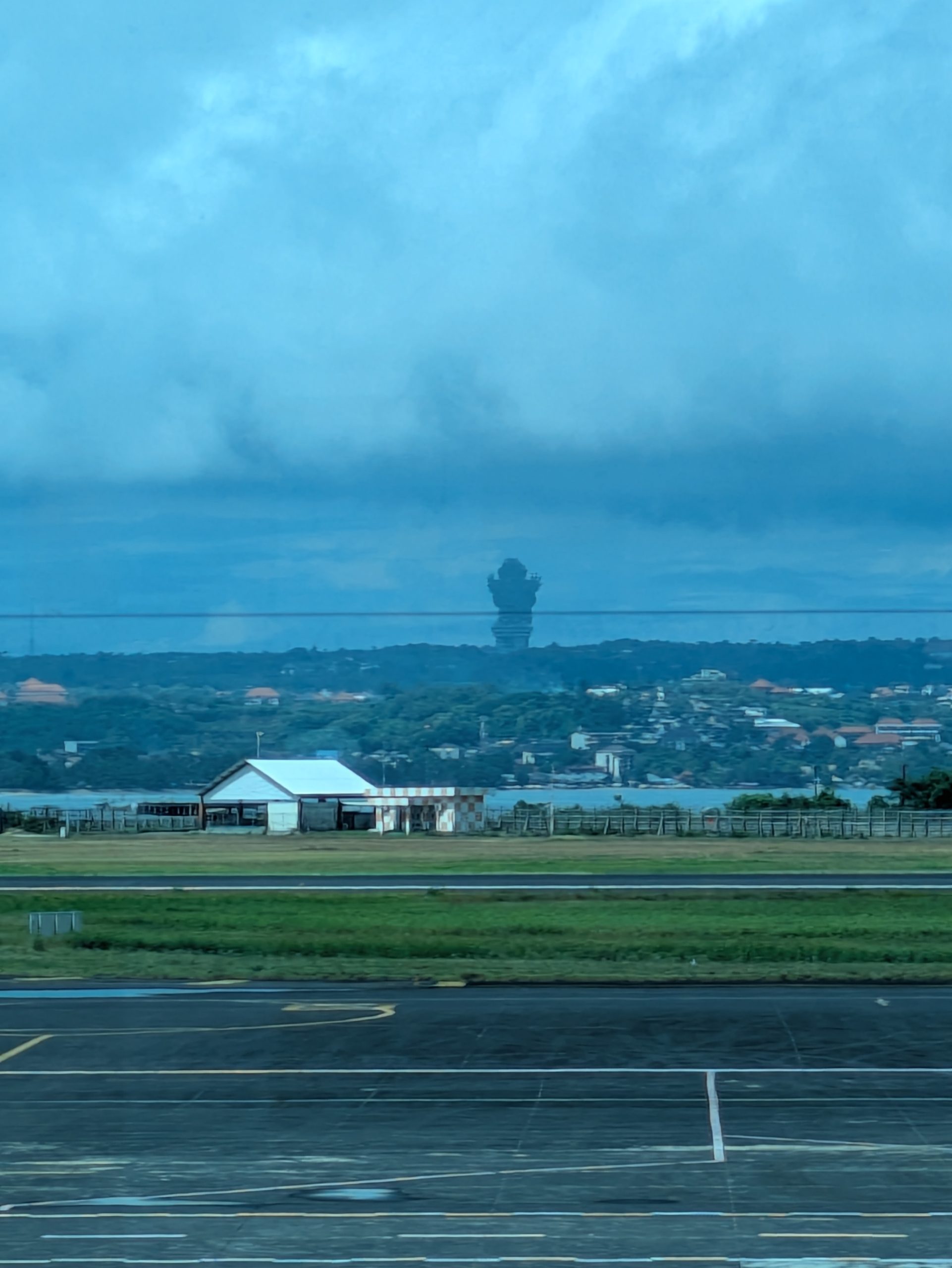
The weather was a bit rubbish, although that made it an ideal day to be travelling. When we left Denpasar, you couldn’t see the Garuda Wisnu Kencana Cultural Park, with its 122‑metre Vishnu statue, despite it being enormous and less than seven kilometres away. The weather front appeared to be coming in from the east, which resulted in a slightly bumpy ride – nothing too dramatic, although Jay might disagree – but enough to remind you that sometimes the quickest part of a journey still demands some attention. I did keep reminding her that the alternative (and original plan) was by small boat.
The difference in Lombok was immediately apparent, and nowhere more so than on the roads. After Bali’s near‑constant procession of scooters, cars and tour buses, the relative quiet felt almost unsettling, as though we’d arrived somewhere still mid‑sentence. Journeys unfolded without fanfare: little stop‑start traffic, no sense of being carried along by the collective momentum of tourism, just long, open stretches of tarmac with the occasional truck to overtake, eventually (just like the A17),and motorbikes passing through. It was a simple but telling indicator of population density and tourist numbers: fewer people, fewer places competing for attention, and a pace that felt less imposed. Getting from one place to another felt like part of the experience rather than something to be endured.
By the time we finally rolled into Senggigi, the day had done what travel days do best: absorbed all available time and returned very little of it, aside from the slightly dazed satisfaction of having arrived. Lombok announced itself quietly, not with a view or a landmark, but with the simple absence of noise—roads that moved, space between vehicles, and long stretches of tarmac that didn’t feel like they were being fought over. After Bali’s constant churn, it was as if someone had turned the volume down a few notches and left us to notice things again. We checked in, deposited bags, and performed the only meaningful act remaining to us: found a beer. And with that small ceremony completed, the island began to do what we’d come for, slow the pace, loosen the schedule, and make staying put feel like the point rather than a failure of planning.